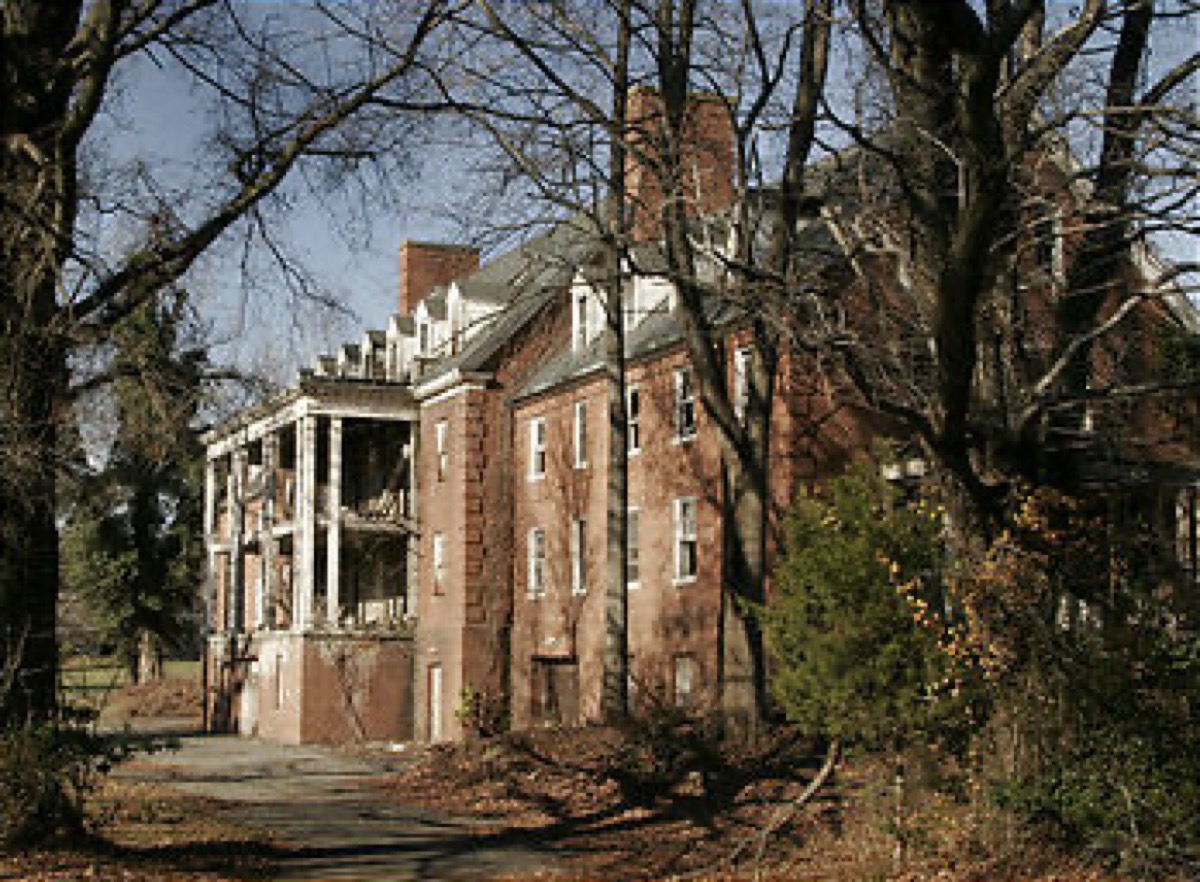
Glenn Dale Hospital sits abandoned outside Washington, a tuberculosis sanatorium built around sun decks and glass solariums. The story locals tell is of an officer who emptied his magazine at something inside, then couldn't say what he'd seen.
The story locals tell about Glenn Dale Hospital in Maryland is about a police officer. He was on rounds late at night, checking the abandoned campus the way patrols do. Neighbors across the street heard gunshots and called for backup. When the other officers found him, he was standing frozen, unable to speak. He had emptied his entire magazine at something that was never found, and he could never explain what he saw.
No news report names him. No record holds it. It moves from one ghost-hunting site to the next in the same words, which is how you know it's folklore rather than fact. But people keep telling it about this place in particular, and the reason has to do with what Glenn Dale was built to be.
It opened in 1934 as a tuberculosis sanatorium for the District of Columbia, sited fifteen miles outside Washington because the remote, fresh air was thought to heal. The whole campus was designed around sunlight. Rooftop sun decks. Glassed-in solariums on nearly every floor. Screened sleeping porches with steel windows that opened by machine, and a playground on the roof of the children's wing. The man who supervised the design, Nathan C. Wyeth, had already given the country its first Oval Office. Underground tunnels ran between the buildings so patients could move from the children's hospital to the adult one without going out in bad weather.
But tuberculosis in 1934 was usually a death sentence, and the shame of it ran so deep that families wouldn't say where their relatives had gone. For thousands of patients, this elegant campus of sun porches was the last place they ever saw.
The cure arrived too late for them. Once antibiotics made isolation hospitals pointless, Glenn Dale took chronic and indigent cases until it closed in 1982, undone by high asbestos levels and a cleanup bill in the tens of millions. The District sold the campus off, the law restricting whatever came next to a retirement home that never came. Twenty-three buildings have sat empty ever since.
Visitors report the rest. A little girl who follows you down the children's ward and then vanishes from the photograph. Footprints in the dust no bigger than a toddler's. A woman in white seen near the windows. None of it is documented, only retold from one visit to the next.
The lore reaches for the contradiction the place can't shake. Glenn Dale was designed around light and air, built to keep people from dying. It is remembered as a building full of the dead.