TLDR
Ghost tour author Mindie Burgoyne calls this "the most haunted street in the country," with 14 haunted sites in two blocks. Highlights include a 1659 Native American curse that caused blindness in over 40 LeCompte descendants, the ghost of an enslaved woman executed in 1831, and a British redcoat who traveled with a house shipped by barge from Annapolis.
The Full Story
Eastern Shore ghost tour author Mindie Burgoyne calls High Street in Cambridge "the most haunted street in the country," and the math is hard to argue with: 14 documented haunted sites in just two city blocks.
Dorchester County has more ghost sightings per square mile than anywhere else on the Eastern Shore, and High Street concentrates 340 years of Colonial violence, slave trade, maritime death, and at least one verified multi-generational curse into a stretch you can walk in ten minutes.
THE CHOPTANK CURSE
In 1659, French war hero Antoine LeCompte received a patent for 700 acres along the Choptank River where the peaceful Choptank Indians had lived for generations. When the Choptanks kept returning to their ancestral land after being driven away, LeCompte responded with violence. Before fleeing for good, the Choptanks placed a curse: "Because Antoine LeCompte was blind to the ways of peace, his sons and descendants will suffer blindness."
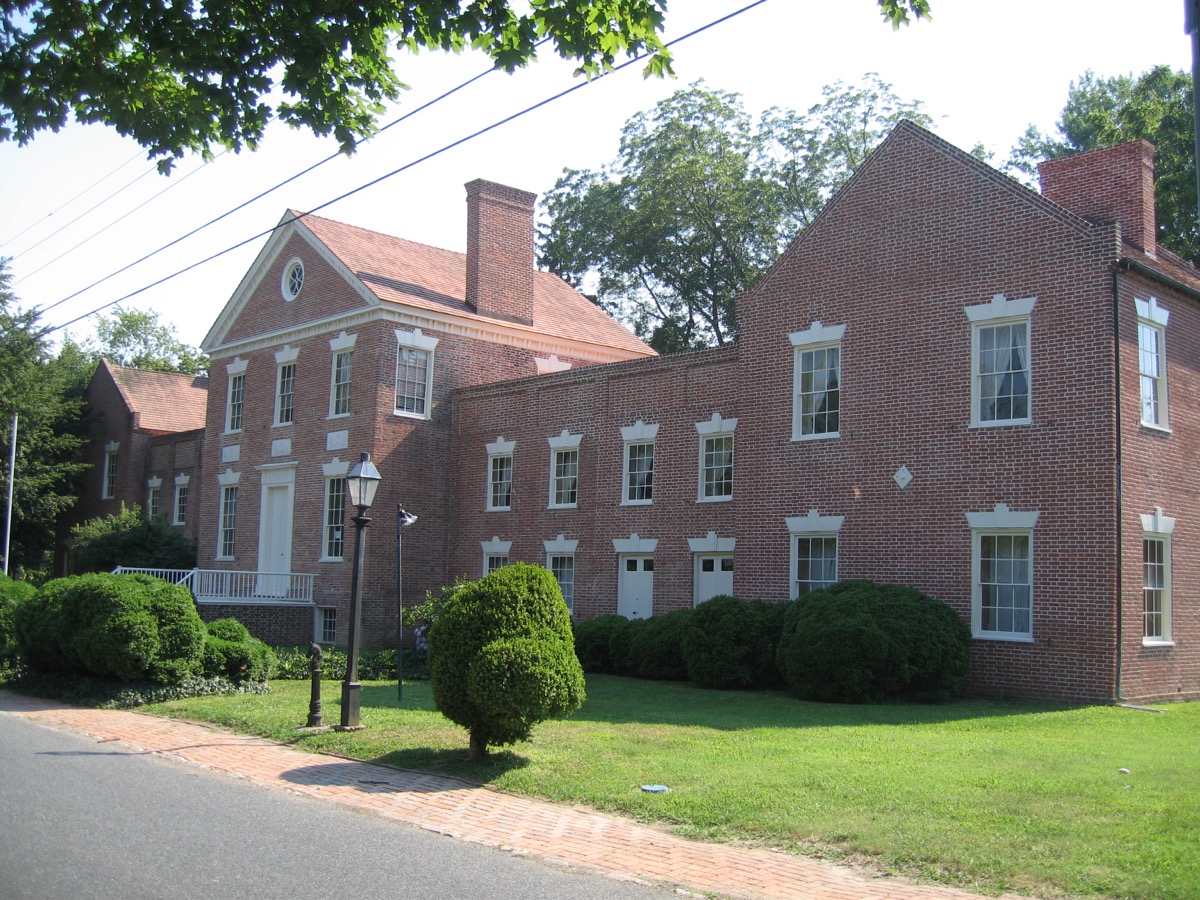
The curse landed. Antoine's son Moses went blind. Nine of Moses's eleven children went blind. Over 40 LeCompte descendants across multiple generations experienced blindness. An 1819 account noted that "nineteen of the living LeComptes were blind." The condition still appears in adult males in the family. The LeCompte House on High Street, a Federal-style brick home built in 1803 and purchased by War of 1812 naval officer Captain Samuel Woodward LeCompte in 1842, produces strange photographic evidence. Six separate photographers, none of them connected, have captured dark figures in the attic window across different visits and different years. Each shows what appears to be the outline of a person.
BLOODY HENNY
In June 1831, an enslaved woman named Henny Insley from Vienna was brought to the Cambridge Courthouse and executed for hacking her enslaver's wife to death with an axe. According to Burgoyne: "They just tied a rope around her neck, tied to a tree, while they had her stand on an oxcart. They put feed in front of the ox and he slowly walked away... it was a long, slow, horrible death." Children began chanting after: "What'd they hang you for, Bloody Henny? What'd they hang you for, Bloody Henny?" A fountain stands at the former gallows site in Spring Valley Park now. Late at night, visitors report hearing ghostly children's voices repeating the rhyme and the sound of a rope scraping against a tree branch.
THE FLOATING REDCOAT
The oldest house in Cambridge has a ghost from another city. The Josiah Bayly House was built around 1750 in Annapolis by John Caile, then dismantled, loaded onto a barge, and shipped across the Chesapeake Bay. A British redcoat appears to have hitched a ride. Workers reassembling the house spotted a soldier in Revolutionary War-era uniform standing in a second-story window, in a room that had no floor yet. The "floating ghost" has been seen in upstairs windows for decades. Josiah Bayly himself was a colorful figure: born on Halloween in Somerset County, he served as Maryland's Attorney General from 1831 to 1846 and notably defended Patty Cannon, a notorious kidnapper and slave catcher, in court.
The house holds more than the redcoat. A woman who purchased the property in the 1990s cleaned up an antique cheval mirror and placed it in her bedroom. "She reported seeing the reflection of a little girl in the mirror, a reflection that would quickly vanish, but the child's facial features were discernible... and it was always the same child." Her teenage daughter experienced a woman "slapping her feet trying to get her to wake up." Workers found shackles on the walls in both the attic and basement, and the Smithsonian excavated an outbuilding identified as a former slave cabin. In the 1940s, a ten-year-old boy vanished while playing at the property. Two days later he walked home, insisting he'd only been gone "a few hours" in the backyard.
THE SINGING TREE
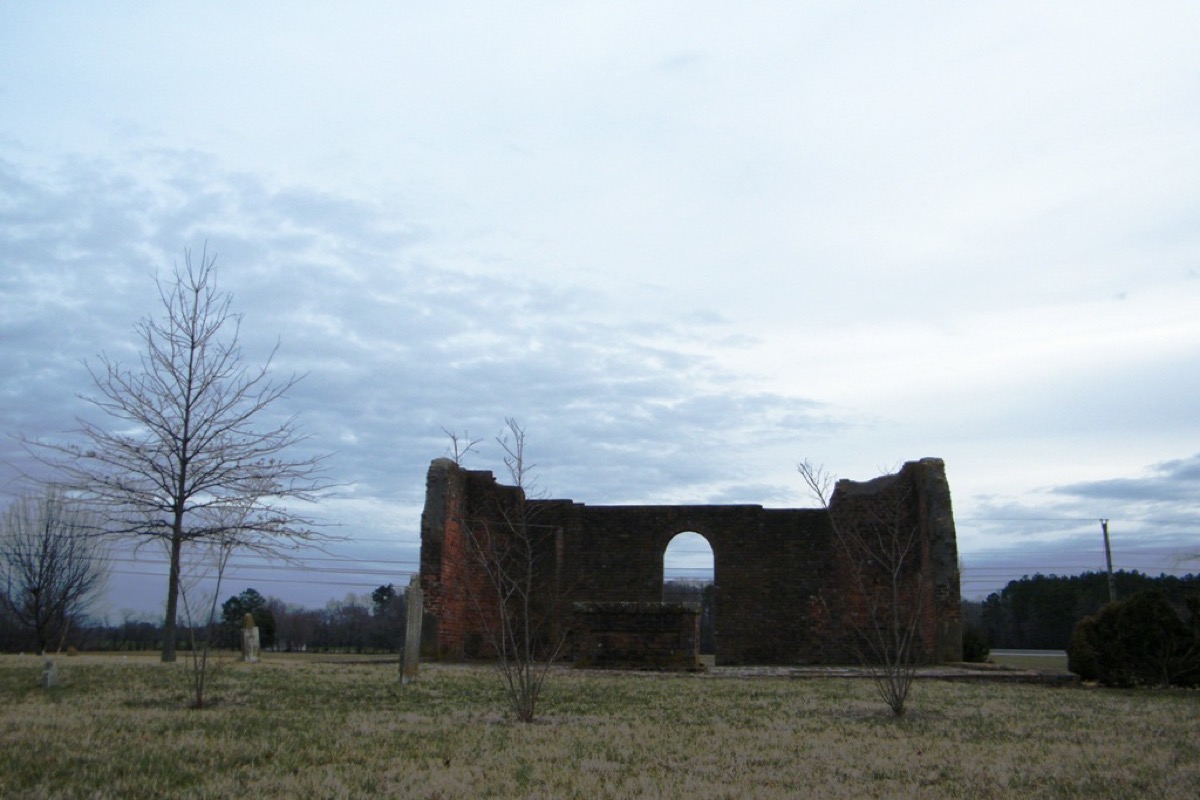
Christ Church cemetery, established with the Great Choptank Parish in 1692, contains a yew tree over 200 years old whose roots have slowly consumed the headstone of Ann Weller, who died in 1817. When the wind blows, the tree hums. Not a melody, but a buzzing vibration. Many believe the sounds come from Ann Weller herself, whose grave the tree has been absorbing for two centuries. Place your hand on the bark and the tree vibrates under your palm. Four Maryland governors are buried in the churchyard.
THE BANKER AND THE MURDER HOUSE
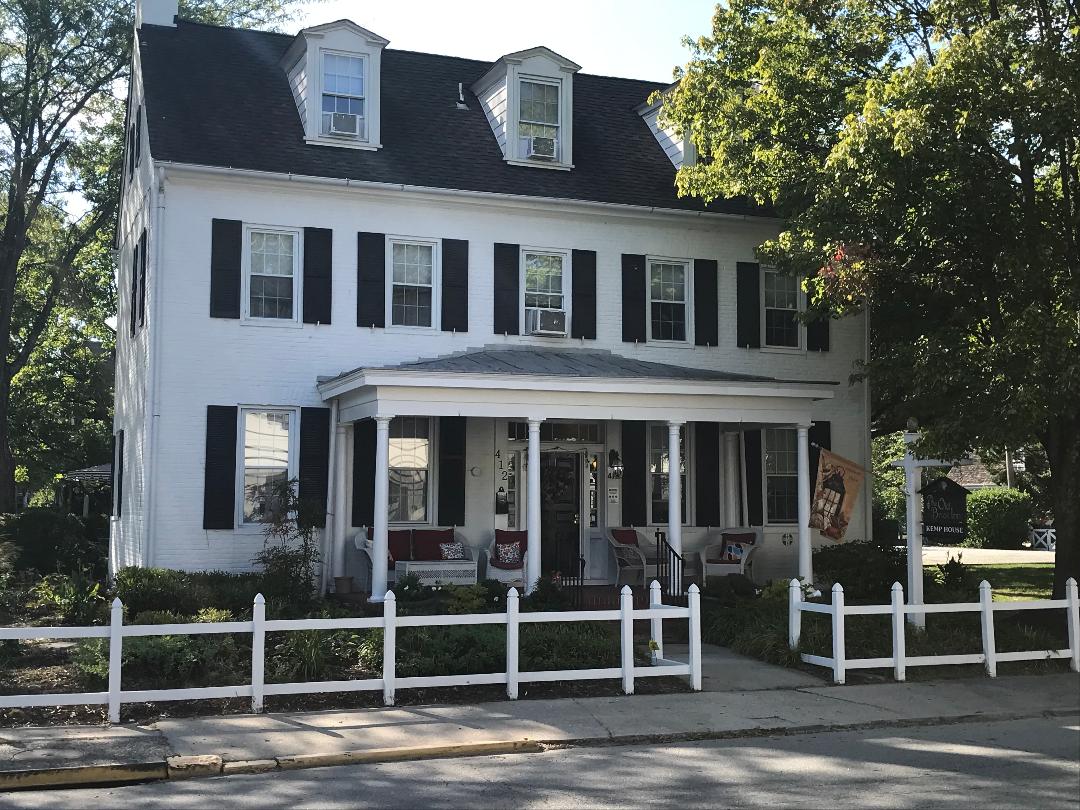
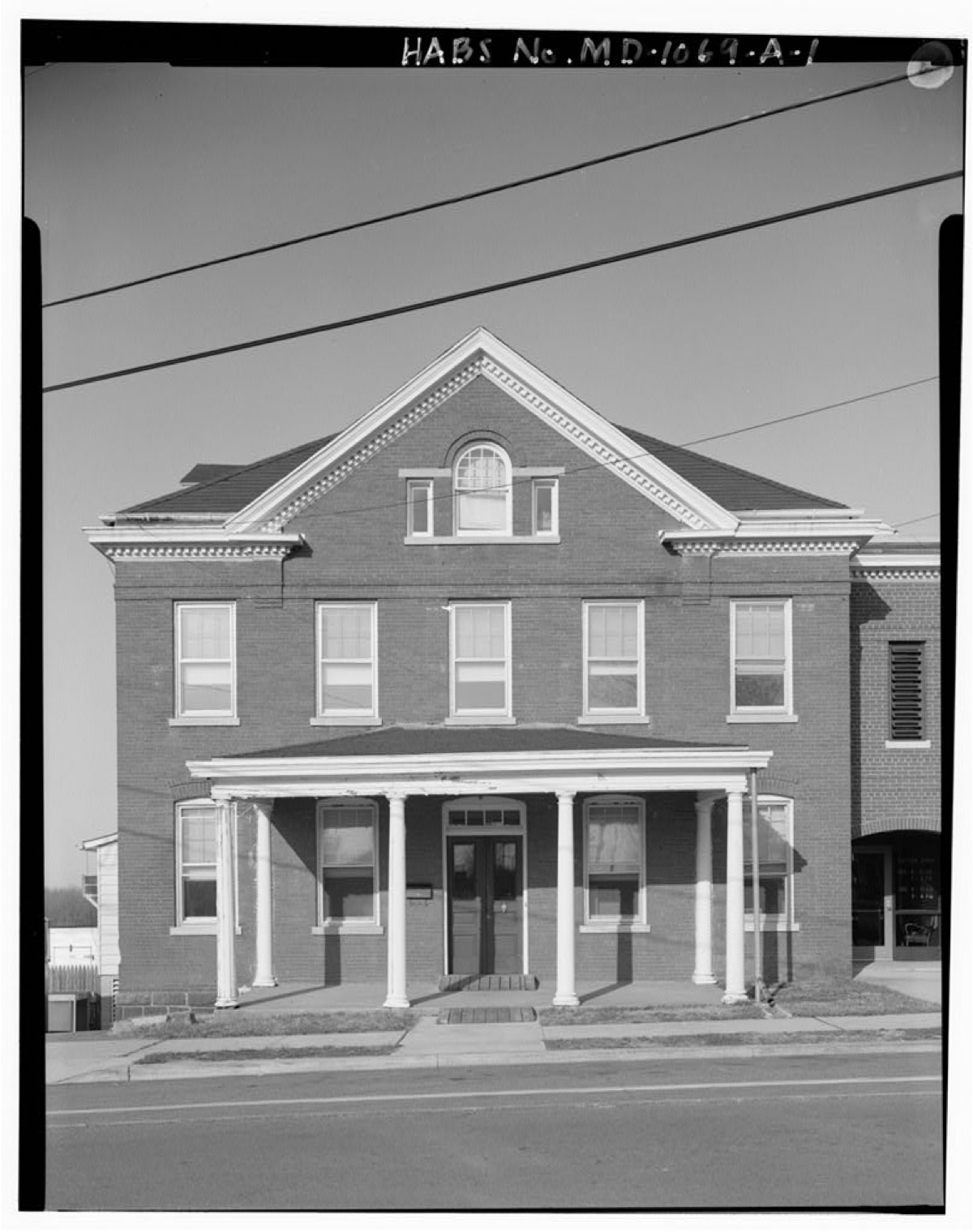
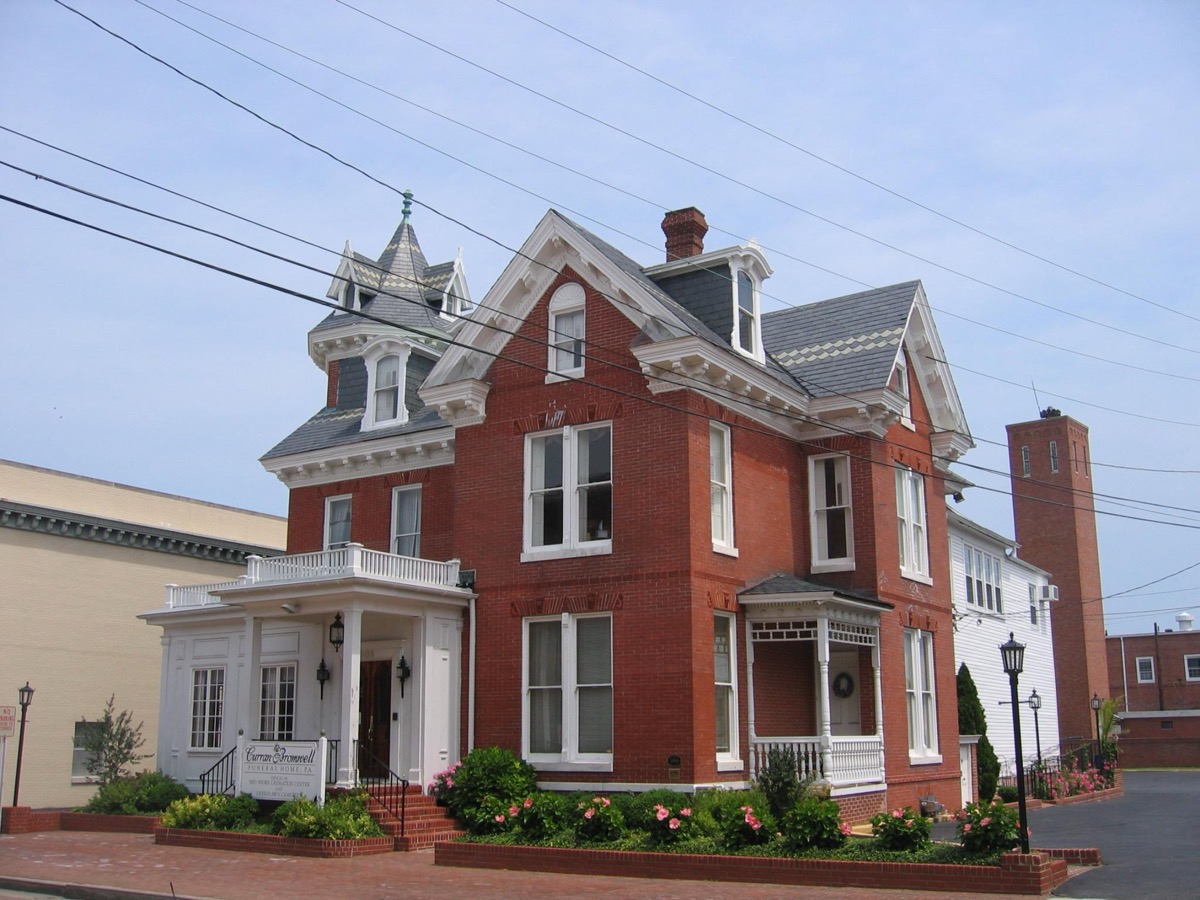
George Woolford, president of the bank building that later became the Richardson Maritime Museum, hanged himself from the attic rafters after the 1929 stock market crash. Visitors and staff hear footsteps pacing overhead, though one skeptical volunteer blamed the building's air handler. At 112 High Street, the elegant Victorian known as Cambridge House Bed and Breakfast was the scene of a violent murder involving "an umbrella and a fireplace poker" that ended with gunfire. Previous owners noticed umbrellas and pokers kept disappearing from the house. They didn't understand why until they learned about the murder.
Cambridge was founded in 1684 as a plantation port. The town pier served as the regional slave market before later becoming a stop on the Underground Railroad. The spirits said to walk High Street include soldiers, governors, jilted women, oystermen, an eccentric cat lady, a dying daughter, slain war heroes, murderous merchants, laughing children, and a one-legged sea captain. At Long Wharf where High Street meets the Choptank River, there are stories of pirates and phantom ships on the water at night. Automobiles are the only foreign objects on a street that otherwise looks like it hasn't moved past the 19th century.
Researched from 12 verified sources. How we research.