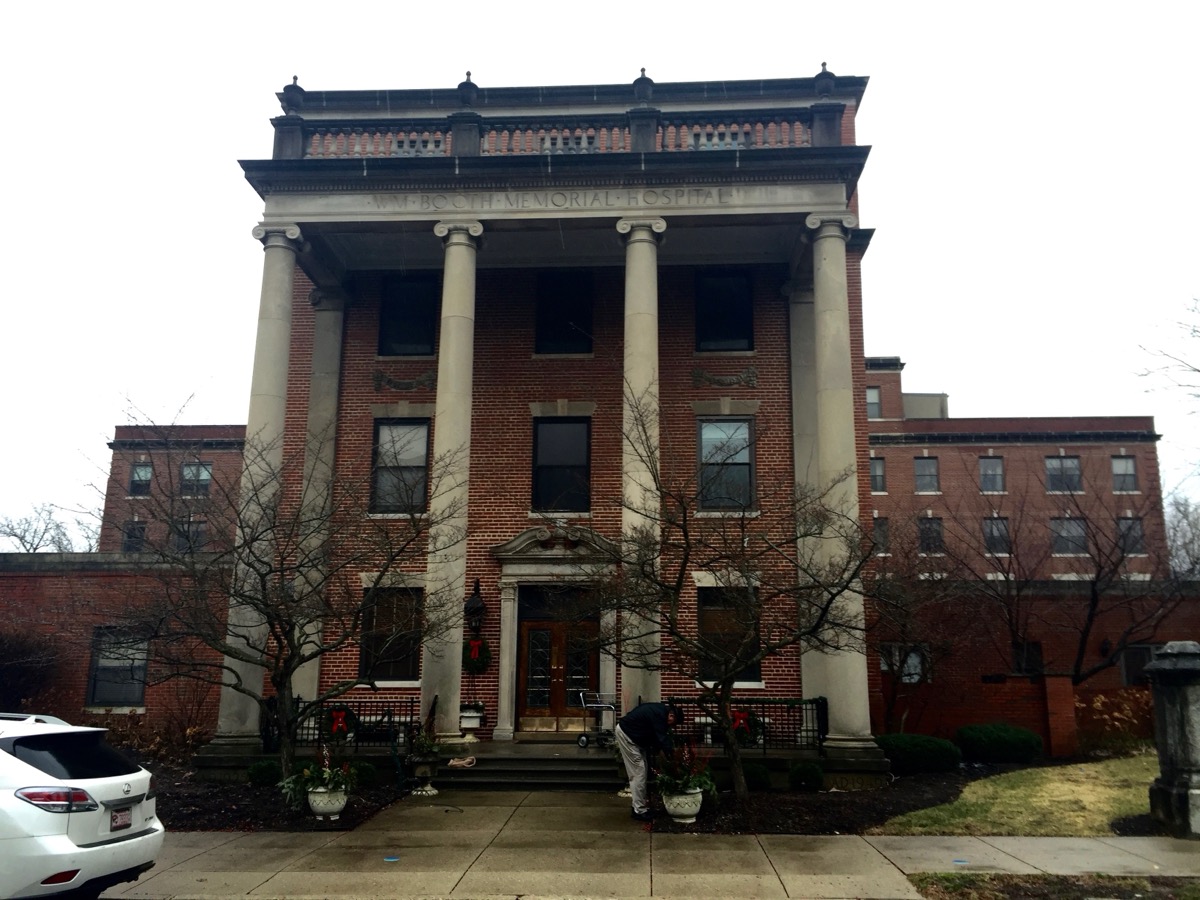
At Governor's Point in Covington, Kentucky, the luxury condos sit on the old William Booth Memorial Hospital. Residents say they wake in the night to a nurse in a 1930s uniform, pressing a hand to their forehead, telling them to go back to sleep.
At the Governor's Point condominiums in Covington, Kentucky, residents say they wake in the dark to a hand pressed gently on the forehead. A woman is standing beside the bed. She wears a nursing uniform in the style of the 1930s, and she leans in the way a nurse checks a child for fever, "almost like she's checking their temperature," as the local tour guide tells it. Then she says, almost word for word every time, "everything is going to be okay honey, just go on back to sleep." When they open their eyes again, she's gone.
The accounts barely differ from one resident to the next. The same uniform, the same gesture, the same line. The condos went up on the footprint of a hospital, and the hospital was a place where comforting people at night was the whole job.
For most of the 20th century, this site at 323 East Second Street was the William Booth Memorial Hospital, run by the Salvation Army and named for the man who founded it. Booth hospitals did one particular kind of work: they were maternity hospitals, taking in single and unwed mothers to deliver their babies, with many of those babies given up for adoption. The first patients were admitted in 1914. The building was dedicated in 1926, and by the mid-1960s it held 150 beds and 17 bassinets. Women came here frightened, in the night, to give birth far from home, and to hand the child over after. The nurses stayed up with them.
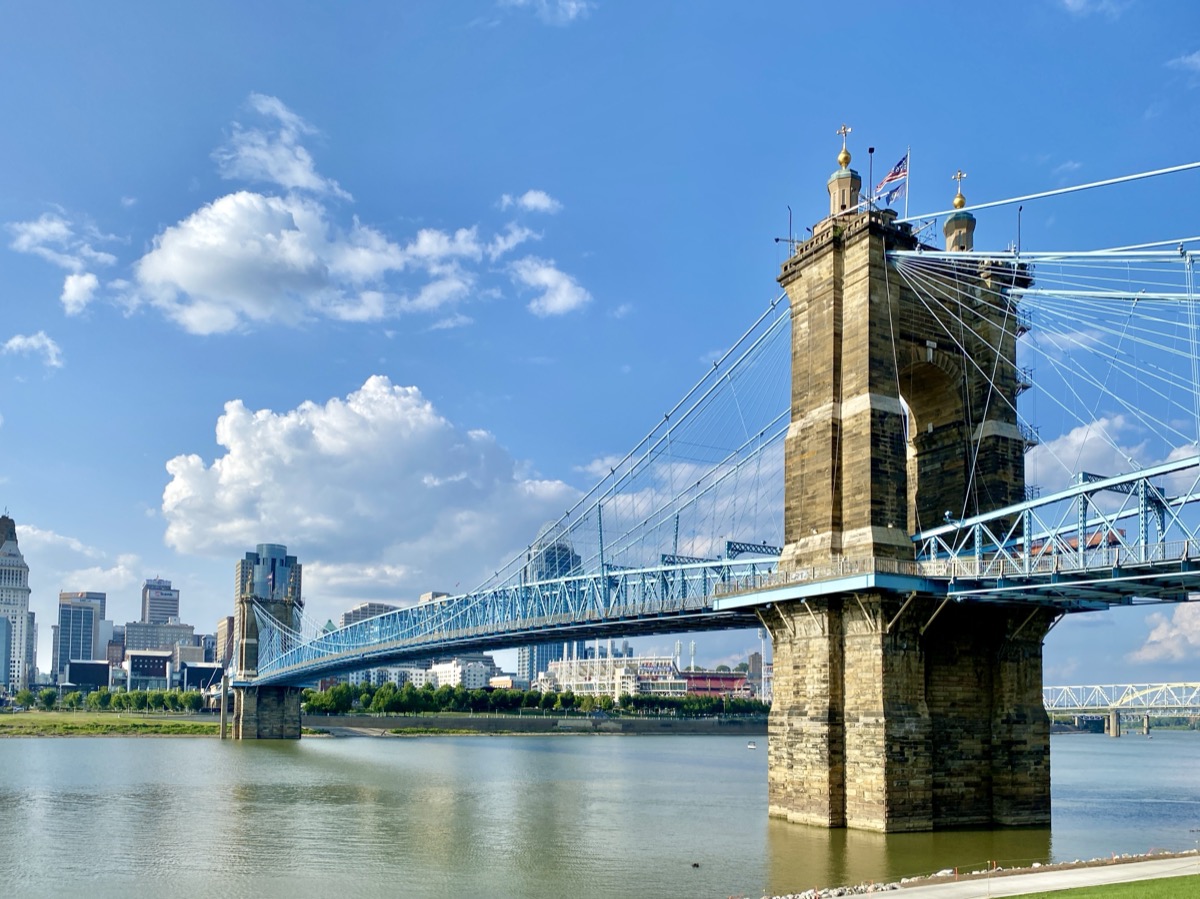
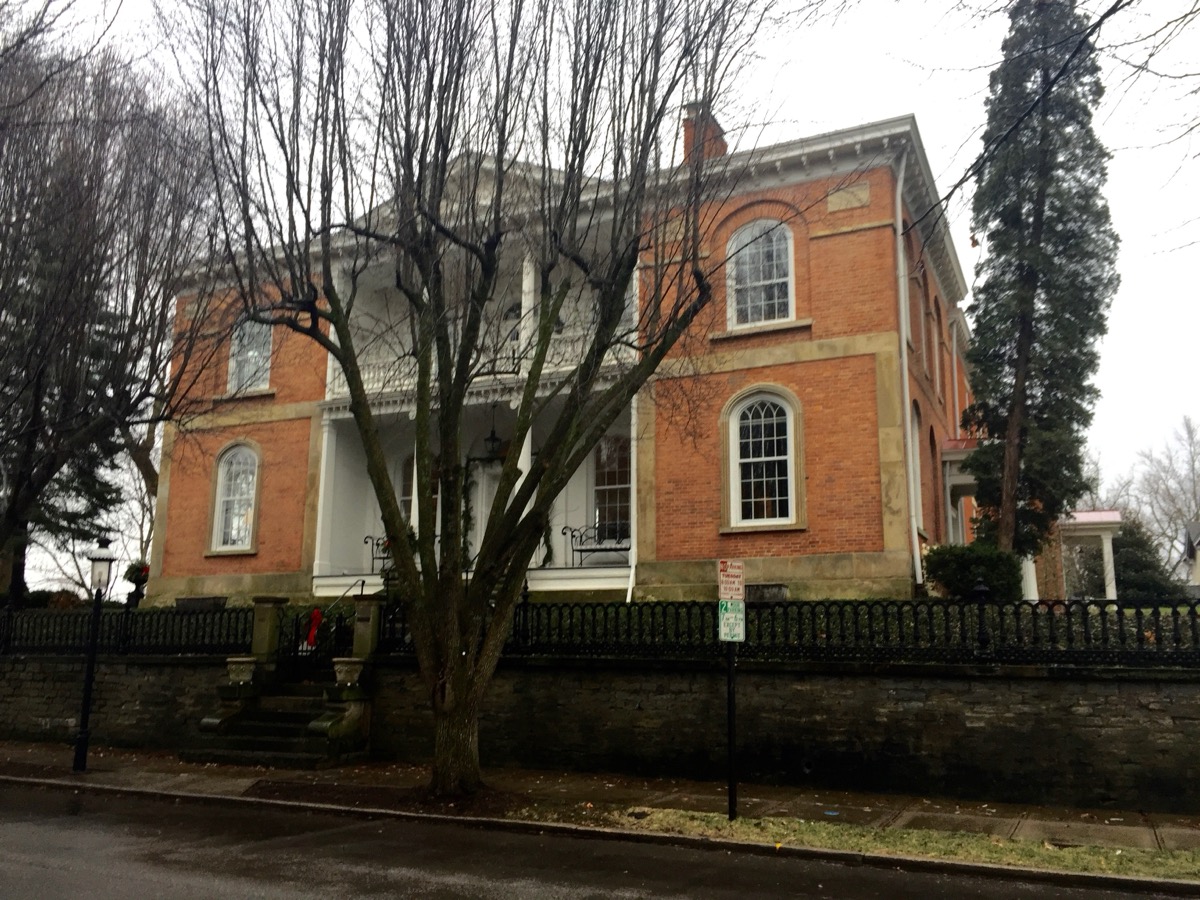
Before any of that, the high point overlooking the Ohio and Licking Rivers held something else entirely. In 1869, the businessman Amos Shinkle built a Gothic brick mansion there, the largest house in Covington, with turrets and marble statuary and inlaid floors. Shinkle had made his fortune on river coal and on the Roebling Suspension Bridge across the Ohio, the one you can still drive today; he was a stockholder by 1856 and its president by 1864. He died in 1892. His family later donated the mansion to the Salvation Army, and in 1920 it was torn down to make room for the hospital.
The hospital eventually closed too, and the lot became condos. No record names the nurse, or says when she worked here, or what kept her. A guide on the Ghosts of Covington tour collected the accounts from the people who live there now. They wake to a stranger checking their fever, in a building raised to deliver the children of women who'd come a long way to be alone, and a stranger tells them it's going to be okay.