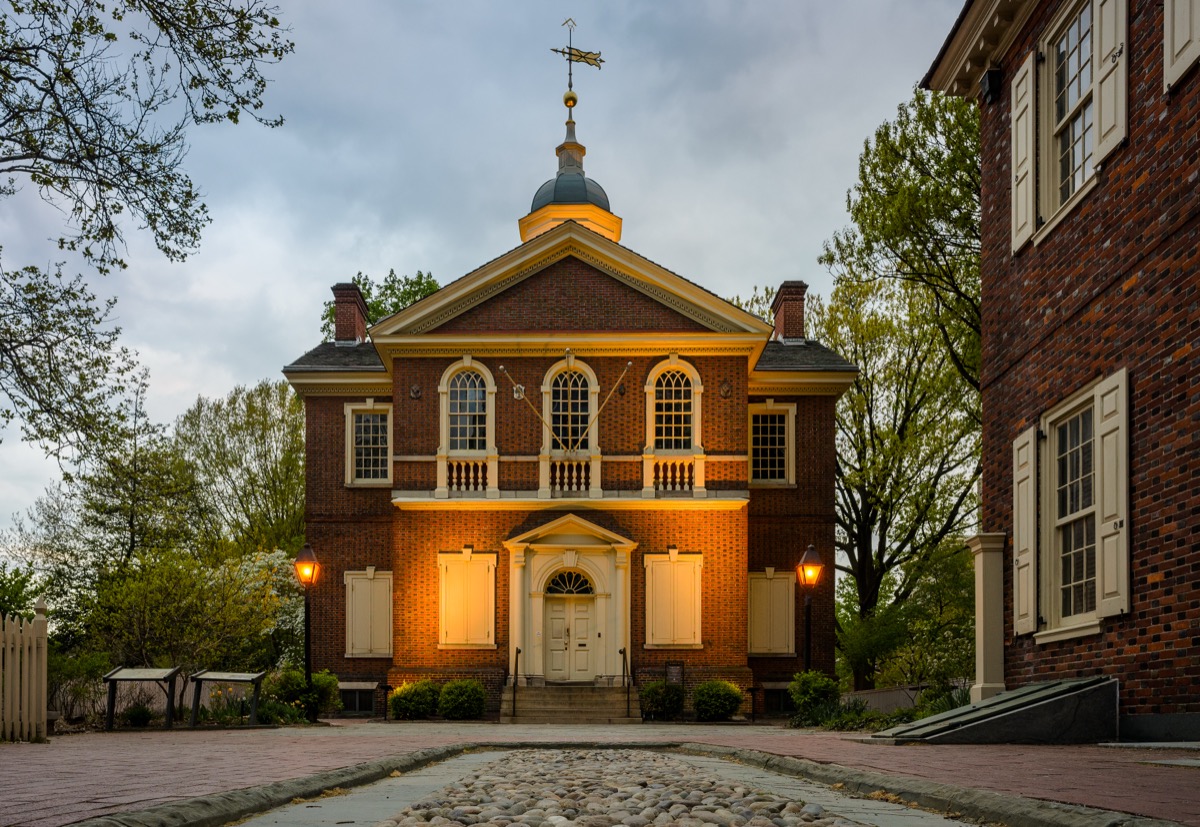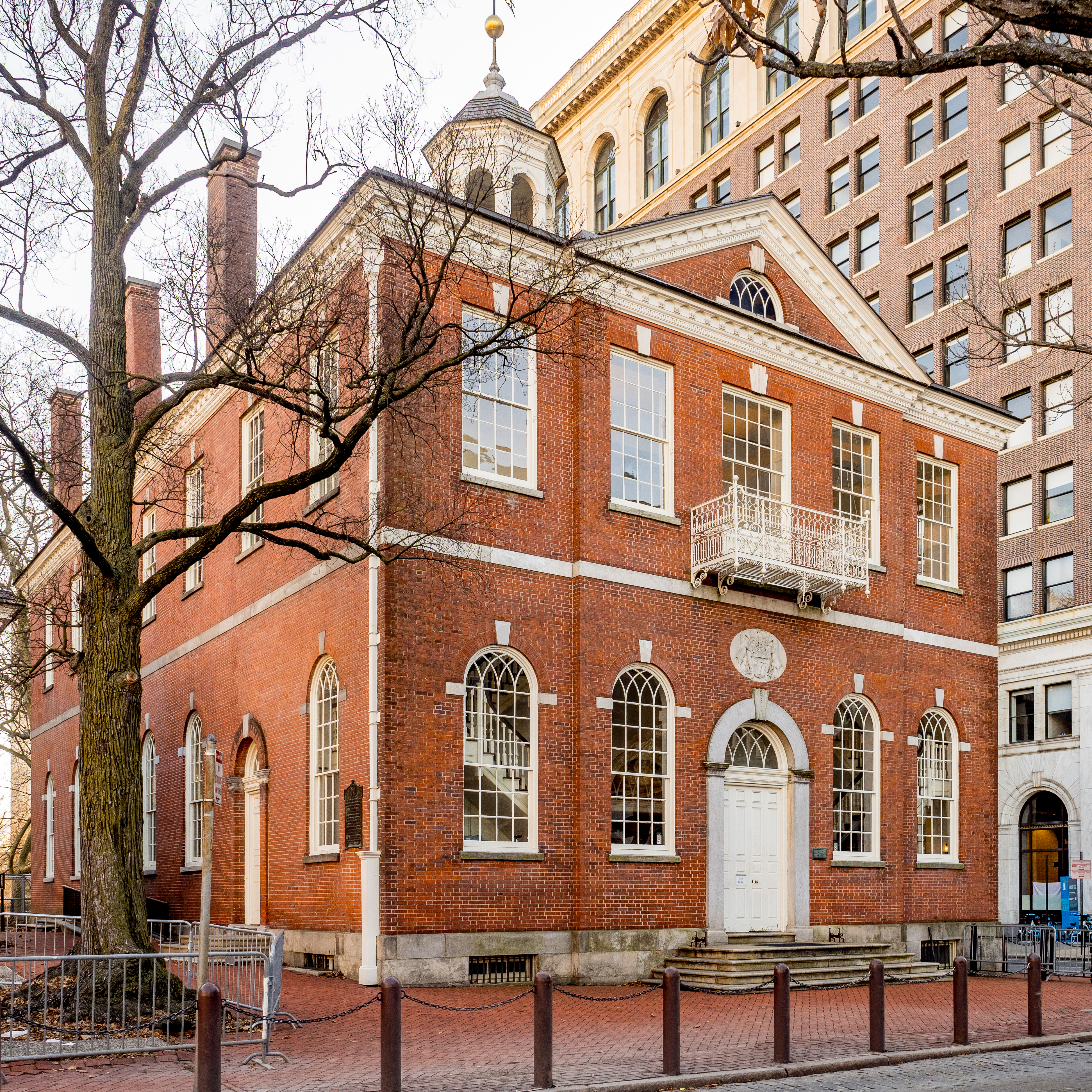
Congress Hall at 6th and Chestnut in Philadelphia gets a stout man in spectacles, a figure pacing the upstairs gallery, a remorseful Benedict Arnold. Every one of those ghosts is documented next door, at Independence Hall, then handed to the better building by the tour guides.
At Congress Hall, the two-story brick courthouse at 6th and Chestnut in Philadelphia, the ghosts come well-credentialed. The tour guides will point you to a stout man in spectacles and a colonial coat, reading papers on the Chestnut Street side, and tell you it's Benjamin Franklin. A tall figure paces the upstairs gallery; they call him Washington. Benedict Arnold wanders room to room, trailed by a ghostly mist, said to be seeking absolution.
Here's the catch. Every one of those apparitions is documented at the building next door.
Franklin examining a copy of the Declaration, Arnold drifting room to room trailed by his mist — those accounts belong to Independence Hall, the larger building directly across the square. None of them is native to Congress Hall. The founding-father ghosts on this block get assigned, by tour narration, to the best-preserved courthouse on the corner.
You can see why it draws them. For ten years this was the United States government. Congress met here from December 1790 to May 1800, while Philadelphia was the national capital and Washington D.C. was still mud and surveyor's stakes. The House of Representatives sat downstairs in a sparse, unadorned room. The Senate took the ornate second floor, deep green walls and a carpet woven with the American eagle and the seals of the thirteen original states.
Washington was sworn in for his second term in that upstairs chamber on March 4, 1793, and gave the shortest inaugural address ever delivered, 135 words. Four years later, almost to the day, John Adams was inaugurated in the chamber below, in the first peaceful transfer of executive power the country had managed. The Bill of Rights took effect under this roof. So did the First Bank, the Mint, and the Department of the Navy. Portraits of Louis XVI and Marie Antoinette, French royal gifts that Franklin arranged on his diplomatic mission, still hang in the committee rooms; the originals burned when the Capitol did, in 1814, and these are the copies.
After 1800 the building went back to being a county courthouse, then fell quiet for a century before the restorers came. It is one of the most historically loaded places in the country. The strange part is that no one ever reported a ghost in it. The whole haunted population of the block simply moved in by association, to the one building grand enough to deserve them.