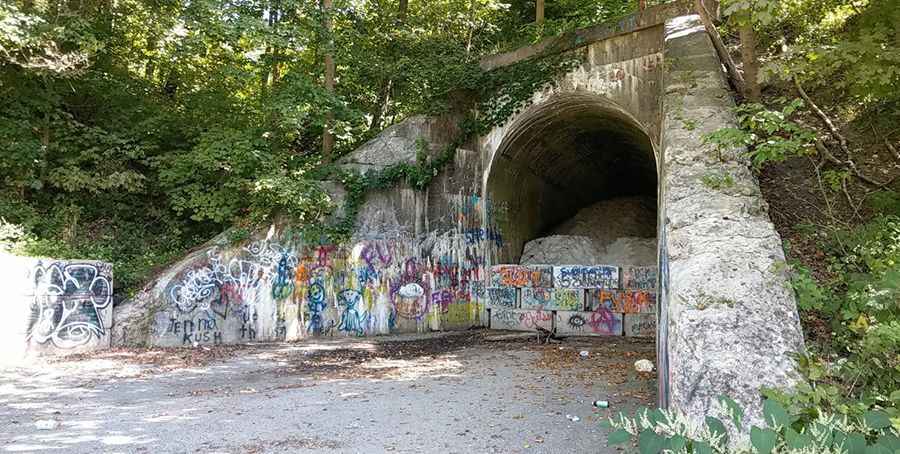
At Green Man's Tunnel in South Park Township, near Pittsburgh, teenagers drive in, cut the headlights, and call for a glowing figure to appear. The figure was a real, kind man named Raymond Robinson, who lived 40 miles away and never saw the place.
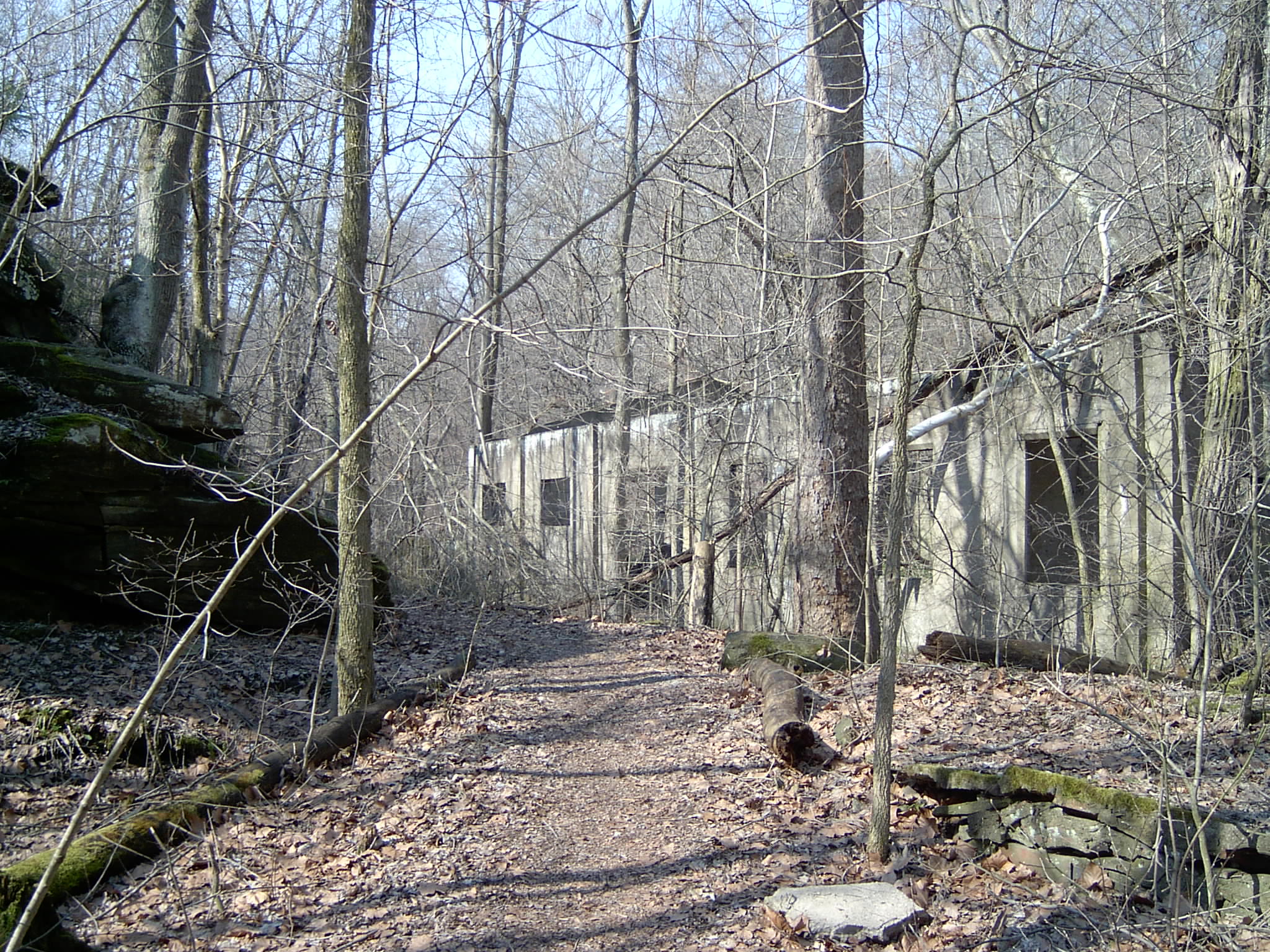
The legend around Green Man's Tunnel, a sealed railroad underpass in South Park Township south of Pittsburgh, is that something glows in the dark there. Teenagers drive in, cut their headlights, and call out for the Green Man. The way it gets told, he comes back with a green glow, stalls your car, and wants you gone. People who go report footsteps behind them and a faint light at the far end, though a cell signal drops in most tunnels regardless of who is haunting them.
The tunnel is real enough. The Pennsylvania Railroad cut it in 1924 to haul coal out of the Peters Creek valley, and the date is still molded into the concrete above the arch. The line was abandoned in 1962. Today the eastern portal is gated shut and the inside holds road salt for the township. The stories about why it's haunted don't agree with each other: in one an electrician was electrocuted fixing the tunnel lights, in another a man was struck by lightning on a deserted South Park road. Either way he comes back green.
The man at the center of it was real, too, and his name was Raymond Robinson.
He was born in 1910 in Beaver County. On June 18, 1919, when he was eight, he climbed a trolley trestle near Beaver Falls to reach a bird's nest and grabbed a live wire carrying 22,000 volts. It cost him his eyes, his nose, and an arm. He lived another 66 years after that, in Koppel, making doormats and wallets and belts by hand to sell.
To avoid the daytime stares, he walked at night, feeling his way along State Route 351 with a stick. Drivers who passed him in the dark started the legend. Some called him the Green Man. Some called him Charlie No-Face.
But the people who actually met him tell it differently. He would trade a few words or a photo for beer or cigarettes. He followed baseball and kept the statistics in his head. "Most people actually when they encountered him and started to talk to him found out that he was a great guy," a local ghost historian said. His great-niece put it plainer: "He always tried to be friendly to everybody."
He died in 1985 and is buried at Grandview Cemetery in Beaver Falls.
The tunnel where they go looking for the monster sits about 40 miles from where Robinson lived. He never saw it. The folklore took a kind man, dropped his name, moved him to a coal tunnel he'd never visited, and left the glow.