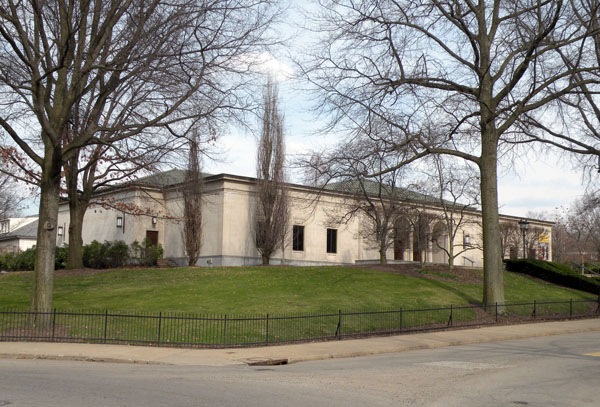
At Clayton, the Frick family mansion in Pittsburgh, a girl in a white dress keeps appearing at the ends of upstairs hallways. Staff say she's Martha Frick, who died in 1891 before her sixth birthday — in the house her grieving family left frozen.
At Clayton, the Frick family mansion in Pittsburgh's Point Breeze, the most-reported figure is a small girl in a white dress. People glimpse her at the ends of upstairs hallways and on the staircases, never for long. The staff say she's Martha Frick, and they have reason to.
Henry Clay Frick was one of the richest men in America, and inside this 23-room house he lost two of his four children in thirteen months. Martha fell ill and died in 1891, just before her sixth birthday; the museum's own docent history attributes it to a virulent infection, though the popular telling has her swallowing a pin years earlier. The next year, the family's newborn son died within weeks of his birth, and one ghost-history account places his wake in the parlor. The grief-stricken Fricks left for New York and never lived at Clayton again.
But they left almost everything behind. After a six-year restoration, the house opened to the public in 1990 with 93% of its objects original to the family. Materially, it is the actual home, frozen at the moment they walked out. Their daughter Helen later returned and lived here until her death in 1984, keeping the rooms as they had always been.
The reports cluster where the children were lost. A child's laughter is heard in the upstairs halls and what was once the children's wing. Cold spots are reported in the nursery and in Henry's study. In the nursery, toys are said to move on their own, and a rocking horse to rock gently when no one is near it. In the study, the scent of cigar smoke turns up, and on rare occasions a man in Victorian-era formal attire matching photographs of Frick himself.
Frick himself outlived everyone in the house and died in New York in 1919, far from Clayton. Yet the man people report wears the clothes of his Gilded Age prime, the years before the family lost the children and left. Whatever lingers here seems to have kept that decade and nothing after it.
The newest part of the story is the oldest part of the house. For decades the third and fourth floors stayed closed, and security guards reported hearing someone moving around up there late at night, when the building was locked and empty. In November 2025, Clayton opened those floors to the public for the first time — the old servant quarters, still showing peeling wallpaper and water-stained ceilings. Now visitors climb the same stairs the guards used to hear someone walk.