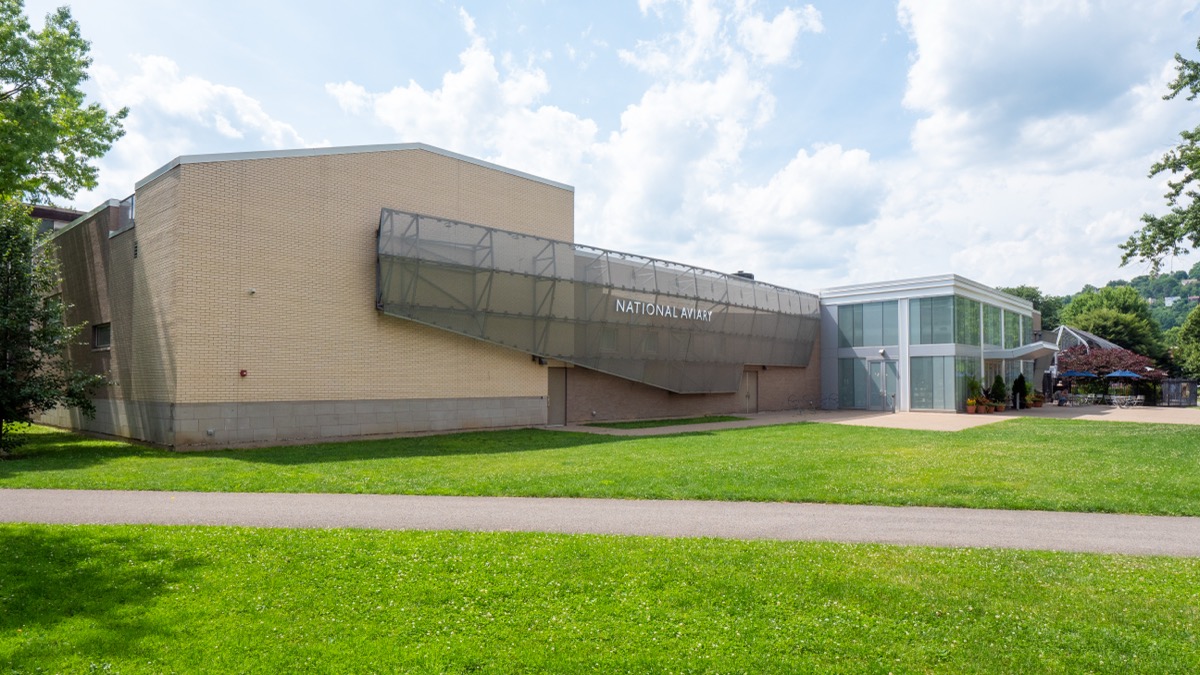
The National Aviary in Pittsburgh keeps 500 birds for the public to walk among. Underneath sits the ground of a Civil War prison, and staff say the dead who linger there are gentle. They love the birds, the story goes, and they follow the staff around.
The National Aviary on Pittsburgh's North Side is a bird zoo. You go to watch flamingos and free-flying parrots, more than 500 birds across 150 species, in rooms you walk straight into. What you're walking on is the ground of a prison.
The original Western Penitentiary stood on this spot from about 1826 until the early 1880s, Pennsylvania's first prison, designed by the architect William Strickland. It ran on solitary confinement, the system Charles Dickens came to inspect on his American tour and wrote about afterward, mentioning "a prison on the same plan which I afterwards saw at Pittsburgh." During the Civil War the building held 118 Confederate cavalrymen from John Hunt Morgan's command, brought in on August 5, 1863, and kept through the winter before they were shipped to Maryland the next March. At least eight of them died here that winter, sick in the cold and the crowding. One died trying to escape.
The aviary opened over that ground in 1952. And the staff say the prison never fully emptied.
They report shadowy figures in the early morning and after closing, when the place is locked and the only sound should be the birds. Banging from the basement with nothing under it. Footsteps in the corridors, cold spots, the feeling of being watched while working alone. The figures, when people describe them, are sometimes wearing Civil War uniform, the restless dead of the prison era walking the halls of the place that replaced it. Shawn Kelly of the Pittsburgh Paranormal Society calls the aviary "extremely haunted." The birds, the lore goes, react to things the staff can't see, though no one has ever measured it.
Then a spirit-box session caught something stranger than a grudge. A male voice took credit for a radio in the kitchen that kept switching itself on and off in front of a female staff member. He said he'd done it to get her attention. He said six others were with him. Then he named the staff who worked there.
The spirits, the story goes, said they liked the people and liked the birds, and would follow the staff around on their rounds, watching. One group came away calling it a peaceful place the spirits seem intent on keeping. Eight men died on this ground in a prison winter, and a hundred and fifty years later, what people report isn't anger. It's seven of them, trailing the keepers from room to room, keeping the birds company.