At the Mordecai House in Raleigh, North Carolina, a piano in the front drawing room plays soft melodies with no one at the bench. The ghost everyone names is Mary Willis Mordecai Turk, the matriarch who ran the place until her death in 1937.
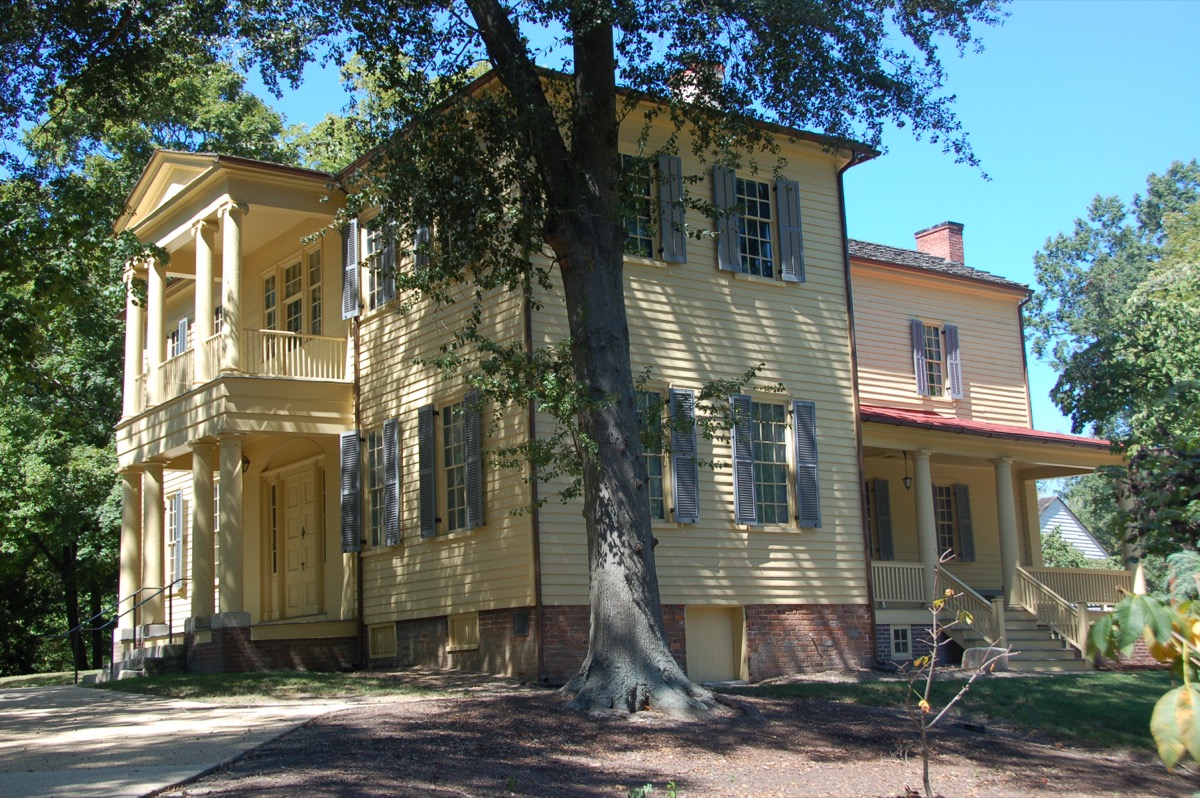
At the Mordecai House in Raleigh, North Carolina, the piano in the front drawing room plays when no one is sitting at it. It's a mid-1800s antique, kept downstairs in the drawing room, and visitors describe the same thing: a soft melody, a faint twinkle of the keys, an empty bench.
The woman they blame is Mary Willis Mordecai Turk. She was born in the house in 1858 and ran it as matriarch until a cerebral hemorrhage killed her in 1937, longer than anyone else lived there. People report her in a gray 19th-century dress — on the upstairs balcony, drifting down the interior staircase, hanging as a gray mist over that same piano. One story holds that her photograph tips over when something is said in the house she would have disapproved of, though no one names the day it happened.
The house stayed in the family for generations. The Lane and Mordecai descendants kept it until 1967, when the city of Raleigh bought it and built a historic park around it — 3.2 acres that now also hold Andrew Johnson's birthplace cabin and a small chapel, structures hauled in from elsewhere and crammed onto the grounds. The house itself never moved.
The house has earned the audience. The oldest part of it was built around 1785, seven years before Raleigh existed, which makes it the oldest residence in the city still on its original foundation. The City of Raleigh's own Historic Sites director, Josh Ingersoll, told ABC11 it's "often considered to be one of the most haunted houses in North Carolina" — an unusually candid thing for a municipal museum to say out loud.
Then there's the honest part. Nelson Nauss, a paranormal investigator who has studied the place, explains the piano better than any believer. "A train goes by regularly," he told WRAL, "and sometimes the vibration makes the keys vibrate and twinkle by themselves." A rail line runs close enough to set the antique keys ringing on their own. He doesn't dress it up. He thinks the famous music is a train.
What he doesn't explain away is Mary. "She was the matriarch," he said. "She was responsible for the home. Maybe she's just continuing that duty — even in death."
Here is the part nobody on the tour points out. Mary Willis married William Armstrong Turk at this house on January 12, 1881. Turk was a Southern Railway executive. The trains now blamed for her piano are the same industry her husband ran — twinkling the keys in the house where she still gets seen, on a railroad she married into a lifetime before anyone called the place haunted.