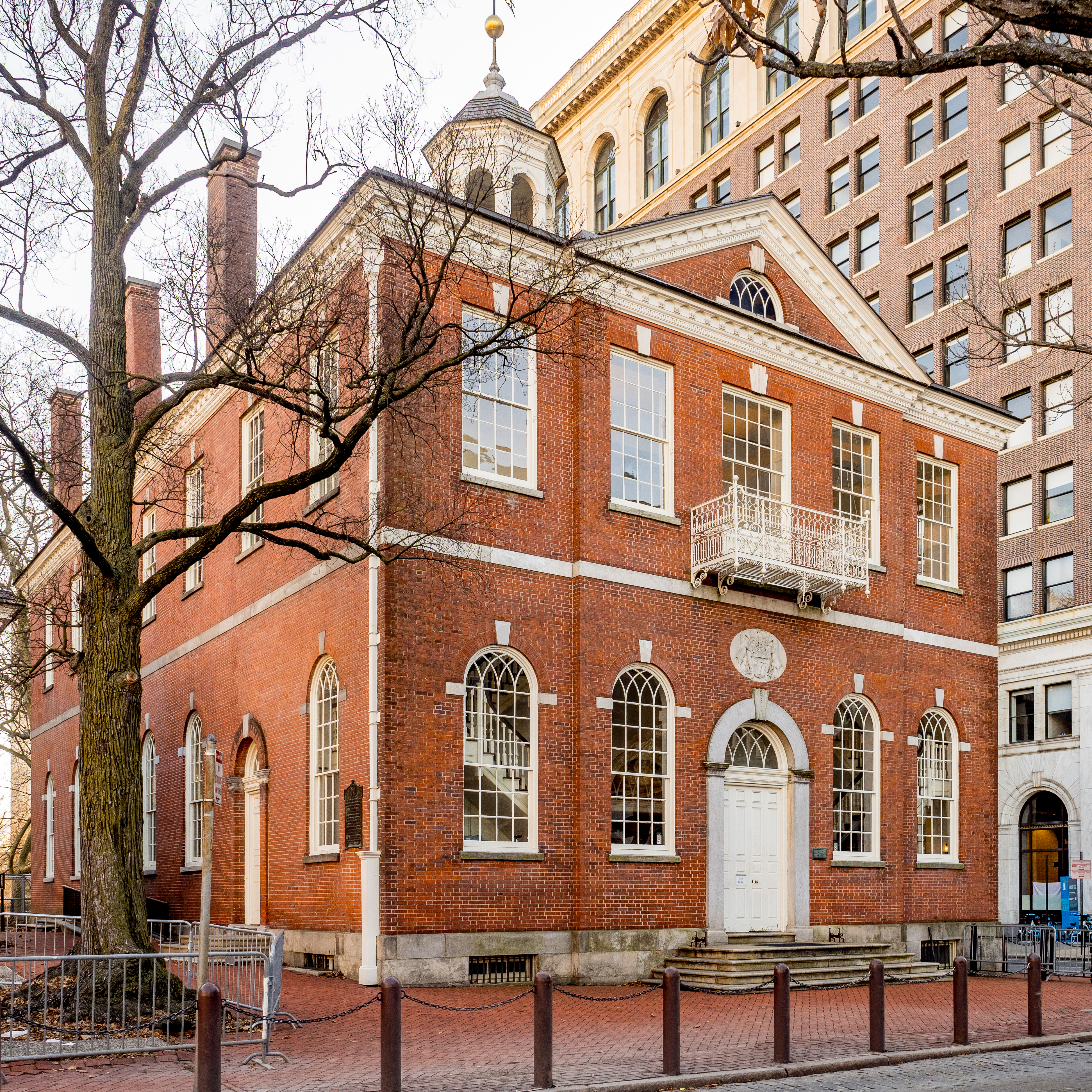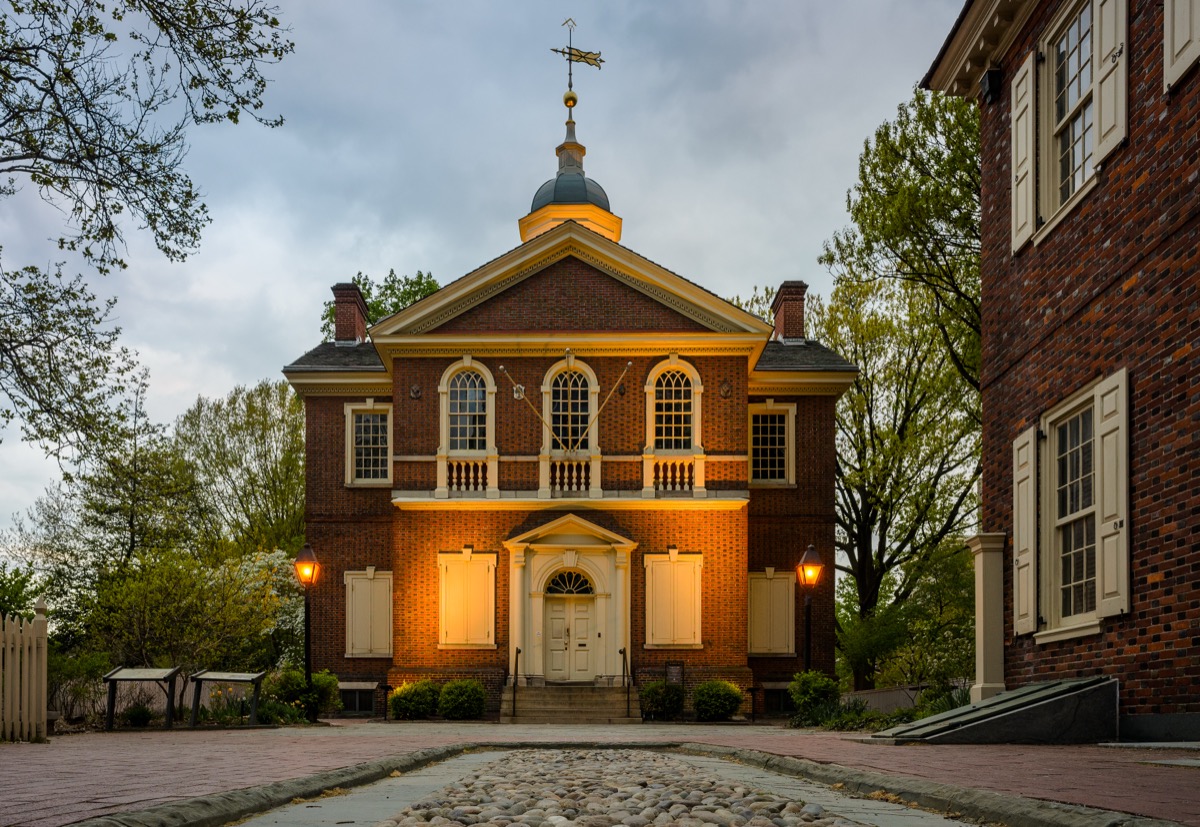
For decades, tenants in the attic apartments of Carpenter's Hall in Philadelphia reported heavy-booted footsteps and banging from one old room. The man who slept there helped rob the bank below, then died before anyone could try him.
Most haunted buildings hand you anonymous footsteps. The attic of Carpenter's Hall in Philadelphia hands you a name and a crime to go with them.
The top floor was once carved into small rooms rented to members of the carpenters' guild that owns the place, and after one tenant died, the others started hearing him. The story goes that heavy-booted feet would stomp down the hallway and loud banging would come from his old room. By the lore, the noises kept on for decades, long after the guild stopped renting the attic at all.
The tenant was Thomas Cunningham, and he had a reason to stay.
On the night of August 31, 1798, $162,821 vanished from the vault of the Bank of Pennsylvania, which was housed inside the Hall at the time. There was no forced entry. The vault had been opened with a forged key. It was the first major bank robbery in the United States, and it was an inside job: a guild member named Isaac Davis, and Cunningham, the bank porter who slept in the building and knew the place cold.
He never answered for it. Within days of the heist, Cunningham was dead of the yellow fever then tearing through Philadelphia, gone before the law could reach him.
The wrong man went to jail instead. Patrick Lyon, the blacksmith who had forged the vault doors and locks weeks earlier, was held three months on $150,000 bail, caught the same fever in his cell, and was cleared by a grand jury in January 1799. He later won damages for it and spent some of the money on a portrait of himself at his forge, the prison's cupola painted into the window behind him.
This is the same hall where the First Continental Congress met in 1774, delegates from twelve colonies signing the Continental Association under the same roof. It had darker uses too. During the Revolution its floors held wounded American soldiers, and under the British occupation that began in 1777 it served as a hospital for both armies' wounded. The suffering ran older than the ghost.
The guild's own history records the heist, the Congress, the occupation. It does not mention the footsteps. That account belongs to the people who lived in the attic, listening to a thief who died before justice found him and, by their telling, never quite left the room he died in.