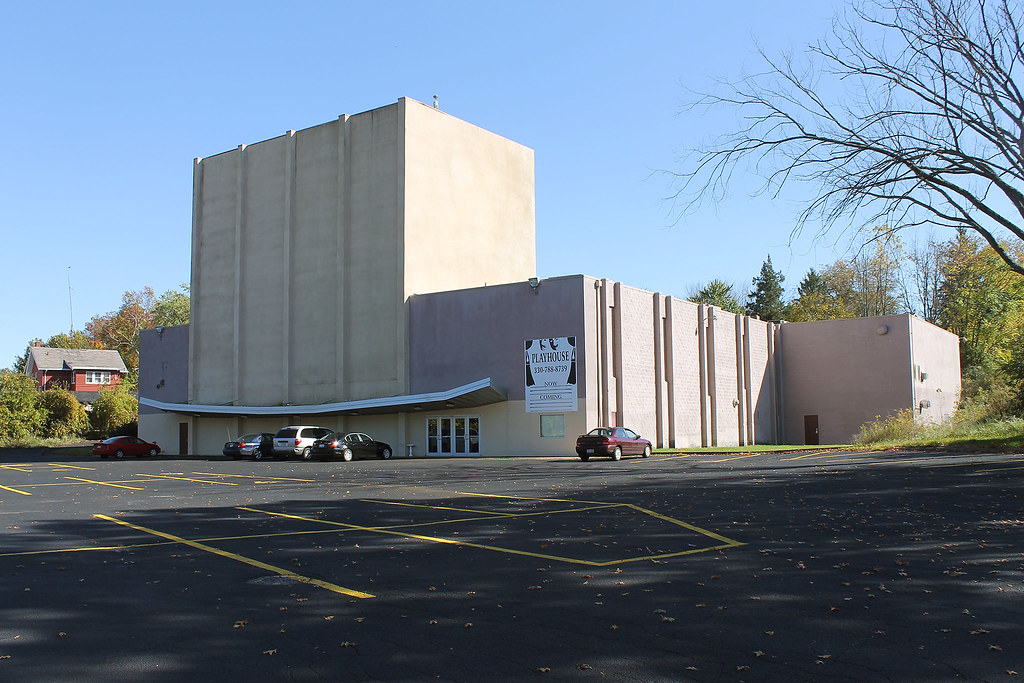
Actors at the Youngstown Playhouse keep looking up at the same balcony seat, where a shadow man sits and watches the stage. A second face haunts the light booth above him. One guard felt the watcher follow him home, pressing into the back of his car seat.
A dark figure sits in the balcony at the Youngstown Playhouse in Youngstown, Ohio, and watches the stage. He's man-shaped and motionless, there during rehearsals and during performances, and actors have looked up mid-scene to find him looking back from the upper rows. They call him the shadow man, for lack of anything else to call him. No one has ever attached a name to him, or a face, or a reason he's there.
There's a second watcher above the first. The light booth sits over the balcony, and a half-seen face has surfaced in it, appearing in the glass and then gone, in a booth that should be dark and empty with no one inside. Stagehands have caught it and turned away. After the face shows itself, the story goes, a shape in white slides out through the closed booth door, into a room with no opening for it to use.
The rest of what people describe is quieter and harder to pin: cold spots, whispering with no source, objects that shift on their own, music drifting through the house after the lights are out. An overall sense, the moment you step inside, of not being alone in the building.
The worst version belongs to a former security guard. He was used to the watched feeling on his rounds, the way old empty buildings do that, and he'd made his peace with it. What he wasn't ready for came after he'd locked up and driven off. On the road home, he felt a steady pressure against the back of his seat, low down, like a pair of knees pushing into it from behind. Whatever had watched him through the theater seemed to have climbed into the car with him, and it rode along until he was well clear of the place.
None of it traces to a death. The Playhouse opened in 1924, when four women from a Youngstown temple began reading plays aloud for their own enjoyment, and it grew into one of the oldest community theaters in the country, its hundredth season capped by a gala in June 2025. It has lived in three buildings: a converted barn that burned twice, a former movie house, and the two-theater building off Glenwood Avenue it has filled since 1959. Two fires, and no one killed in either. No murder, no accident, no name in any record to hang the haunting on.
What's left is the vantage. The shadow in the balcony and the face in the booth above it both watch the stage from the seats that look down on it. Whatever sits up there took the best view in the house, and it has never once given the seat back.