The children kept asking for an extra cookie for the sad little girl upstairs at Cleveland's Franklin Castle. There was never anyone there. The crying girl became Ohio's most famous ghost story, built on murders that an investigator later proved never happened.
At Franklin Castle in Cleveland, the children kept asking their mother for an extra cookie. It wasn't for them. There was a sad little girl upstairs who wanted one, they said, and every time their mother climbed up to look, the floor was empty.
The children belonged to James Romano, who bought the four-story sandstone mansion on Franklin Boulevard in 1968, meaning to open a restaurant. His kids were the first to describe her: a girl in white, crying, on an upper floor of a house where no child lived. They weren't the only ones who noticed something. The family reported organ music with no organ playing it, and footsteps crossing empty rooms, and before they moved out in 1974 a priest came to perform an exorcism. By then they had a name for the girl. They thought she was Emma Tiedemann.
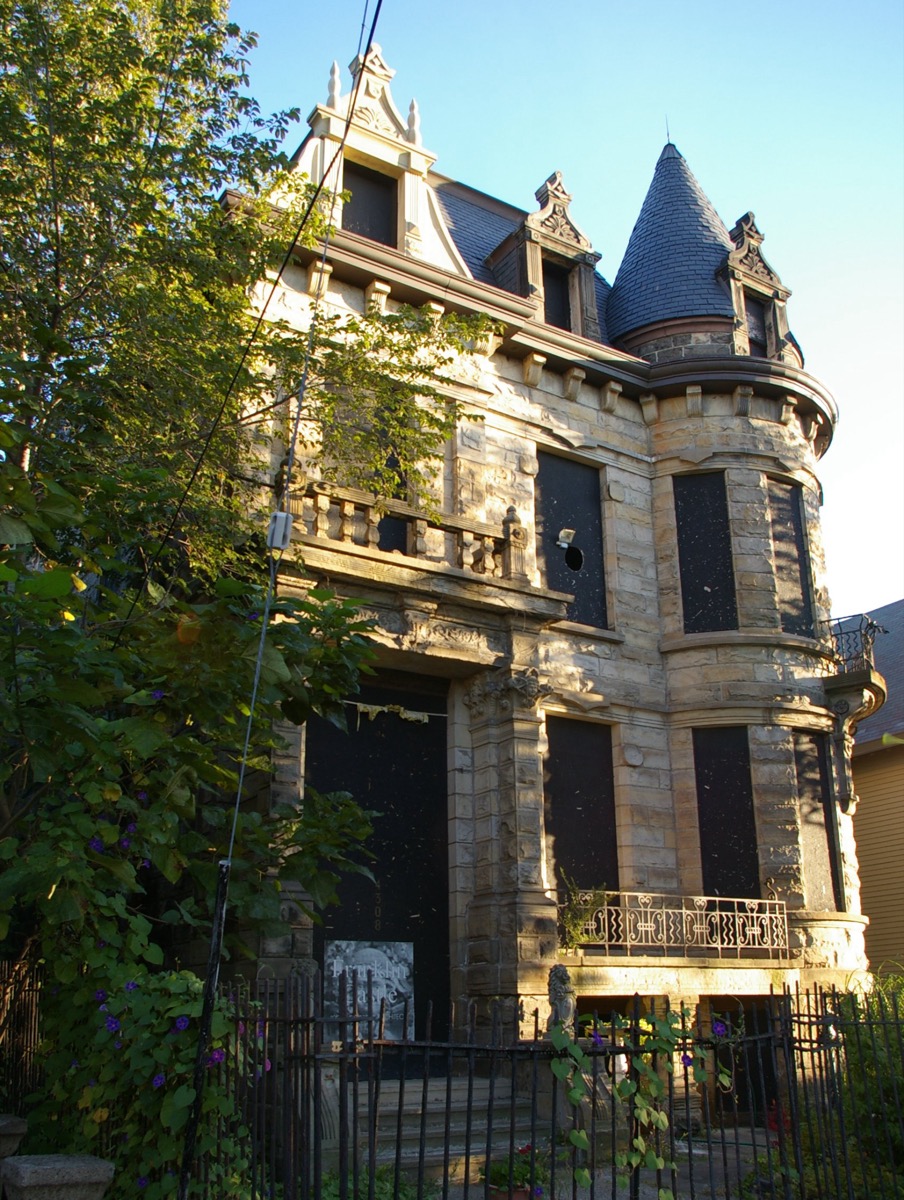
Emma was the daughter of the man who built the place. Hannes Tiedemann, a German grocer who became a banker, raised the house between 1881 and 1883 — more than 20 rooms, 80-some windows, gargoyles, a turret on the corner. Emma never saw it finished. She died of diabetes in 1881, at 15.
By the time the Romanos arrived, the mansion had collected darker stories. The one tour guides tell best is about a maid named Rachel, said to have been strangled in the tower room after she turned Tiedemann down. Visitors who climb to that room say the air tightens around the throat. Tiedemann was supposed to have hanged a niece, too.
In 1975, the year after the Romanos gave up, someone found human bones in the house. The bones were real. Most people who looked into it decided a later owner, by then running ghost tours, had planted them; one theory has them carried over from a cemetery a few streets away. Nobody ever proved where they came from.
None of the murders hold up. An investigative historian named William Krejci went looking for Rachel, for the niece, for any of it, and found nothing in the record. "They were very kind people," he said of the Tiedemanns. "Mr. Tiedemann was a benefactor of the community."
What he found instead was worse for being true. The family buried Emma, then Hannes's mother, then three more of his children, all within a few years of moving in. The murders that made Franklin Castle famous never happened. The dying did.