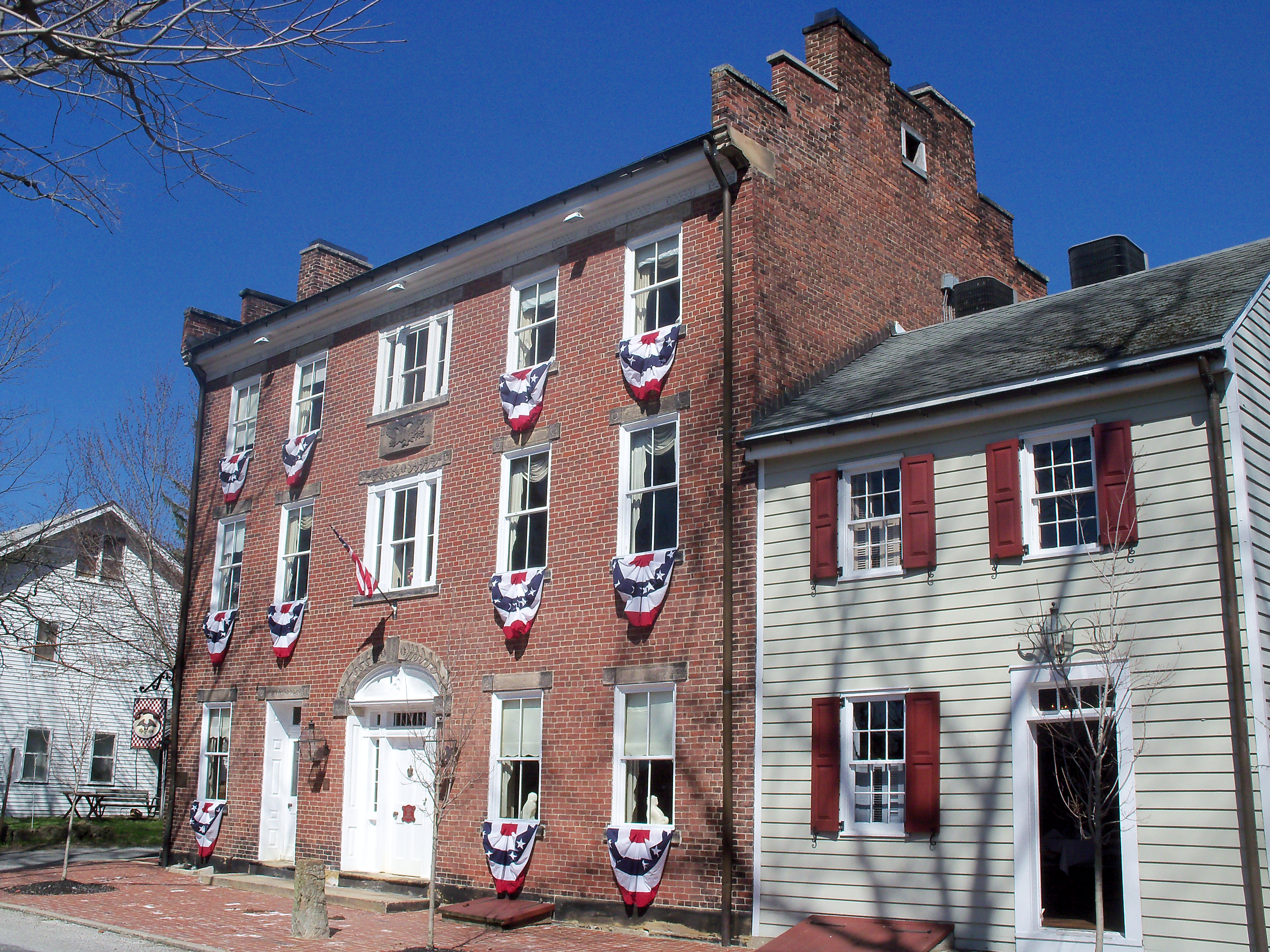
The Spread Eagle Tavern in Hanoverton, Ohio rents out its third-floor Jefferson Room for $200 a night, "Complete with resident ghost." She's Olevia, the lady in the window, said to have hanged herself there, and no record proves she ever lived.
The Spread Eagle Tavern in Hanoverton, Ohio rents out the bedroom where a young woman is said to have hanged herself, and the inn prints it right on the price list. The third-floor Jefferson Room goes for $200 a night, "Complete with resident ghost."
She has a name, though it shifts with the teller — Olevia Nicholas on some accounts, Olivina on the tavern's own pages. She was a former owner's daughter, the story goes, who left Hanoverton in the late 1800s to chase an acting career in New York and came home heartbroken after her fiancé walked out on her. She moved back into her old third-floor bedroom. Then, the way it's told, she knotted a bedsheet and hanged herself from the window.
That window looks down onto Plymouth Street, and the people who report her describe the same figure year after year: "a sad looking lady looking out the window onto Plymouth Street." The staff call her the lady in the window.
Guests who book her room say they wake to find the covers pulled off the bed. Men aren't welcome, the legend goes — their shower water is said to run ice-cold while they're standing under it, and she's said to drift the third-floor hall after dark. Other guests have logged footsteps in the corridor late at night, and doorknobs wiggling, as if someone were trying to get into the rooms.
She isn't the only one said to stay. The tavern was built in 1837, a Federal-style inn with a reinforced Underground Railroad tunnel still in its basement, and more than one of its dead seem to have lingered. Guests describe a little blonde girl bouncing on the staircase, said to have died in a fire in one of the connected row houses, and the ghost of an escaped slave near the cellar, where a piano is sometimes heard playing in an empty room.
But none of it sits on the record, least of all Olevia. No death notice, no census line, no grave has turned up to prove she ever lived in Hanoverton, let alone died in that room. Her story survives in tavern lore, a handful of ghost blogs, an old newspaper column, and a sister's diary that no one outside the family has read.
The inn rents the room anyway. Olevia comes printed on the booking page beside the queen bed and the two fireplaces, the one amenity no document can confirm.