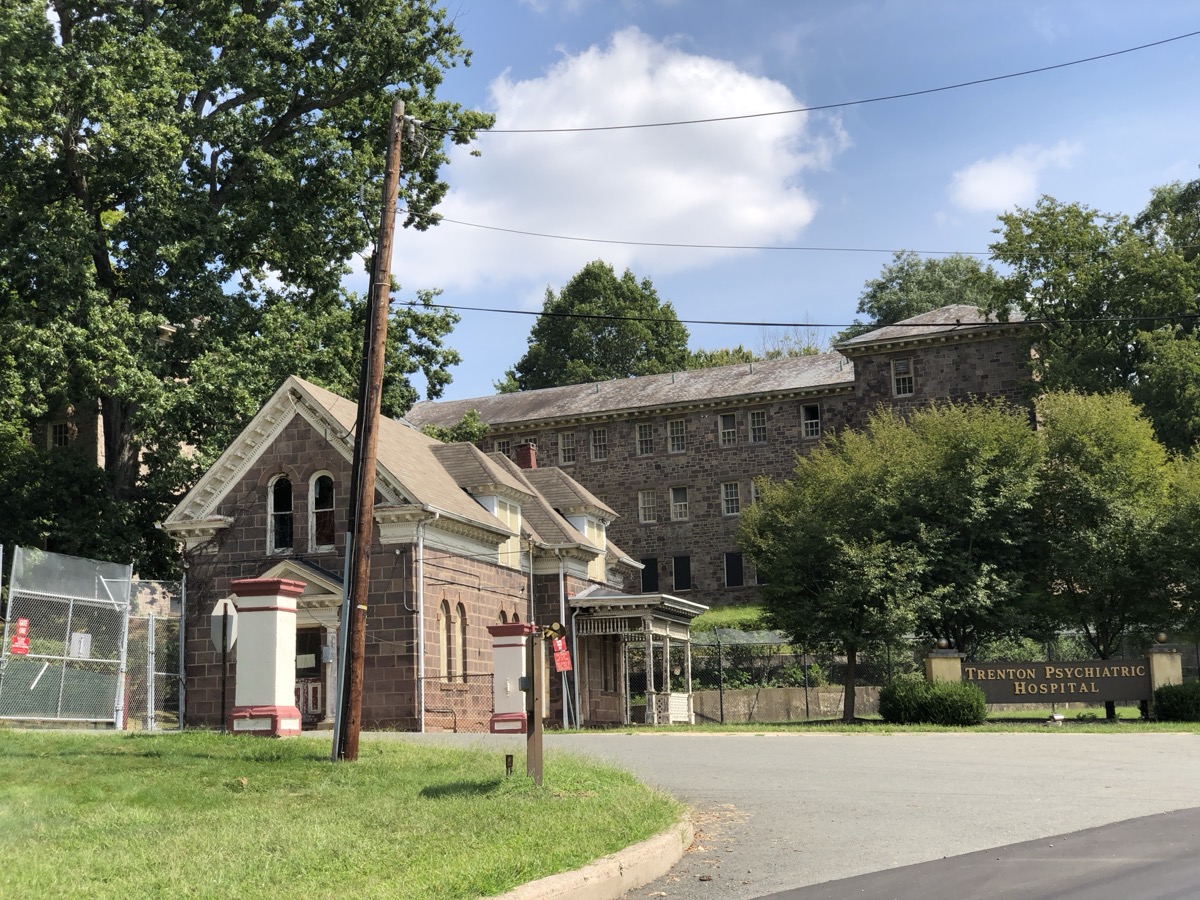
At Trenton Psychiatric Hospital in New Jersey, the apparition people report most is Dr. Henry Cotton, the superintendent who tried to cure madness by surgically removing teeth and organs. The patient spirits, they say, are missing limbs.
The ghost people report most at Trenton Psychiatric Hospital in New Jersey is the doctor. They describe Dr. Henry Cotton still making his rounds through the old wards, and near him, the patients, often described as missing limbs. The detail tracks, because of what he did to them while they were alive.
Cotton took over the hospital in 1907, at age 30. He was convinced mental illness was a bacterial infection rooted somewhere in the body, something you could cut out. He started in 1916 with teeth. When pulling teeth didn't cure anyone, he kept going inward, removing tonsils, sinuses, stomachs, spleens, gall bladders, ovaries, testicles, and cervixes. He paid particular attention to the right side of the hindgut, which he called the source of "depraved impulses." Popular accounts put his totals past 11,000 teeth and 645 major surgeries.
The colon operations were the worst of it. Roughly a third of the patients who underwent them died, most from peritonitis. Cotton published cure rates as high as 85 percent.
The hospital opened in 1848 as the New Jersey State Lunatic Asylum, founded through the advocacy of reformer Dorothea Dix and built on the Kirkbride Plan, with long wings radiating off a central block. It was meant to be humane. By 1954 the patient population peaked at 4,237.
A controlled trial in 1922 found no difference in outcome between Cotton's surgical patients and those who were left alone. His own mentor at Johns Hopkins, Adolf Meyer, quietly commissioned an investigation. The psychiatrist who ran it, Phyllis Greenacre, found his records chaotic and his cures impossible to verify. Meyer buried the report. Cotton kept operating until he retired in 1930.
The hospital still runs today as a 400-bed facility, though much of the original Kirkbride structure sits disused. The haunting lives in those abandoned wings. Investigators name the surgical lab, the Forst Building, and the Women's Ward as the active spots, tied to the disproportionate number of women Cotton operated on. They report cold spots, shadow figures, the feeling of being watched.
The recordings investigators bring back are mostly low-grade, evidence that proves nothing on its own. What proves something is the controlled trial, the report Meyer buried, the death rates Cotton wrote down himself in his own papers. The patients said to walk those wards are missing pieces of themselves, and that is the one part of the whole story that nobody ever had to imagine.