Engineers on the old B&O line braked for a woman in a white gown standing in front of the Silver Run Tunnel near Cairo, West Virginia, and never found a body. The one who refused to stop learned at the end of his run that she had ridden the cowcatcher the whole way.
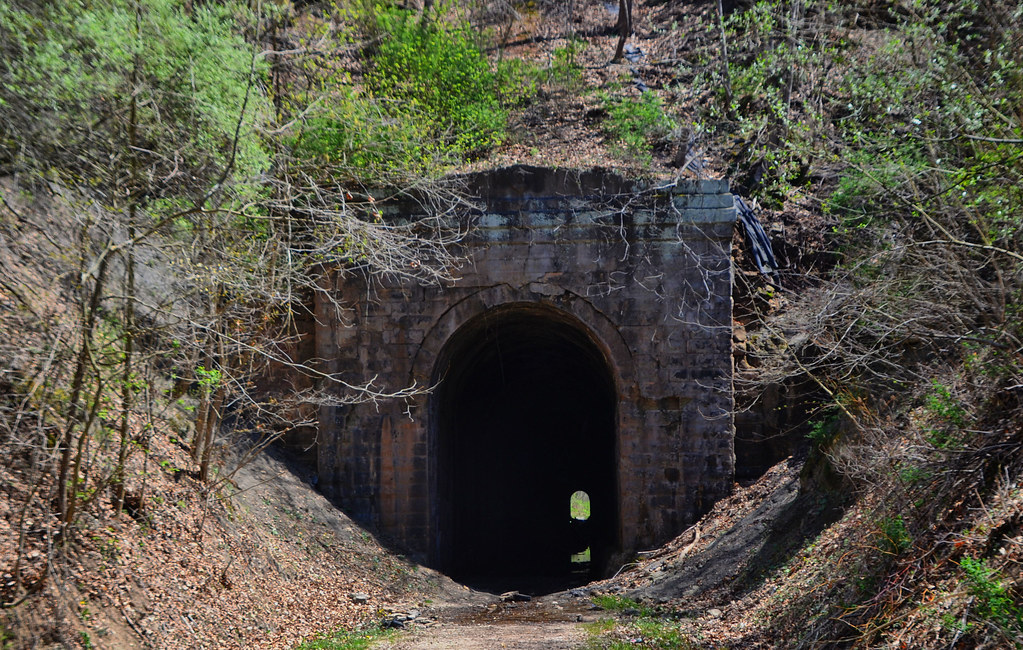
The Silver Run Tunnel runs 1,376 feet through a hillside west of Cairo, West Virginia, and for generations the engineers who came at it slowed down for a woman standing on the tracks. She wore a long white gown. Black hair, and in one telling, golden slippers. The men who got their trains stopped and climbed down to look for her never found a body.
The account people keep returning to is dated 1910. A young engineer running the midnight westbound express out of Grafton toward Parkersburg saw her in front of Tunnel No. 19, threw the brakes, and could not stop in time. He told the watchmen at Smithburg, 36 miles on, that a layer of fog lying across the rails had seemed to swallow her up. The sightings come in fog, in rain, on half-moon nights, and they end the same way every time: she rises and passes over the locomotive instead of under it, and the crew that searches the ballast finds nothing on it.
She was a bride, the story goes. She waited at Silver Run station in a long white dress for a fiancé who never came, and went onto the tracks. Fell, jumped, or was pushed, depending on who is telling it. None of the tellings give her a name, or his, or the town she came from.
Then there was the engineer remembered as O'Flannery, who had heard all of it and said he would not stop his train for any ghost. He drove straight through her.
In Appalachian History's version, the telegraph office at Parkersburg began taking messages from every station down the line: a woman in white was riding the cowcatcher of an incoming train. A crowd gathered at the platform to meet it, and what climbed down was a pale-faced engineer. The West Virginia storyteller Jason Burns tells it with the crowd chasing the locomotive, some of them on horseback, yelling and waving, because she had been sitting on the cowcatcher waving back at them for roughly two and a half miles.
Trains kept running the bore for decades after that. The last scheduled one, Train 89 out of Grafton, cleared Parkersburg in the early hours of August 31, 1985, and the rails came up three years later. The brick-lined tunnel belongs to the North Bend Rail Trail now, and the West Virginia Department of Tourism lists Silver Run Tunnel #19 as a free stop on its official Paranormal Trail. The hillside seeps, so the inside of it stays damp and foggy nearly year-round.
Visitors report moans out of the dark and orbs in their photographs. D. J. Allen, who runs the bike shop in Cairo, is the one who gets those accounts into print. She says dogs brought to the mouth of the tunnel balk and will not go in.