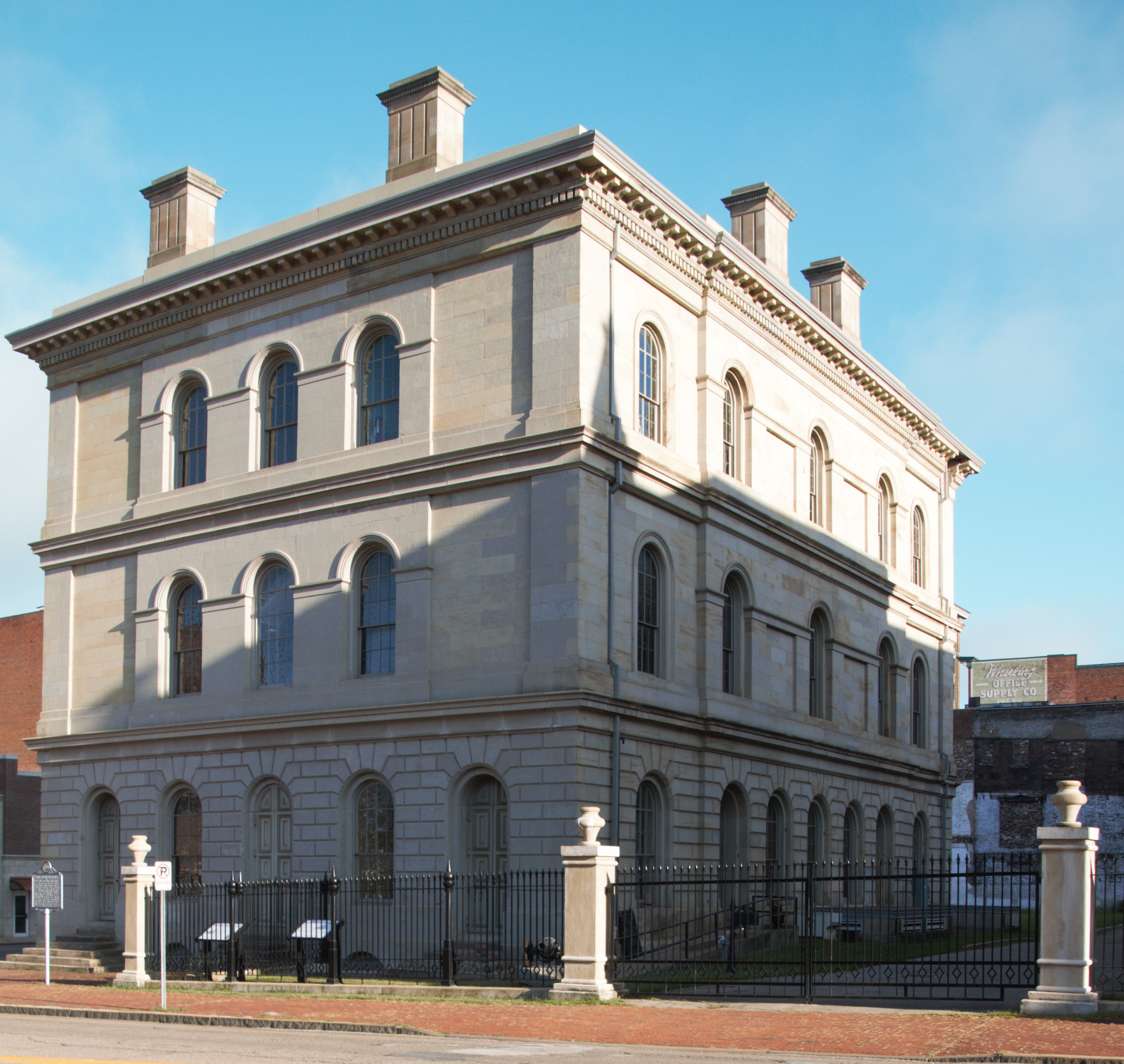
Staff at West Virginia Independence Hall in Wheeling have been shoved in empty hallways, heard footsteps with nobody there, and watched the elevator come down on its own. Upstairs, they say, a woman is still looking for the husband who was hanged across the street.
Bruce Cooey was walking down the second-floor hallway at West Virginia Independence Hall in Wheeling when something pushed him. "One time I was walking down the second-floor hallway and someone or something gave me a shove in the back, you know, like pushing me," he told The Intelligencer in 2016. He turned around. There was nobody behind him.
Cooey worked in the building for years, and the shove wasn't his only story. He watched a fire extinguisher come off the wall, bracket and all tearing loose, and roll across the floor. He passed along a visitor's account of a man's hand reaching out in the second-floor restoration room and going straight through him, after which the visitor walked out of the building. Cooey's own solution was simpler. "I kind of jog through the place."
He isn't the only one. Sue Beth Warren, who staffs the front desk and guides tours, has heard footsteps in the hallway while alone inside. "I've known for an absolute certainty that no one was here and I still heard the footsteps." She has also watched the elevator come down from the upper floors by itself, doors opening on nobody. Site director Debbie Jones hears noises from the office beside the Civil War courtroom often enough that she greets Judge John Jay Jackson Jr.'s courtroom every morning and again every evening, just in case.
Then there is the woman. Staff describe her in the upper-floor hallways, and the story they tell about her is oddly specific. She is looking for her husband, a man they say was condemned to death in the courtroom upstairs and hanged at the prison across the street.
The prison was real, and it really was across the street. The Atheneum stood at the corner of 16th and Market, a warehouse with a theater built over it, until the Union army turned it into a military prison from October 1863 to October 1865. The men held there called it "Lincoln's Bastille." It burned in 1868, in the largest fire the city had ever had.
What no record holds is the hanging. The landmark nomination, the state encyclopedia, the prison's own histories, the newspaper archives: none of them says anyone was ever executed at the Atheneum, and nothing names the condemned man or the woman looking for him.
The room she is said to be searching from is where West Virginia was invented. Delegates convened in the courtroom of this sandstone custom house on June 11, 1861, voted to reorganize the state government eight days later, and had a governor by the following day. The building served as the capitol of loyal Virginia until June 1863.
Gerry Reilly managed the site for a decade and now presides over its foundation. "I'm not sensitive enough to actually see apparitions, but I have experienced things like lights being turned off, things moving on their own and unexplained sounds." He is also the author of the state encyclopedia's entry on the building.