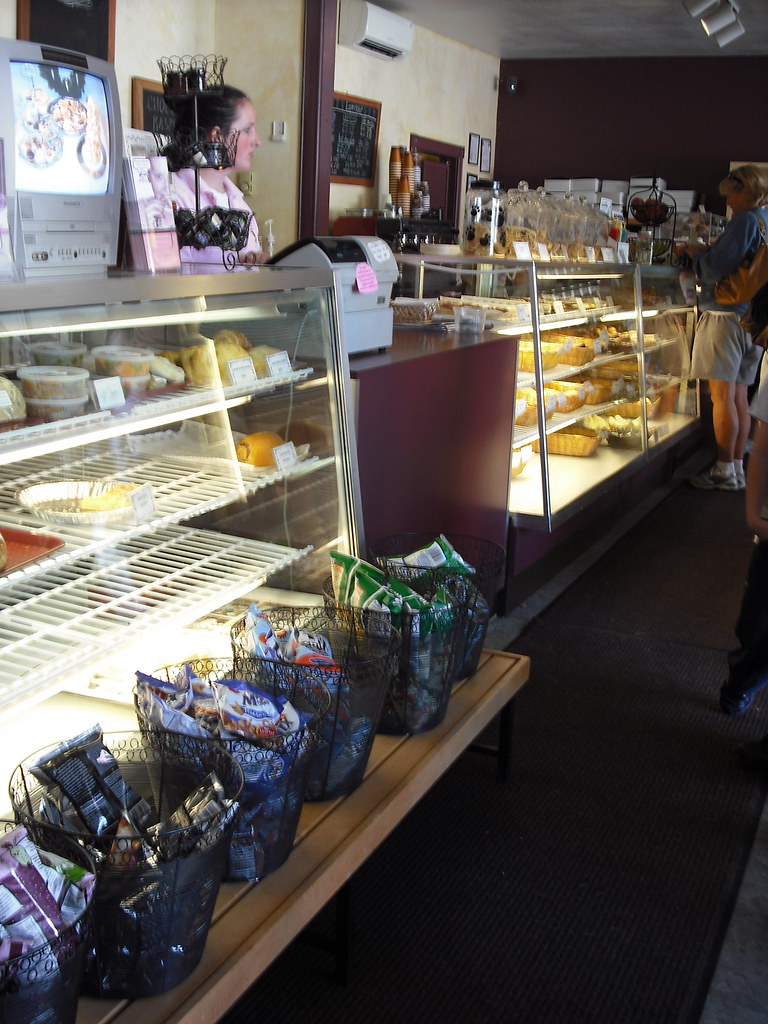
Staff at the Shepherdstown Sweet Shop Bakery in West Virginia keep meeting a white-haired man in grey they call the Colonel, brushing past them at night and once walking straight through a wall. After Antietam, the town became one vast Confederate hospital.
The staff at the Shepherdstown Sweet Shop Bakery, at 100 W. German Street in Shepherdstown, West Virginia, share the shop with a man they call the Colonel. He is elderly, white-haired, moustached, and dressed in grey military clothing, and the accounts go back decades. Owner Pam Berry told a television crew that a man once came in for a job interview and stopped in the middle of it to tell her husband, "You have a ghost." He had just seen a man in a grey suit walk through the wall.
Berry explained the name plainly: "We call him the Colonel because he was always well-dressed. He's in a gray uniform."
Most encounters come at night, and the Ghosts of Shepherdstown episode credits the night bakers with the largest share. Staff describe being brushed past by something they cannot see, and hushed conversation carrying through an empty shop. Nobody describes him as cruel. One employee, Megan Pine, told the same crew, "Something just grabbed me," and described objects falling past the second-storey windows.
The bakery opened in 1982, in a building the business itself describes as 200 years old. The C&O Canal Trust calls it "a 200-year-old building once used as a Civil War hospital."
What happened in the town around it is not in dispute. Antietam was fought on 17 September 1862, and the National Park Service counts 22,720 casualties there. The wounded came back across the Potomac into Shepherdstown, and the Historic Shepherdstown Commission writes that the town "became one giant hospital for the confederate wounded." Historian Kevin Pawlak's account of the hospital period has the six churches full within two days, along with private homes, warehouses and barns, and the water supply nearly gone. More than 100 of the men who died there are buried in Elmwood Cemetery.
In 2016 a television crew spent a night in the bakery, pulled a bone saw out of the basement, recorded a voice they read as "take the saw," and carried the saw out of the building. Through a séance, their psychic gave the Colonel a name: Major Alexander Tinsley, chief of surgery, who wanted forgiveness for amputations performed on men already beyond saving.
Tinsley was a real man. His Confederate service record has him as an assistant surgeon, never a major, and it has him captured at Shepherdstown that September and held prisoner at Fort McHenry. But his 1912 obituary in the Shepherdstown Register says Lee assigned him to the wounded here after the battle, "making him chief surgeon," at a moment when "this town was one great hospital." The same obituary says he met Dare Parran of Shepherdstown among the injured, that the friendship "ripened into love," and that they married. His body was brought back from Baltimore that November and buried beside hers in Elmwood, in the ground holding the Antietam dead.
Nothing in the record puts him inside 100 W. German Street. The show's own town historian placed his surgery up the street, in Moulder Hall.