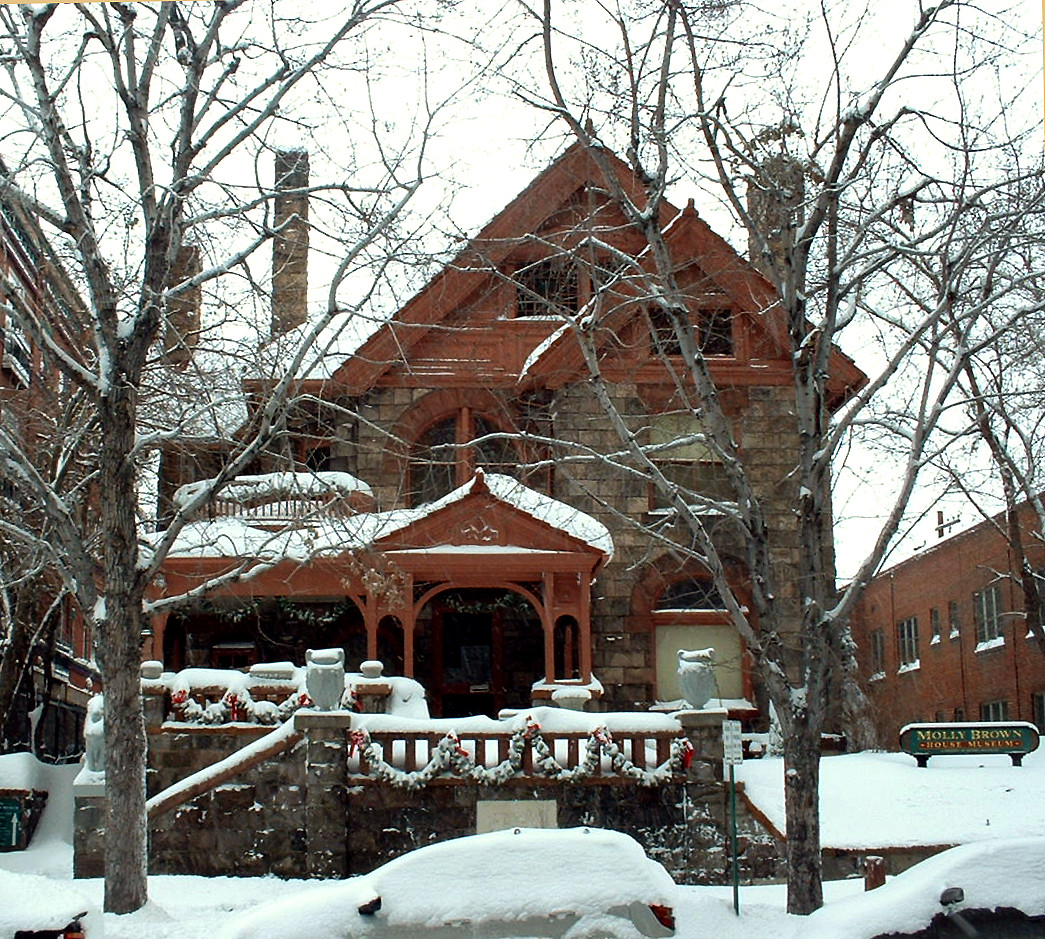
At the Molly Brown House Museum in Denver, visitors keep feeling something soft brush their ankles in the kitchen and hearing a cat meow. No cat lives there. The staff call it Ghost Cat, and they sell merchandise of it.
At the Molly Brown House Museum in Denver, the kitchen has a cat that nobody can see. Visitors feel something soft brush past their ankles. They hear a meow. They look down, and there's nothing there.
The staff call it Ghost Cat. The museum's director, Andrea Malcomb, says the kitchen is where people sense it most, and that she has felt it herself. "I felt something cold brush against me right about here," she told a TV crew, pointing at her own ankle. The museum has leaned all the way into it and sells Ghost Cat merchandise. Malcomb's advice is plain: "If you see Ghost Cat, don't expect it to stick around."
No one knows whose cat it would have been. Malcomb only guesses there was probably one in the house at some point. But there's one death she can point to.
Denver architect William Lang built the house in 1889, and J.J. and Margaret Brown bought it in 1894 for $30,000. Margaret is the one history remembers. She survived the Titanic in 1912, took charge of Lifeboat No. 6, ran for Congress three times, and earned the French Legion of Honor for driving ambulances in the war. She did not die here. She died in New York in 1932.
Her mother did die here. Johanna Tobin passed in the house on April 10, 1905, at 80 years old, with her daughter and granddaughter at the bedside. And when the staff talk about who might be lingering, they reach for her name. "If we have spirits in the house," Malcomb said, "we'd like to think it's Margaret's mother, Johanna, keeping an eye on us."
There's more they report. Pipe tobacco drifting through a building that has been nonsmoking for decades, blamed on J.J. and his pipe. Lightbulbs found loosened, so often that staff go around checking them. But the one they put on a coffee mug is the cat. An unseen animal in the kitchen, circling the ankles of strangers, that vanishes the second anyone looks for it.