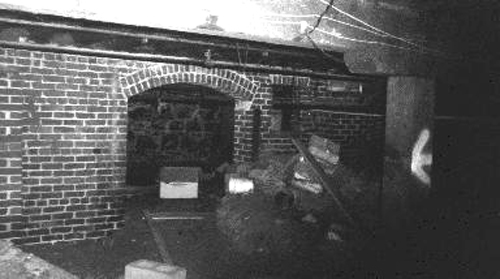
Portland's Shanghai Tunnels draw crowds for a story about sailors drugged and dragged underground, a tale historians say was invented in the 1970s. The ghost above them, a woman in black called Nina, came with no such proof, and no one has explained her away.
In the basement of Old Town Pizza in Portland, Oregon, the staff keep meeting a woman in a black dress. She watches diners from the corner of the room, drifts through the cellar below, and is gone the moment anyone turns. The tell, they say, is a faint waft of perfume and the weight of a presence at your back. They call her Nina.
The building was the Merchant Hotel, put up in 1880, and the restaurant fills its old lobby — you order pizza at what used to be the front desk. The way the story goes, Nina lived and worked on the fifth floor, in a brothel, until missionaries trying to clean up the neighborhood talked her into informing on the operation in exchange for her freedom. A few days later she was found dead at the bottom of the hotel elevator shaft. Some tellings say she jumped; most say she was silenced. A booth at the back of the restaurant now backs onto that old shaft, where a name scratched into the brick is said to be hers.
People still report her. A delivery driver described a body of smoke that rushed up the basement stairs. Staff have seen her fully formed, mournful, always in black, before she fades. Visitors mention breathing in the cellar and a tap on the shoulder with no one behind them. In June 2023 a bartender named Ashley heard a loud, aggressive growling down there, as if amplified through a bad microphone, and never went back down.
Below all of it run the Shanghai Tunnels, the passages everyone comes for. The famous version has sailors dropped through trapdoors, drugged, and held underground until they were sold to ship captains short on crew. Almost none of it is true. The tunnels are real, dug to haul freight from the Willamette docks into basements and, before that, to move opium for Chinese merchants. When men did vanish from Portland's waterfront, it happened up in the saloons, over drugged whiskey, not down in any tunnel. The kidnapping tale was assembled in the 1970s by a local figure named Michael Jones, who mapped the passages and built a tour around them. Historian Barney Blalock traced it to apocryphal newspaper pieces from 1962.
So the underground's most-told horror is the one historians have taken apart, claim by claim. And Nina, who left no death certificate, no grave, no line in any record that she lived at all, is the one nobody can explain away.