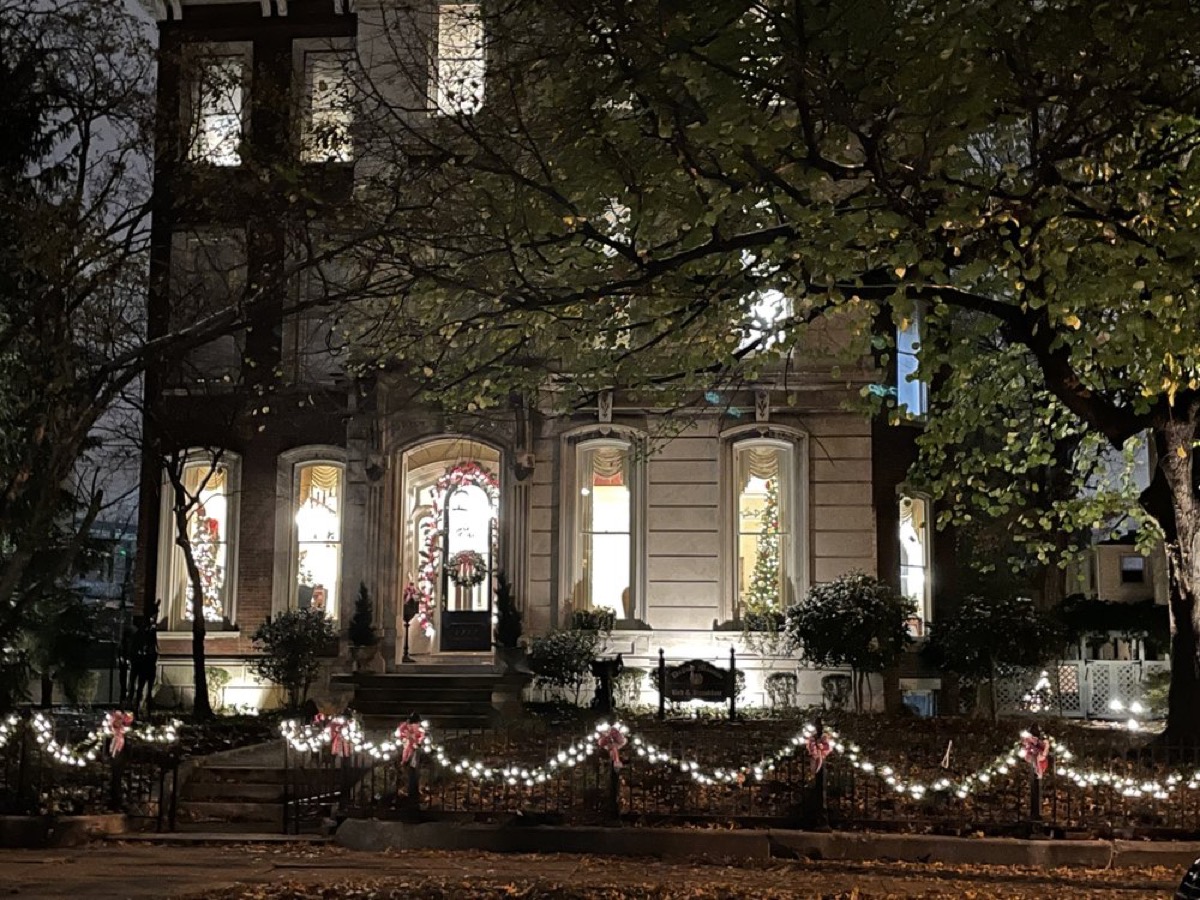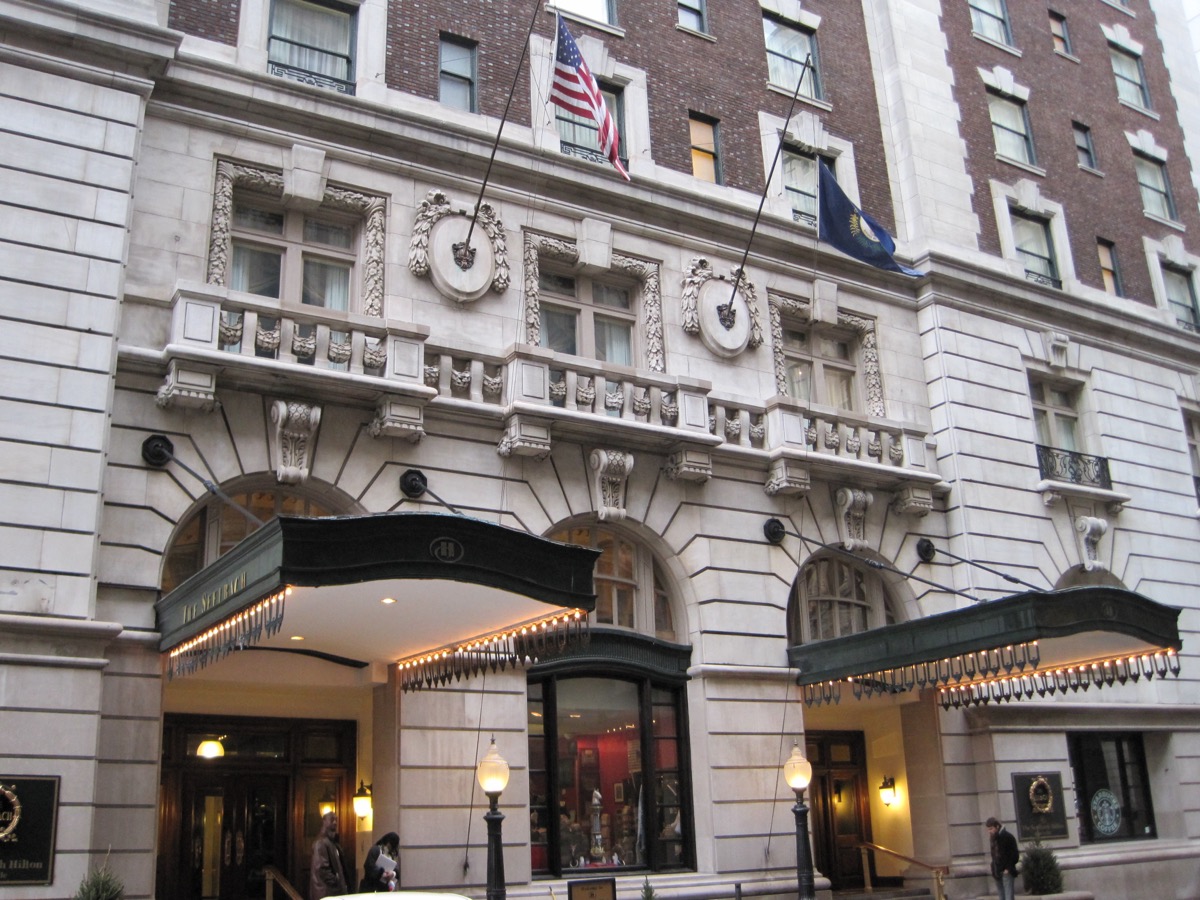
The Seelbach Hilton in Louisville keeps a ghost called the Lady in Blue. She checked in under a false name in 1936 and was found dead on a service elevator days later. In 1987 a cook watched her walk through the closed elevator doors.
At the Seelbach Hilton in Louisville, Kentucky, people keep seeing a woman in a long blue dress on the eighth floor. In 1987 a hotel cook named James Scott watched her walk straight through the closed doors of a service elevator. A housekeeper reported the same woman in blue on the same floor. Guests since have described cold spots, a cool touch on the hair late at night, and the scent of perfume she was said to favor. The sightings cluster in three places: the eighth floor, the mezzanine, and that elevator.
She checked into the Seelbach in the summer of 1936 under a name that wasn't hers: Patricia Wilson. Days later her body was found atop a service elevator car, her skull and legs fractured. A coroner's jury ruled the death accidental that August. For decades nobody knew who she really was, only the name on the register and the dress she had on.
The hotel's own historian, Larry Johnson, spent about forty years on the question. He started at the Seelbach as a bellman in 1982 and chased the case the rest of his career, and he came back with a name: Pearl Mae Elliott, born in Davenport, Oklahoma, orphaned by eight, raised by a family called Funnell. She moved to Louisville in the early 1930s and came to be somebody else. The only names the city kept were the one she invented and the color she was wearing when she died.
Johnson doesn't think it was an accident. A 1937 wrongful-death suit named a former Kentucky lieutenant governor, Henry Denhardt, but Denhardt was shot dead that September by the brothers of another woman he was accused of killing, and the case died with him. Whether Pearl jumped, fell, or was pushed has never been settled.
She isn't the only one people report. An employee once described an elderly woman in tattered clothes behind a mirror who vanished when he stepped toward her. A honeymoon couple on the eighth floor saw a man's silhouette by their window in a room gone strangely cold, gone the moment the lights came on. But it's the woman in blue the hotel keeps telling, the one with the name behind her.
What's settled is the marker her historian helped place at Evergreen Cemetery. It carries all three of her names, stacked: Pearl M. Elliott, then Patricia Wilson, then Lady in Blue. The lived name, the invented one, and the name she only got after she died. Johnson and his wife leave flowers there on holidays. "She was left to roam the hallways," he said, "trying to seek a way to get out."