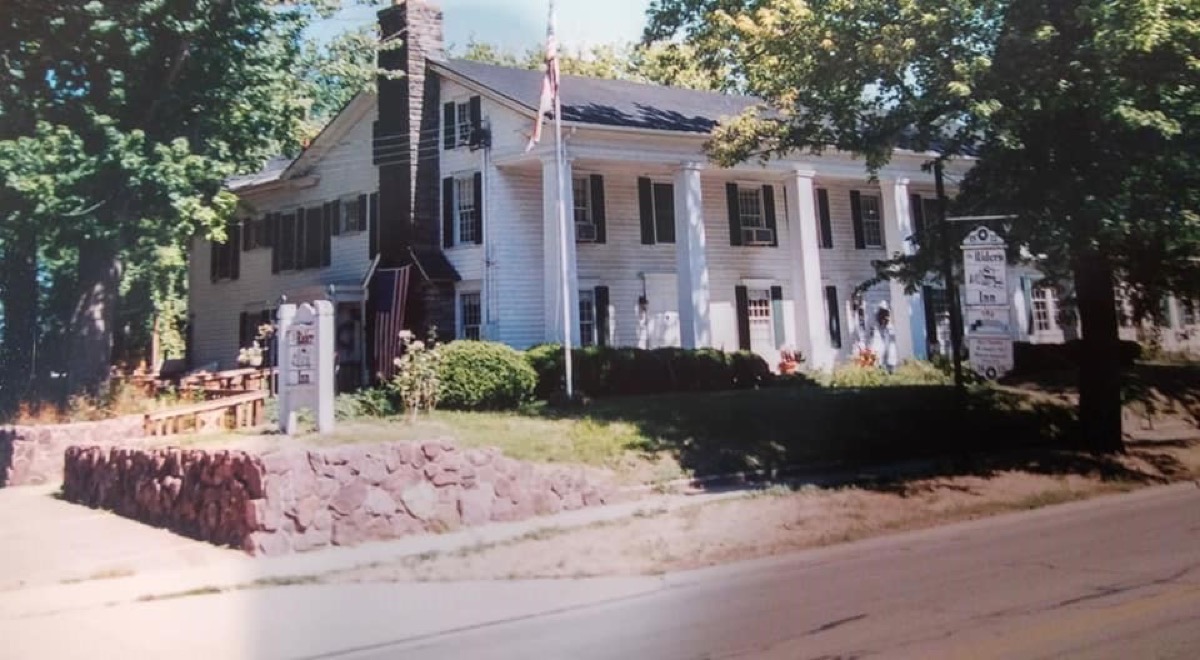
At Rider's Inn in Painesville, Ohio, late arrivals sometimes find the front door already open and a woman in a nightgown waiting inside. She's Suzanne Rider, dead weeks after her wedding, and twice the door she opened wasn't a welcome but a warning.
Late-night arrivals at Rider's Inn in Painesville, Ohio, sometimes find the front door already standing open, a woman in a long nightgown waiting just inside to wave them in. People have described her that way for years. Her name is Suzanne Rider, and she has been answering this door since long before anyone working here was born.
She was Joseph Rider's third wife. The inn opened in 1812 as a stagecoach stop on the old Buffalo-to-Cleveland route, and Joseph ran it; Suzanne married into it and was dead within weeks of the wedding. The way locals tell it, she fell down the tight circular staircase that drops to the kitchen, a stairwell so cramped that a small woman would wedge against the walls inside two steps. Room 11 upstairs is hers now, the most active room in the building.
Not everyone believes the fall. One man who came through on a guided visit stood at the top of those stairs and did the math. "Having stood at the top of the stairs Miss Suzanne is alleged to have fallen down to her death I can say the story is bull," he wrote. He thinks her husband broke her neck and staged it. No newspaper ever settled it.
She isn't the only one reported here. Drivers have seen a soldier in old wartime uniform standing at the windows, waving out at the road. A team of investigators from northeast Ohio who call themselves the Crue of Darkness once spent a night inside with dowsing rods and recorders, and came away describing temperatures that dropped for no reason they could find and a music box that began playing on its own. The inn has changed owners and names over the years; in 2026 it reopened as Pub 1812, the number a nod to the year Joseph first unlocked the doors.
Through all of it, the door keeps doing what it does. Most nights, the open door is only a kindness, a light left on for a cold traveler. Twice, it was something else. During renovations in the early 1980s, police passing the inn noticed the front door standing open in the dark, went in, and found a fire burning in the basement, caught early enough to save the 1812 building. Around 1995, a neighbor saw that same door wide open at one in the morning and called it in. No break-in. No wind. No one who could say who opened it.