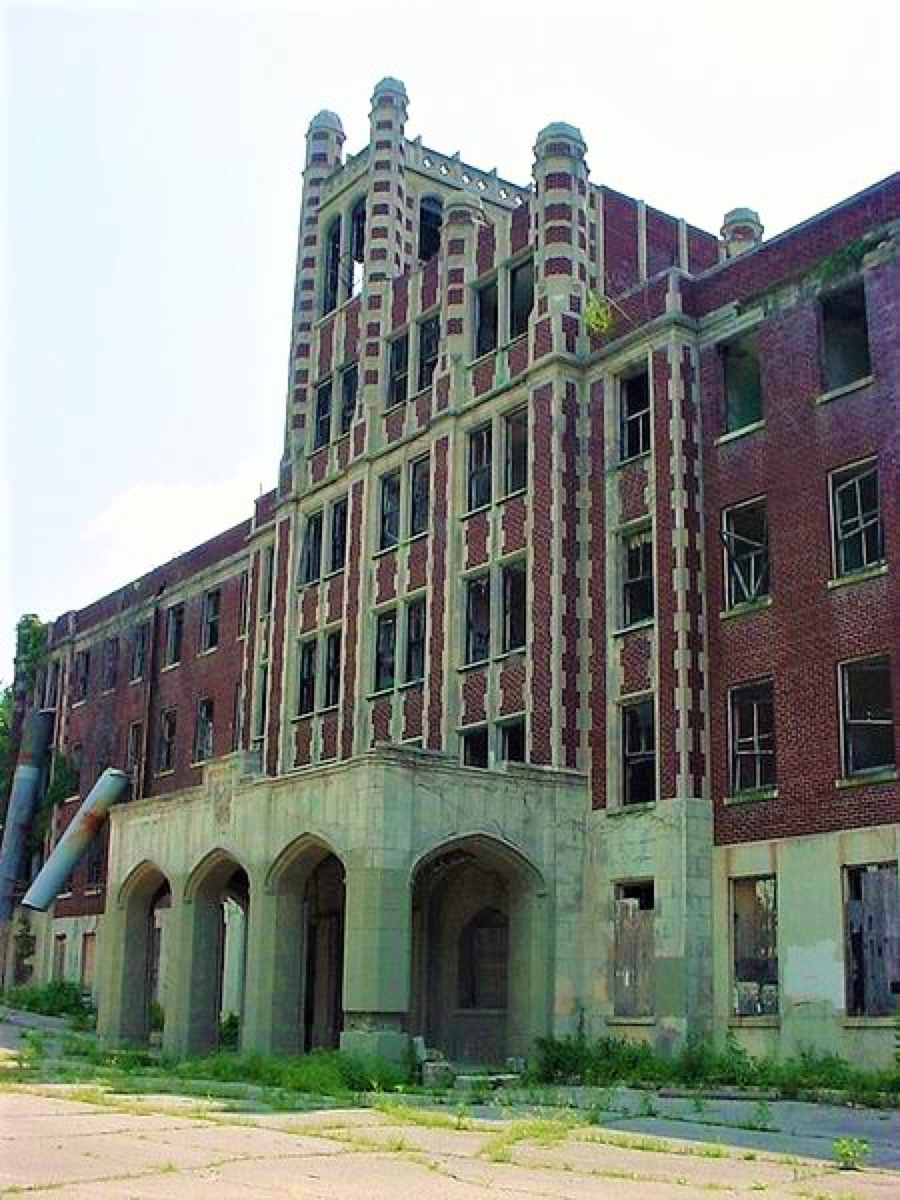
Below the Waverly Hills Sanatorium in Louisville, Kentucky runs a 500-foot tunnel built to carry out the dead so patients wouldn't watch them go. The legend says 63,000 died here. That number is wrong, and where it actually comes from is worse.
Built into the hillside under the Waverly Hills Sanatorium in Louisville, Kentucky is a tunnel about 500 feet long, running from the hospital down to the railroad tracks. The staff called it the body chute. It started as a service passage, a way to haul supplies and walk in out of the cold. When tuberculosis deaths peaked, they put it to a second use: a motorized cable system lowered the dead down the slope so the living patients upstairs wouldn't have to watch them go. Visitors say they still hear voices in it.
The disease was the whole reason the place existed. Louisville sat in a damp stretch of the Ohio River valley and had one of the highest TB death rates in the country around 1900. There was no cure. So in 1910 they built a hospital on the hill, and in 1926 replaced it with a five-story Tudor Gothic building for more than 400 patients, where treatment meant fresh air and sunlight, people left out on open-air porches year-round, through Kentucky winters.
The hospital was segregated. Black patients were kept in a smaller wooden building of 28 rooms and brought up the hill to the main facility only for surgery. Lillie Gilliam, admitted around 14 in the late 1940s, had two-thirds of one lung removed there. "At that time, there were two Waverlys," she said, "the Waverly for the African Americans, and then the Waverly for the white population."
The legend that grew up here says 63,000 people died at Waverly Hills. That figure gets repeated more than any other fact about the place, and it isn't true. A former assistant medical director put the real total nearer 6,000; other historians say closer to 8,000, across fifty years. The worst single year saw about 152 deaths.
Here's where the 63,000 actually comes from. In 1945, tuberculosis killed roughly 63,000 people across all of America. Somewhere along the line, the nation's deadliest TB year got pinned onto one Kentucky hilltop, and the legend kept it.
Streptomycin made the disease curable, and the sanatorium closed in 1961. It reopened as a nursing home that the state shut down in 1982 over neglect and abuse. Then came the abandoned years — a prison plan, a scheme for a 150-foot Jesus statue that collapsed after raising about $3,000 — until new owners bought it in 2001 and began restoring it.
The number people fear was borrowed from a worse year somewhere else. The truth was always quieter, and it was always right here: a tunnel in the hill, built so no one would have to look.