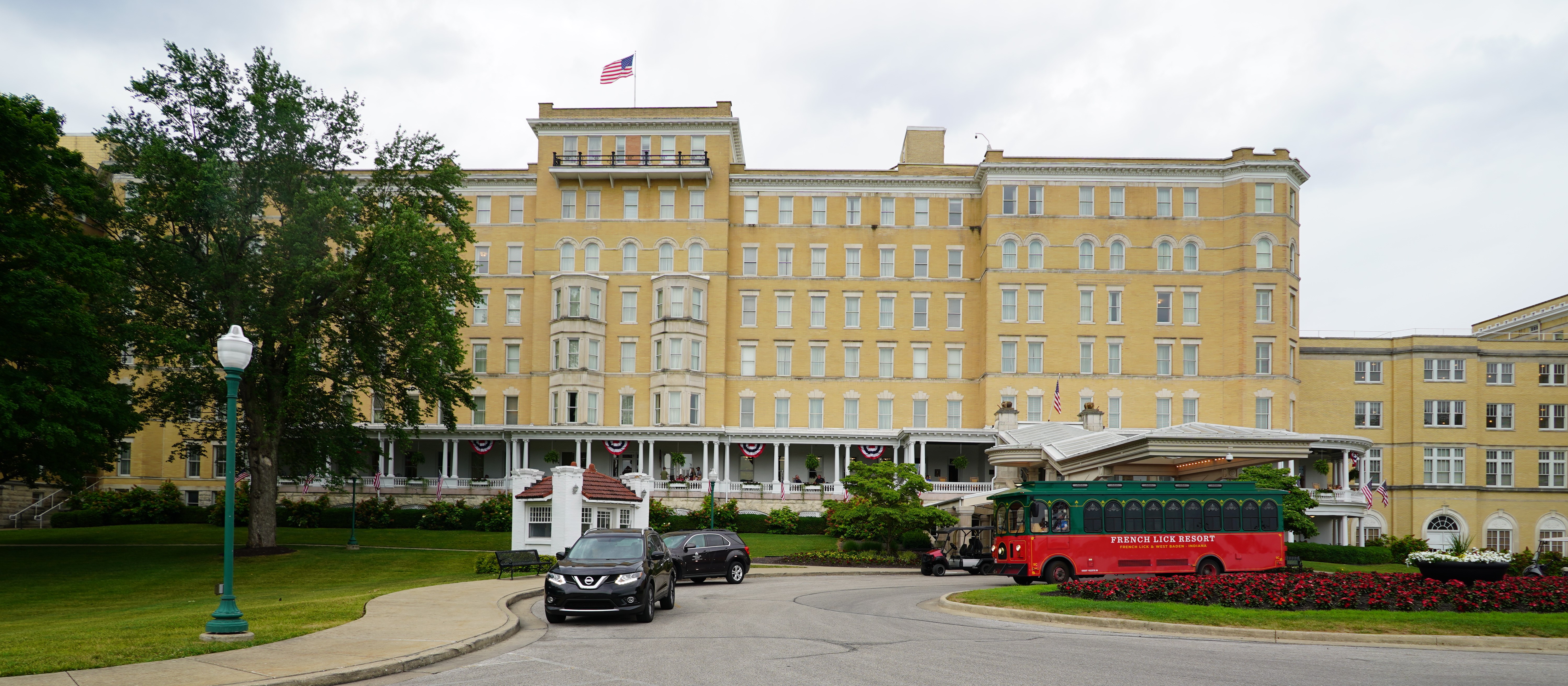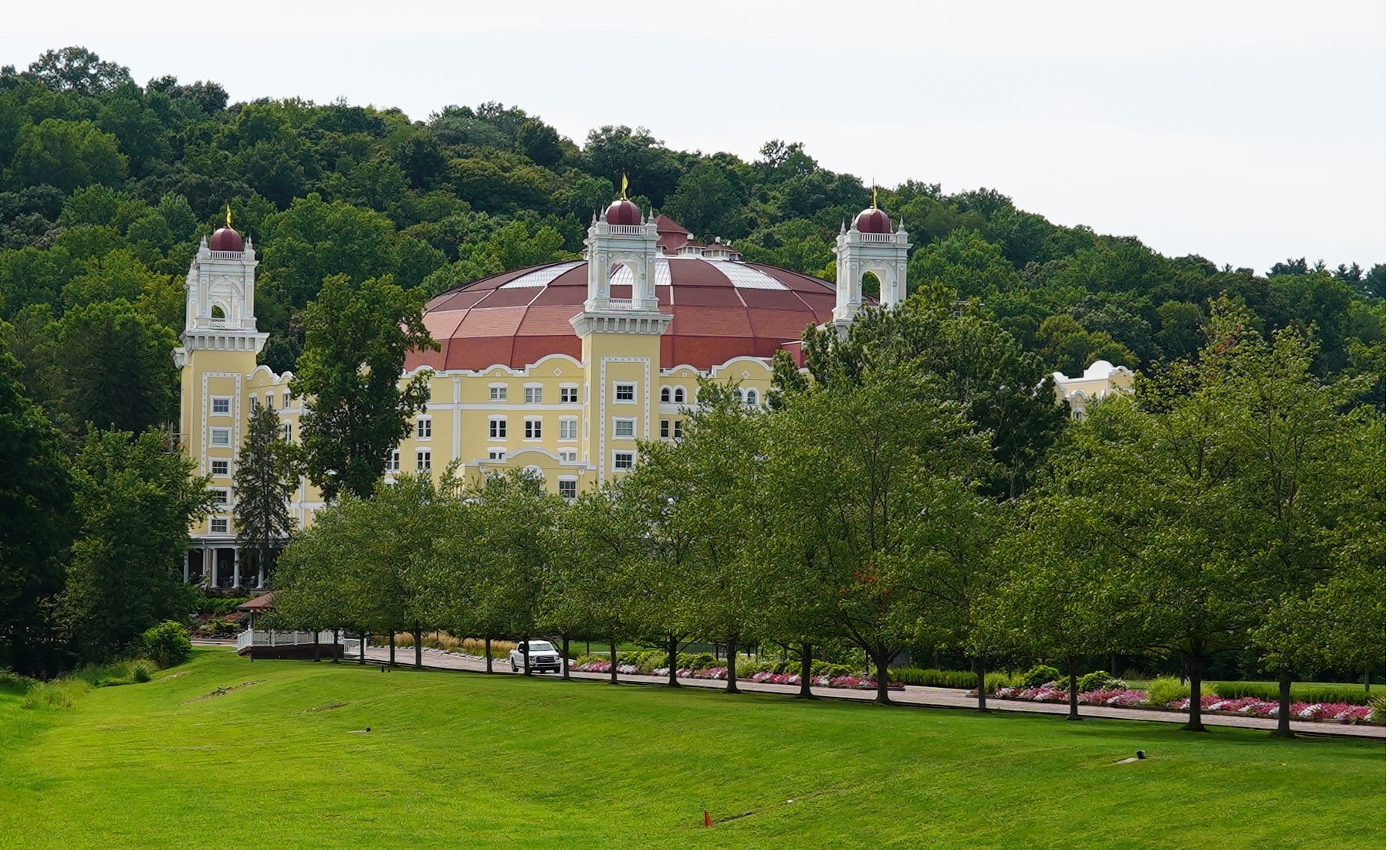
At the top of the West Baden Springs Hotel in Indiana, behind a trap door above the dome, is a small round room nobody knew existed until the 1990s. Its walls hold eleven painted angels. Whoever made them never signed the work or told a soul.
At the very top of the West Baden Springs Hotel in southern Indiana, above the famous dome, there is a small round room that nobody knew was there. Restoration workers found it in the 1990s, crawling up through a trap door, and what they found inside were angels. Eleven of them, painted in oil straight onto the steel walls and the wooden ceiling, peeling now but unmistakable.
Someone climbed up into that chamber, painted eleven angels by hand, climbed back down, and never said a word about it. The earliest graffiti scratched over the paint is dated 1918, so the work was done sometime between the hotel's opening in 1902 and that scratch. No signature. No date. No record anywhere of who did it.
The dome they sit under was the largest free-spanning dome in the world when the hotel opened in 1902, almost 200 feet across, and the place was billed as the Eighth Wonder of the World. The chamber is tucked directly below the center of it, reachable only through that one trap door. A guest could spend a week under the dome and never suspect there was a room full of angels overhead.
There are two stories about who painted them. The leading one credits the DeJaco brothers, a Cincinnati firm that painted church murals and later laid the tile floor of the atrium. The story goes that they slept up in the dome with their gold paint so no one would steal it during the months-long job. The older, more romantic version says a Jesuit seminarian painted the angels and carried the secret to his grave.
That second story has a place to point to. After the 1929 crash, the owner gave the hotel to the Jesuits, who ran it as a seminary from 1934 into the mid-1960s. Thirty-nine priests and seminarians who died in those years are buried on the hillside above the grounds, the steps to the cemetery cut into a slow Z. The last man buried there is the one some believe painted the room.
The hotel has a quieter ghost too, the kind the staff trade as a rumor. People describe a spirit on the stairway and in the dining room who kneels down and unties guests' shoes. Management won't comment on any of it. When the crime novelist Michael Koryta set a supernatural thriller here, he called the place "a surreal, eerie, and beautiful place in rural Indiana."
There's no investigation on record, no name attached, no dated sighting. Just a building with a sealed room at the top of it, eleven angels nobody claimed, and a man on the hillside who may have put them there and let them go unsigned.