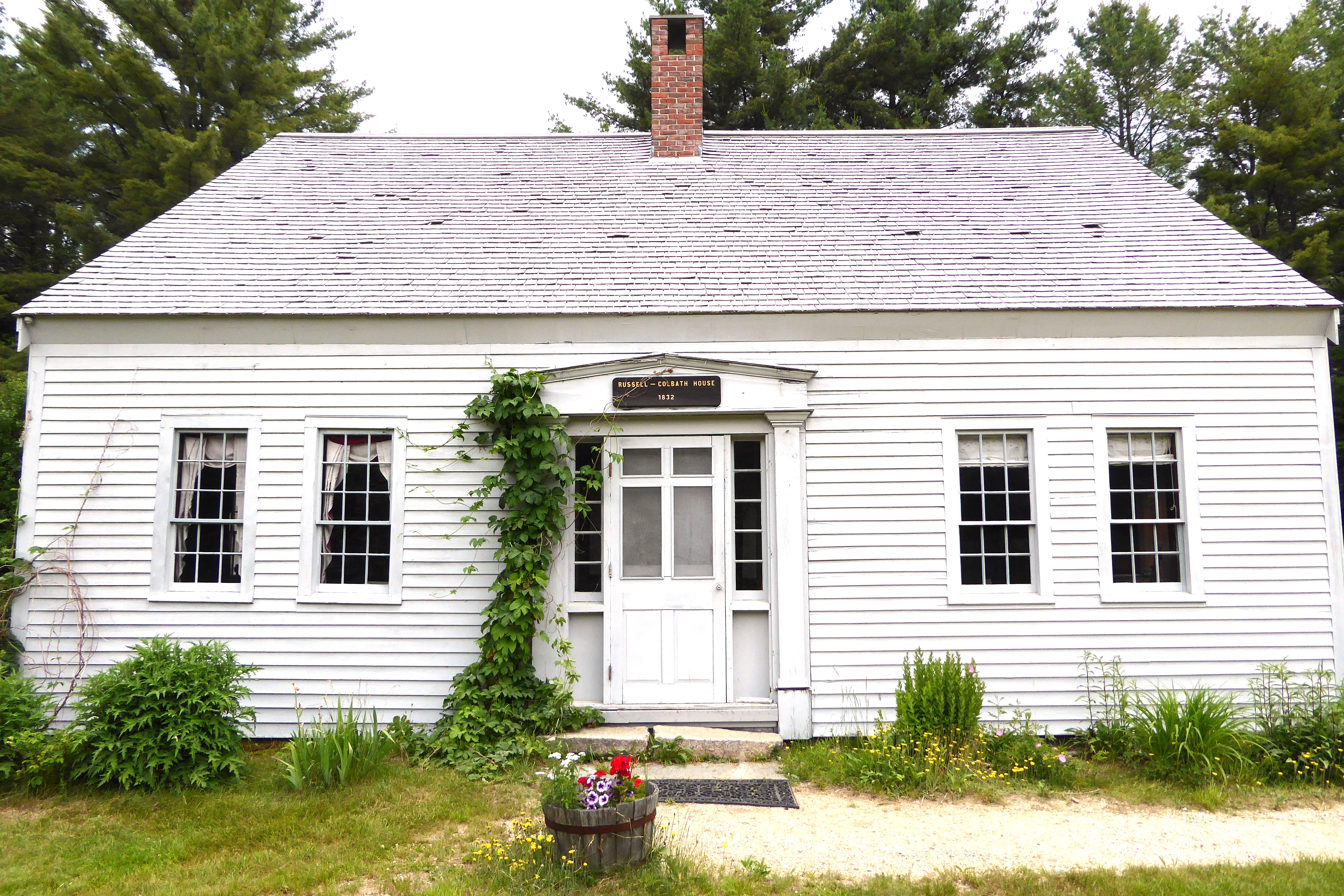
The Russell-Colbath House sits dark and locked most of the year along the Kancamagus Highway in Albany, New Hampshire. Drivers passing after nightfall still report a lamp glowing in the front window, where Ruth Colbath kept a light burning for 39 years.
The Russell-Colbath House stands alone along the Kancamagus Highway in Albany, New Hampshire, locked and empty for most of the year. Drivers passing after dark say a lamp glows in the front window anyway, with no one left inside to light it.
The light belongs to Ruth. Thomas Russell and his son Amzi built the house around 1831, early settlers in the Swift River valley, and it is the only original structure left from the lost town of Passaconaway, the last homestead standing in a valley the forest has otherwise swallowed. Ruth Priscilla Colbath was born in it, grew up in it, and lived there essentially her whole life. She ran the Passaconaway post office out of the front room and was the village's first postmistress, serving until 1907. The window that held the lamp looked out over the same room where she sorted the mail.
In the fall of 1891 her husband Thomas told her he was heading out to run some errands. "I'll be back in a little while," he said, and walked off down the road. He was 41. He did not come back that night, or the next.
Ruth lit an oil lamp and set it in the front window to guide him home. She lit it again the next night, and the next, for 39 years. Thomas never returned in her lifetime. She died in November 1930, at 80, having never seen him again.
He came back in 1933, three years too late, after an absence of 42 years. By then Ruth was in the ground in the small cemetery beside the house, and the property had passed to relatives. His own explanation, the one he gave, was that he had wandered off, gotten lost, and was too embarrassed to come home and admit it. He learned she was dead, and he left again, and no one saw him after that.
The Forest Service acquired the property in 1961 and runs the house as a small seasonal museum now, open roughly July to early October and dark the rest of the year. They keep a replica lamp in the window as a memorial to her vigil, a daytime display for visitors who pull off the highway. But the sightings come in the off-season, on the long stretch of months when the place is shut and locked and nobody is inside, when the front window should hold nothing at all.
Ruth waited 39 years for a light to bring him home. The light is still on.