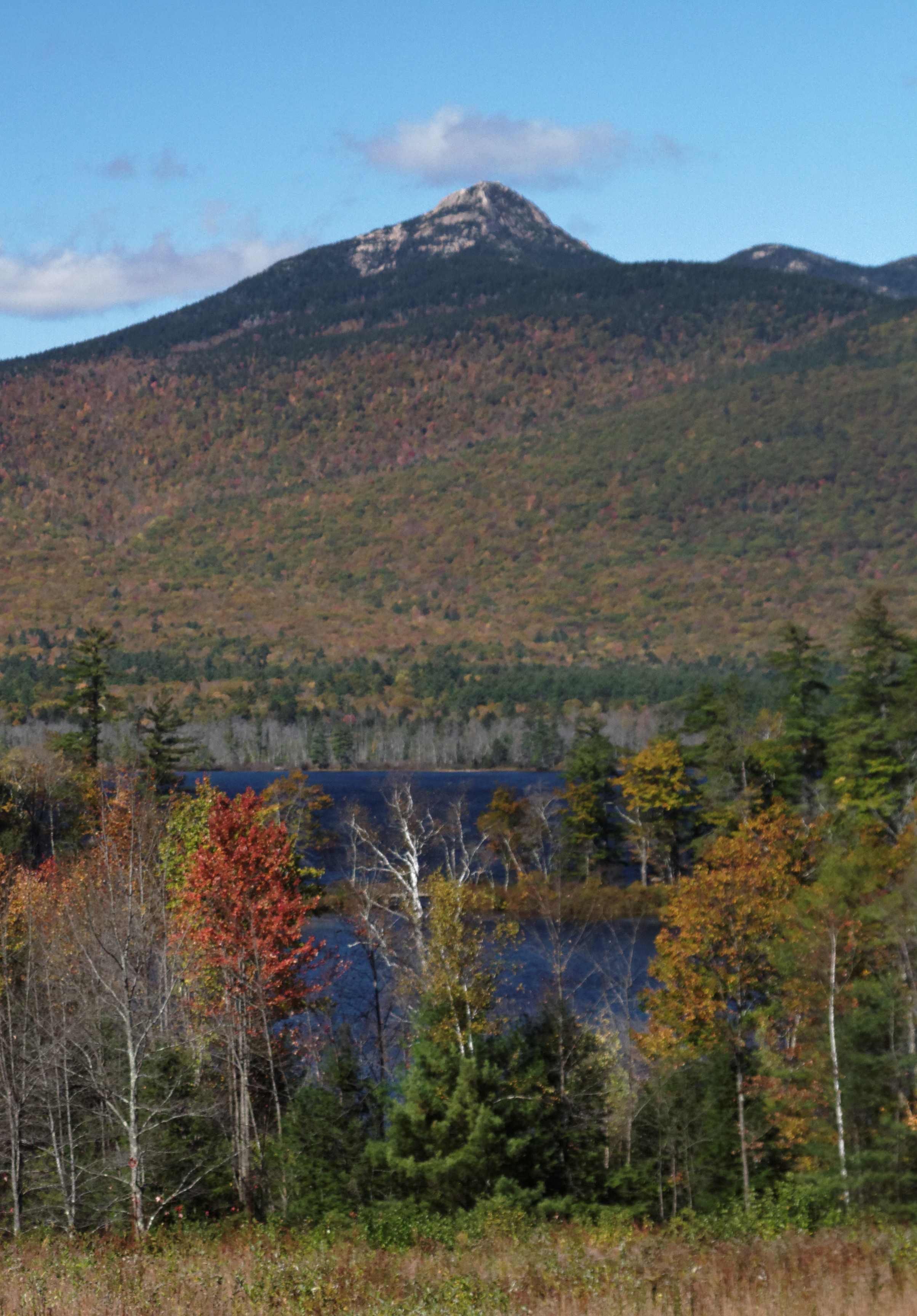
Mount Chocorua in Albany, New Hampshire carries a curse spoken by a dying chief who, historians now say, probably never existed. The strange part: after his legendary death, the cattle in the valley below really did start dying.
The curse tied to Mount Chocorua, the bald granite peak that rises above Albany, New Hampshire, names the cattle by name. As the story goes, a chief named Chocorua was tracked to the summit around 1720, and before he leapt to his death he called down ruin on the settlers below: their crops blasted, their homes burned, death breathed upon their cattle.
Then the cattle started dying.
In the valley town of Burton, now Albany, livestock began wasting away from a sickness no one could explain. The settlers had a name for it. They called it the Burton Ail, and they read it as the curse coming true, exactly where the dying chief had aimed it. Some accounts say families gave up and left Burton for Conway, Bartlett, and Fryeburg across the line in Maine. The deaths were later blamed on what was likely a mineral problem in the soil, a high concentration of murate of lime. But the curse had said cattle, and it was the cattle that died.
Here is the turn. Chocorua almost certainly never existed.
His name appears in no Abenaki oral tradition and no early colonial record. The historian Lawrence Shaw Mayo, writing in 1946, called the whole story "more likely a product of colonial fiction than Abenaki history." Anthropologist Mary Ellen Lepionka found no leader by that name "in surviving Abenaki oral traditions, as one would expect." She reads the word as older than any man, from Algonquian roots meaning "Home of the Water Serpent" — the mountain named for a place-spirit, not a chief.
Even the word "chief" is a borrowed one. The Abenaki were led by sagamores, not chiefs, and Lepionka notes that the dramatic summit leap rings false too: suicide was not the Algonquian way, and a cornered warrior would more likely have died fighting. The kernel of fact, if there is one, may be only an unnamed Abenaki man trapped down at Chocorua Lake and killed by bounty hunters. Everything dramatic grew on top of that later.
It grew, in fact, from a painting. The version every site quotes traces back to a Boston writer, Lydia Maria Child, who wrote "Chocorua's Curse" in 1829 for a holiday gift book, working from an engraving of the death after the painter Thomas Cole. Mayo said she "embroidered it to her heart's content." The peak became one of the most painted mountains in America, and the curse along with it. So the curse has a publishing date but no original. An invented chief, a literary curse, a borrowed painting.
And in the valley, cattle nobody invented lay down and died.