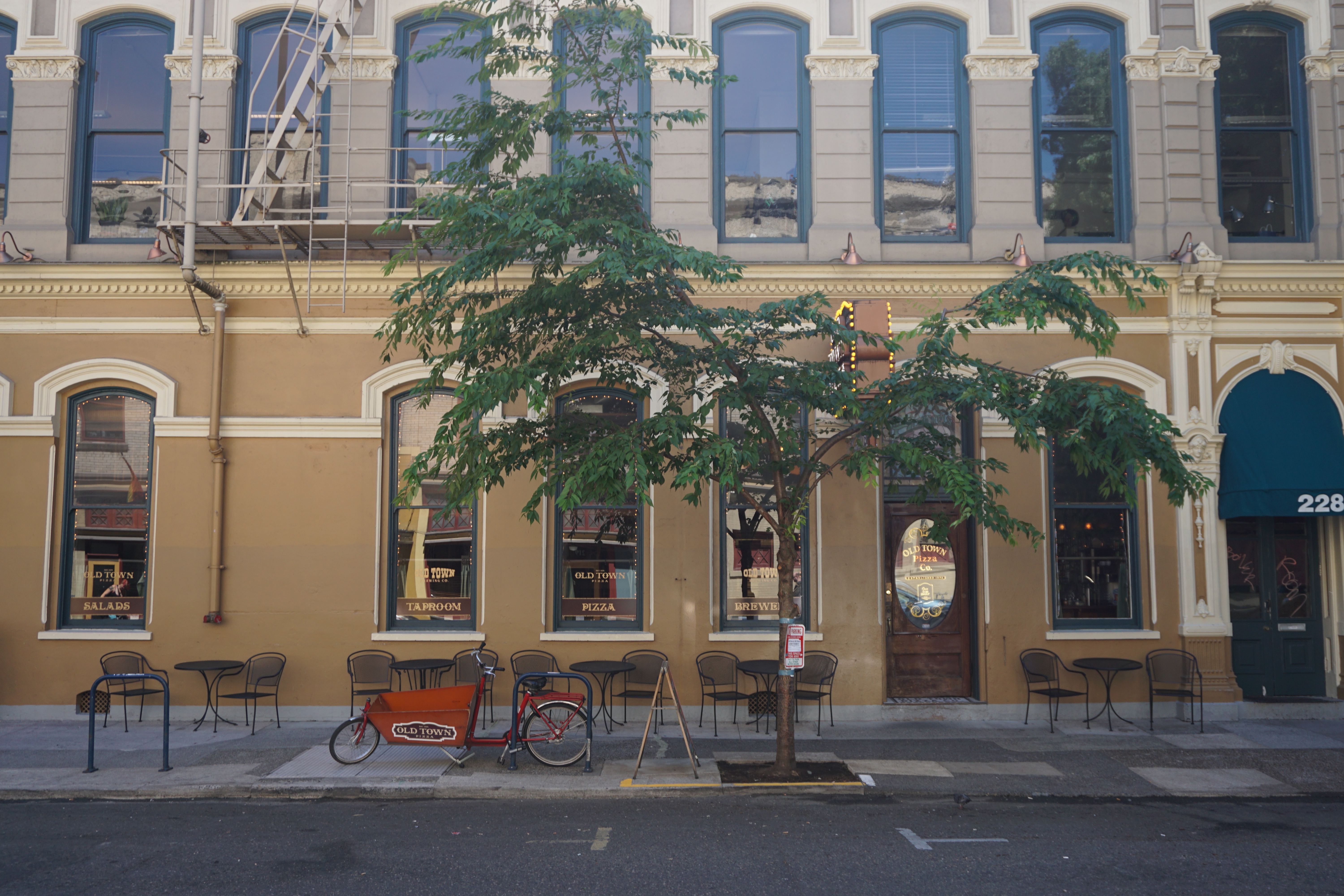
At Old Town Pizza in Portland, Oregon, a brick scratched with NINA marks the old elevator shaft where a hotel girl is said to have died in the 1800s. Staff still see her in black by the back booth, and treat the brick like a headstone.
At Old Town Pizza in Portland, Oregon, there's a brick at the back of the dining room with a name scratched into it: NINA. The staff point it out to first-timers over a beer, almost like a headstone, and then they tell you about the woman they keep seeing. She wears a long black dress, and she turns up on the stairs and by the rear booth, watching the room.
The building was the Merchant Hotel, finished in the 1880s, and it held a bar, a brothel, and a billiards hall in its day. The story goes that Nina worked the upper floors sometime in the late 1800s, that traveling missionaries talked her into informing on the operation in exchange for a way out, and that she turned up dead soon after, at the bottom of the hotel's elevator shaft.
The brick is mortared into the wall of that shaft. It ran one of Portland's first hydraulic elevators, and today it frames the rear booth, the same booth where she's seen most. The pizza counter sits on the hotel's original reception desk, between the original cast-iron posts.
Below the floor runs another piece of old Portland: the Shanghai Tunnels, where men were once drugged and carried off to ships on the Willamette. The restaurant runs tours down into them. Nina, they say, stays upstairs.
People report her in pieces. A woman in black watching the room, then wandering the basement below. Perfume with no source. A tap on the shoulder with no one behind it. One delivery driver heading down to the basement said a body of smoke rushed up the stairs toward him and was gone. On one tour, people sitting in that rear booth said they heard whispering, and a meter carried into it registered something.
No historian has confirmed a word of it. There's no death record, no newspaper account, no missionary diary that lines up with the dates. The tellings can't even agree on the basics: who killed her, whether she was killed at all, whether she was a white woman or a woman of color. It all shifts from one version to the next. One writer who went looking concluded the whole thing is "more local folklore than actual history," and the carved brick may be the only real piece, the legend built backward to explain it.
Which is the strange part. The story everyone tells is unproven, the woman in it may never have lived, and the staff still talk about her like a regular who's been at the back booth longer than any of them have been alive.