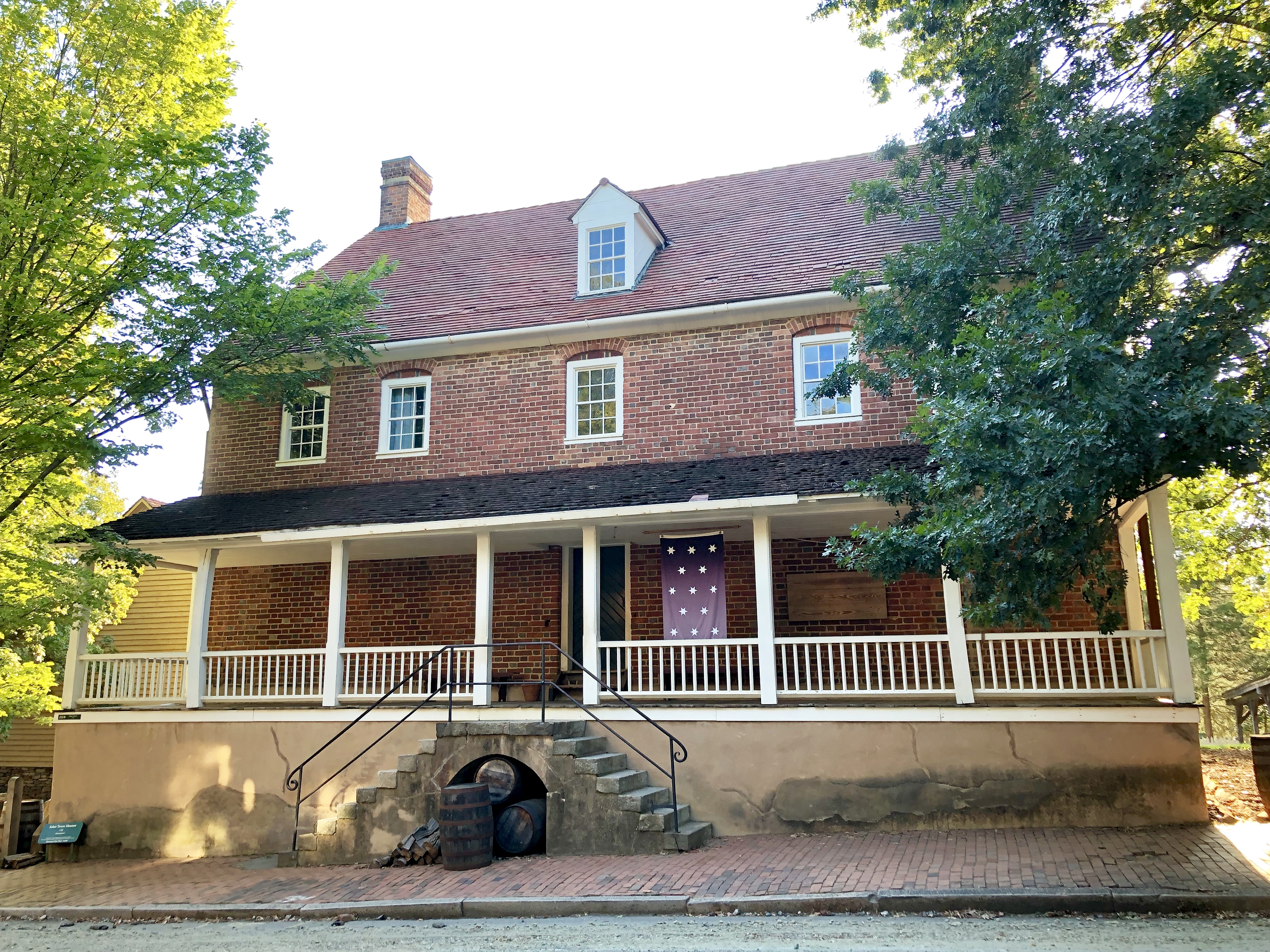
At the Salem Tavern in Winston-Salem, North Carolina, a sick stranger staggered in after dark in 1831 and died upstairs. Then the knocking started in empty rooms, and the keeper took the rifle down from the mantel and climbed the stairs.
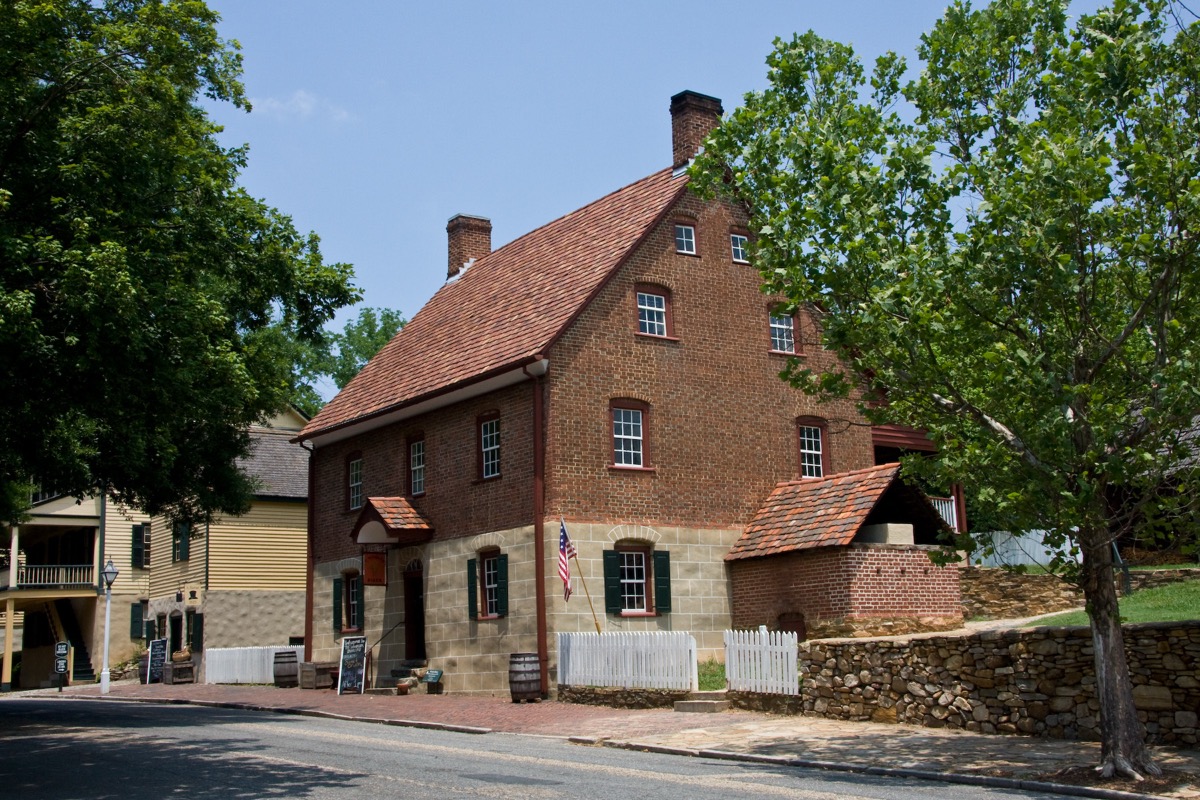
The Salem Tavern in Winston-Salem, North Carolina is a 1784 brick building that operates today as a museum you can tour. After a stranger died upstairs in 1831, the knocking started in its empty rooms, and the story goes that the tavern keeper took the rifle down from over the mantel and climbed the stairs to face whatever was up there.
The Moravians built Salem as a trading town, and they built this tavern on the southern edge of it on purpose. Outsiders passing through weren't allowed to lodge in private homes, so strangers stayed here, in a brick building put up by the mason Johann Gottlob Krause, the first all-brick building in town. President George Washington was one of those strangers, two nights in 1791. Most who came through left again. A few never did.
In the summer of 1831, a traveler named Samuel McCleary lodged at the tavern, left, then came back in poor health. A Salem physician couldn't cure him. He lingered, and then he died, and the Moravians buried him on September 6, 1831, in the strangers' row of God's Acre, the section they kept for non-Moravians who died in town.
That's usually where a ghost story trails off, on a nameless traveler nobody can place. This one has the name. The Moravian church kept obsessive records, so the dead man at the center of it isn't a vague stranger at all. He has a burial date and a line in a 240-year-old archive, which is more than most Southern ghosts can claim.
After the burial, the workers reported the knocks, cold drafts in the heat of summer, voices in rooms with no one in them. As the legend tells it, the keeper, Heinrich Sinsman, climbed the stairs that night with the rifle, McCleary's ghost gave its name and asked that word be sent to a fiancee in a distant Southern city, and once that was done the knocking stopped. The records hold the death; the confrontation is the part people tell.
McCleary wasn't the only one to die in the Salem tavern world. In August 1780, a Continental soldier named William Brown lay dying of what was likely gangrene, and they carried him out to the smoke-house because, as one account puts it, "the stench was intolerable." He died there on August 17 and was buried in the same strangers' ground. A German jeweler named Augustus Staub blew himself up with a chemistry experiment in his rented room near 11:30 one night in 1857, and lived about three more hours. Different men, different buildings, all gone.
But it's McCleary, buried in strangers' row, who got the knocking and the cold drafts in summer and the name and the date. Every October, costumed guides still walk visitors through the original buildings by lantern light, telling the true ones from the records, and his is the one that comes back inside the tavern.