TLDR
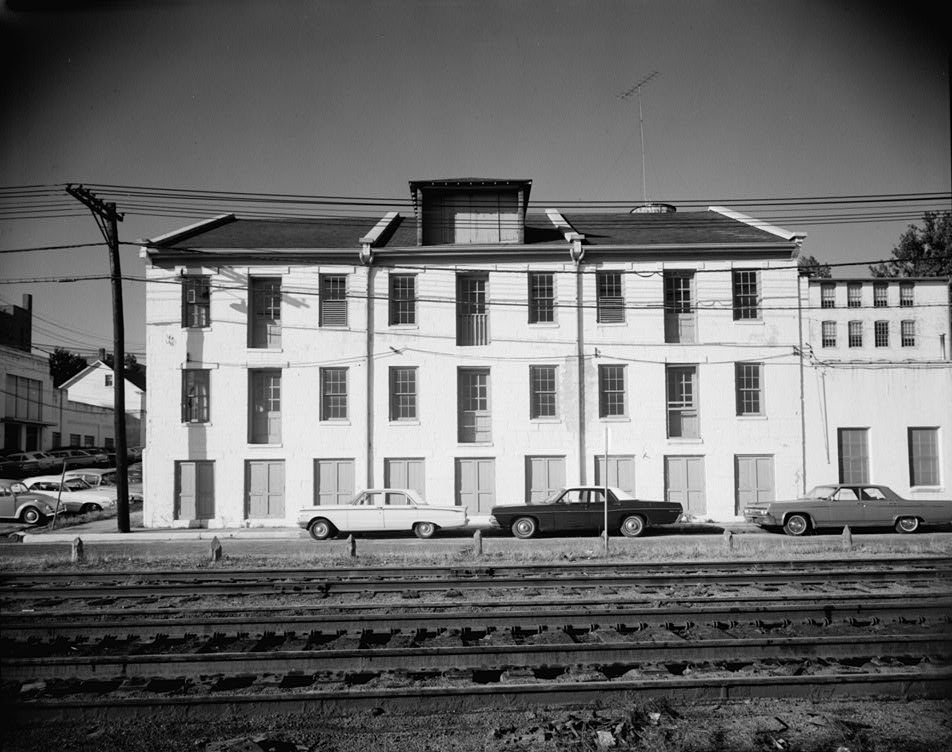
An archaeological team searched for the mass grave of 200 cholera victims from the 1849 steamboat Monroe right outside this 1839 limestone building and found nothing. Ghost tour visitors still report a figure watching from the upper windows at dusk, and the city has never buried utilities in the stretch of Water Street where the trench should be.
The Full Story
In 2013, an archaeological team dug along Water Street in front of the Lohman Building, searching for a mass grave that locals had talked about for over 160 years. They found nothing. The trench, roughly 900 feet long and wide enough to hold 180 bodies, should have been right there, running from the foot of Jefferson Street to the railroad depot. But the ground gave up nothing. The dead, if they're still down there, have settled deeper than anyone can reach.
The story starts with a steamboat. In May 1849, the Monroe left St. Louis carrying passengers bound for the California gold fields. Cholera broke out before the ship reached Jefferson City. Two passengers died en route, and by the time the Monroe docked at the landing, most of the roughly 200 people onboard were sick or dying. The crew abandoned the vessel. A fourteen-year-old local boy named James McHenry found the ship and its passengers scattered along the riverbank, too weak to move. Only two passengers survived. Six Jefferson City residents who helped with the sick also died.
The city dug a trench. A mass grave stretching from the foot of Jefferson Street to the depot, capable of holding 150 to 180 bodies. The Lohman Building, a three-and-a-half-story limestone structure with 18-inch-thick walls and a 30-inch foundation, sat less than 100 feet away. It had been standing for a decade by then, built in 1839 by James A. Crump as a combination grocery store, warehouse, tavern, telegraph office, and hotel. Crump leased the upper floors as the Missouri House hotel, and rivermen and state legislators gathered there in equal measure. The building watched the burials. It's been watching ever since.
Charles Maus and his brother-in-law Charles Lohman bought the east section in 1852 and opened a general store. Lohman eventually took over the whole building and grew it into one of Jefferson City's largest warehouse and mercantile operations. Steamboat captains, fur traders, and settlers heading west all knew the place as Lohman's Landing. The name became official in July 1873.
It didn't last. Lohman's vessel, the Viola Bell, sank in 1871, gutting his finances. His son Louis joined the business in 1874, but by 1875, Charles Lohman was bankrupt. The First National Bank of Jefferson City bought the building at a sheriff's auction in 1876. The Priesmeyer family leased space starting in 1892. Then the Tweedie family acquired it in 1917, running the Tweedie Footwear Corporation there for decades. They made military boots during World War II and women's shoes through the 1950s before shutting down in the 1960s.
The building nearly died too. Developers wanted to tear it down and put in a parking lot. A local activist named Elizabeth Rozier led the fight to save it, and she won. Missouri picked Jefferson Landing as its official bicentennial project in 1974. The Lohman Building opened to the public on July 4, 1976, restored to its 1850s appearance as the anchor of Jefferson Landing State Historic Site.
But restoring the building didn't quiet it. People on ghost tours through downtown Jefferson City, run by the Jefferson City Paranormal Society and US Ghost Adventures, report a recurring figure in the upper-floor windows. The figure stands there, watching the street below with what witnesses describe as an intense, fixed stare. It appears most often at dusk. Look away, look back, and the window is dark and empty.
Inside the building, tour groups describe sudden cold patches that drift through rooms and the sound of heavy boots on wooden floors when no one else is in the building. There's no named ghost here, no dramatic origin story pinned to a single tragic figure. The haunting is vaguer than that, more atmospheric. Most people who've looked into it connect the activity to the cholera dead. The mass grave trench ran right past the building's front door. The 2013 survey team that failed to find the bodies noted something odd: no city utilities have ever been buried in that segment of Water Street, and no significant development has happened there in over a century and a half. The city, it seems, has always known something is down there, even if no one can prove it.
The Lohman Building sits at the corner of Jefferson and Water Streets, part of both the Jefferson Landing State Historic Site and the Missouri State Capitol Historic District. It's been on the National Register of Historic Places since February 25, 1969. Inside, you can see a recreated 1850s general store and a short film about the site's history. The adjacent Union Hotel houses the Elizabeth Rozier Gallery, named for the woman who made sure all of this survived.
The grave is still missing. The figure in the window keeps showing up. And the thickest limestone walls in Jefferson City haven't done a thing to keep whatever's out there from getting in.
Researched from 8 verified sources. How we research.