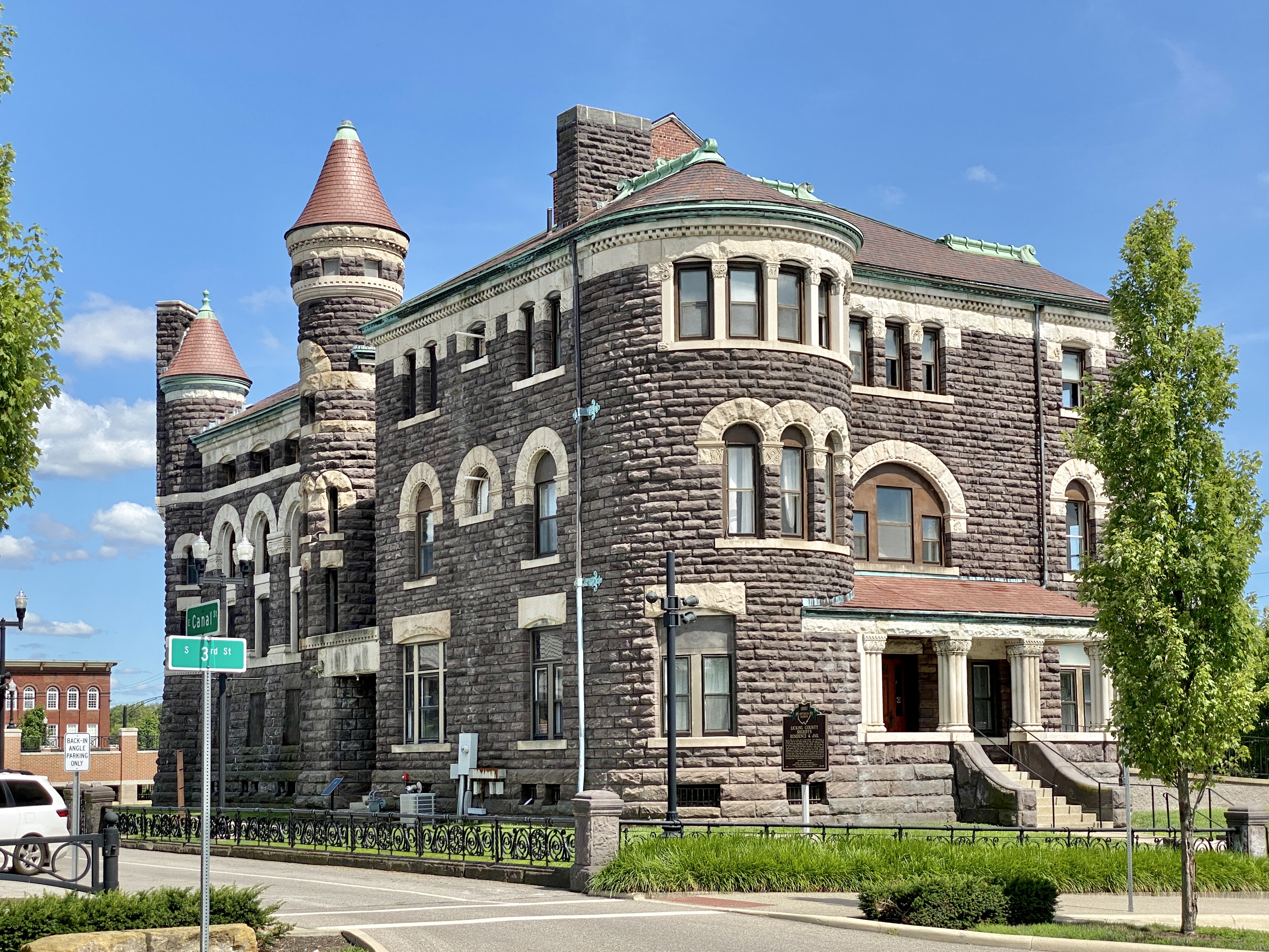
A mob dragged 17-year-old Carl Etherington from his cell at the Historic Licking County Jail in Newark, Ohio in 1910 and hanged him a block away. Visitors to that cell block still report a wave of panic, like someone running out of time to escape.
Visitors to the old cell block at the Historic Licking County Jail in Newark, Ohio keep reporting the same feeling: a sudden, urgent panic, as if they need to get out and can't. It's strongest where the jail held Carl Etherington. He was 17, and he had less than a day to live.
On July 8, 1910, Etherington, a former Marine working as an Anti-Saloon League agent, shot a former police captain in self-defense and was held at this jail. By nightfall, word spread that the man had died of his wound, and a crowd estimated in the thousands gathered outside. They beat down the jail gate, dragged him out, beat him with a hammer, and hanged him from a telegraph pole on the courthouse square, a block away. By 10:35 that night he was dead. His reported last words to the crowd were "Tell my mother that I died trying to do my duty."
More than forty people were later indicted, and the governor removed both the mayor and the sheriff from office. Most of those convicted were pardoned a few years later.
Etherington isn't the only death the building carries. The jail opened in 1889 and ran until 1987, and at least 22 people are said to have died inside it, many by their own hand. In 1953, a woman named Mae Varner was brought in to sober up after a suicide attempt and, within 45 minutes, set her clothing on fire in her fourth-floor cell. Visitors say they still feel her around it.
The building was two places at once. Its front was the sheriff's residence, where he lived with his family; the back held 32 cells. A later sheriff, Ross Embry, died of a heart attack in those living quarters in 1934.
The worst of the place is below ground. Staff call the basement isolation area the dungeon, the part of the building people warn each other about, where cold spots give way to something physical. People report being touched there and having their clothes pulled. Heavy chairs, the story goes, get thrown across the room.
Not everyone is convinced. One paranormal team spent a night here, captured nothing, and debunked a photo and a video taken on site on their way out.
The 1889 sandstone jail still stands on that same downtown square. It's a museum now, and every fall it reopens as a haunted attraction called the Jail of Terror, selling tickets to be frightened inside the building a real mob once broke into.