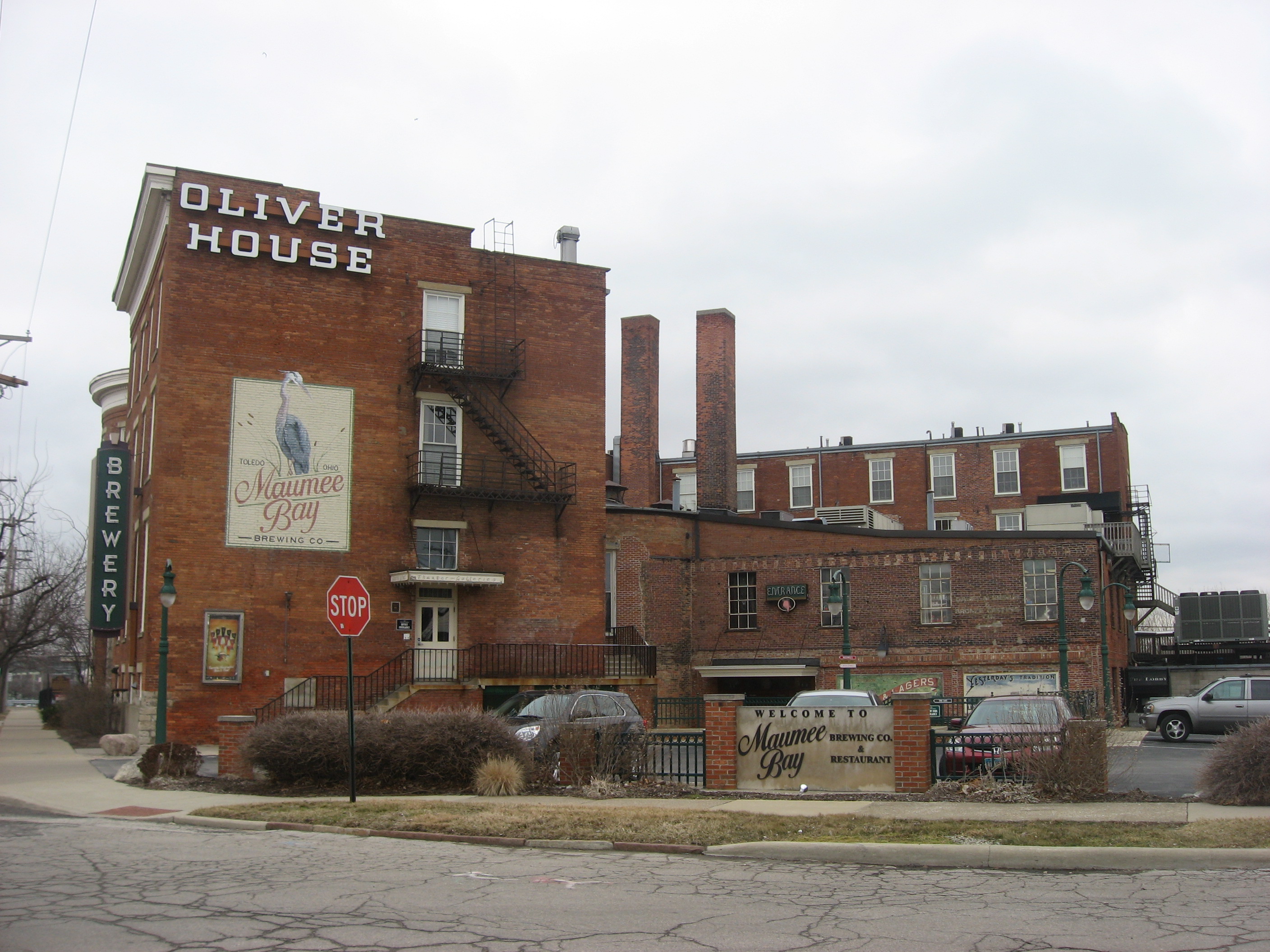
Maumee Bay Brewing pours craft beer inside the Oliver House, Toledo's grand 1859 hotel — a building that turned out to sit on a burial ground and hid an Underground Railroad tunnel, and still keeps its ghosts: the Captain, the Lady in Green, and boot steps on the stairs.
At Maumee Bay Brewing Company in downtown Toledo, Ohio, the regulars share the upstairs pool room with a man in a full uniform. He is the building's most frequently reported ghost, and the people who work here call him the Captain.
The brewery fills the Oliver House, which opened in 1859 as Toledo's grand luxury hotel and is the last hotel its architect designed that is still standing. Craft beer has been poured inside it since the mid-1990s, and the Captain came with the building. He turns up in that pool room and in the Private Dining Room, the old hotel lobby, where staff have seen him watching the games. Floorboards creak, doors swing open and shut on their own, cold drafts cross closed rooms, and the regulars hand him the blame.
He is not the only one. On the second-floor staircase, people describe a woman in a long emerald gown styled to the turn of the century, gliding down the steps. No one has ever put a name to her, and even her color is unsettled: the brewery's own telling dresses her in white, while most everyone else remembers green. They call her the Lady in Green.
The third presence is heard rather than seen, and it keeps to the second floor for a reason. During the Spanish-American War, wounded soldiers arrived in Toledo by train in 1898, and that floor became a makeshift hospital. Late at night, workers climbing the stairs report heavy boot steps echoing close behind them, an even tread that keeps pace with their own. During the 1990s restoration, a bricklayer felt so followed that he fled to his room for the night.
That restoration turned up something the renovators had not bargained for. Crews working the building uncovered a Native American burial site beneath it, and local Native leaders were brought in to perform a sage-and-tobacco ceremony before the remains were reburied. The basement holds one more passage out of the ordinary: a bricked-over archway that opens onto a tunnel which once ran to the Maumee River, a stop on the Underground Railroad and an escape route north toward Canada.
The general manager has worked the building for years and no longer tries to explain the late-night noises. "The haunting just continues over time," he said, "usually late in the evenings." And the brewery pours its beer below ground, in a basement the old stories say once served as the hospital's morgue.