On the fourth floor of the old Athens Lunatic Asylum, a body-shaped stain has refused to scrub out of the concrete for decades. It marks where Margaret Schilling, a patient missing six weeks, was finally found dead in 1978. Chemists later proved part of it is really her.
At the old Athens Lunatic Asylum in Athens, Ohio, there is a stain on the concrete, four floors up, in the shape of a human body. People have scrubbed at it for decades. It will not come out.
The body it belongs to was Margaret Schilling. She was 53, a patient at the hospital — by then renamed the Athens Mental Health and Retardation Center — and on December 1, 1978, she walked off an active ward and disappeared. Staff searched the grounds and found nothing. It was six weeks before anyone found her, in mid-January 1979, when a maintenance worker climbed to Ward N-20, a long-abandoned wing in a tower once used for tuberculosis patients, and saw her on the floor near a window. She was undressed. Her clothes were folded in a neat pile beside her. The autopsy ruled natural causes and put her death four to five weeks earlier, which meant she had been lying there nearly the whole time.
They removed her body. The stain stayed. A pale shape the size of a person, ringed by a darker border a few inches wide, pressed into the bare concrete where she had lain.
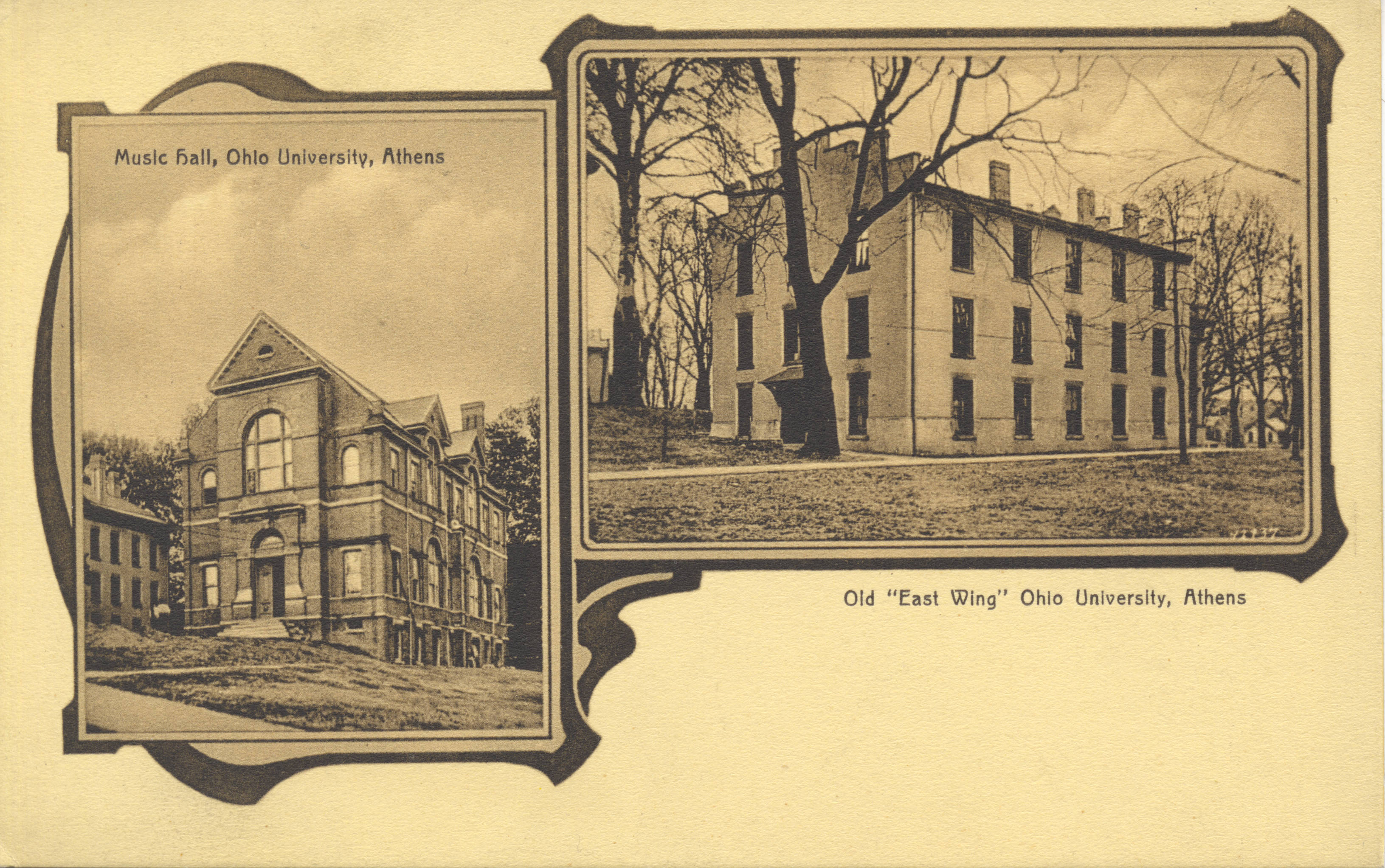
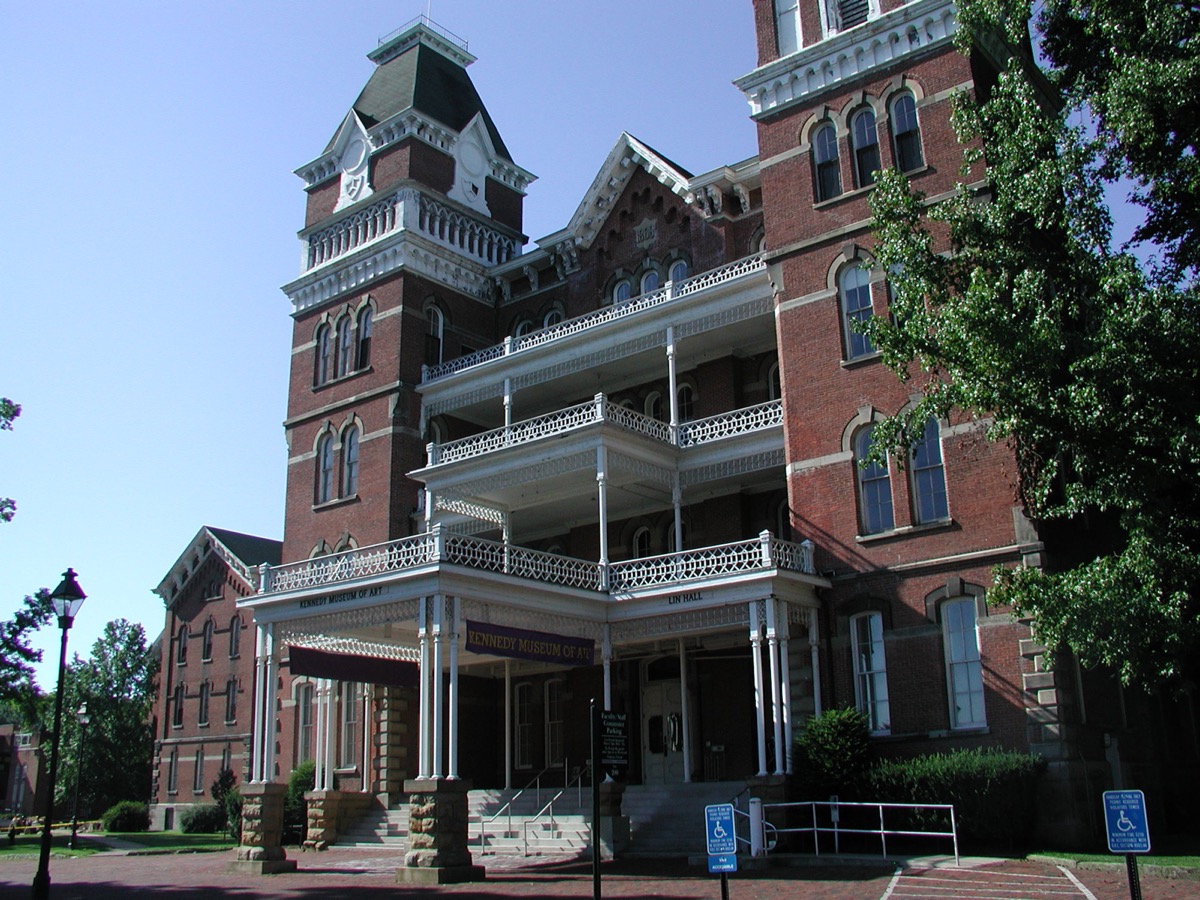
The Ridges, as the place is called now, opened in 1874 — a vast Kirkbride asylum that held as many as 1,800 patients by the 1950s. It became best known for what was done there in that decade, when Dr. Walter Freeman brought his transorbital lobotomy to Athens and worked through patients by the dozen, as many as 20 in a single day, no operating room, no general anesthesia.
For thirty years the stain was a campfire story — sunlight had baked her outline into the floor, people said. In 2008, chemists at Ohio University finally scraped the residue with a razorblade and ran it through their instruments. What they pulled off the floor was adipocere: the waxy, soap-like substance a body makes as its fat breaks down. It was real. Margaret was, chemically, still on that floor.
But the analysis found something else. The body-shaped outline had been deliberately etched into the concrete with a phosphoric-acid cleaner called Blu-Lite, sharpened by hand into what the study called "deliberate adulteration of the appearance of the stain."
So the thing that won't scrub out is both. Half of it is a woman who lay dead and unfound for six weeks. The other half is the work of whoever decided the truth wasn't quite enough.