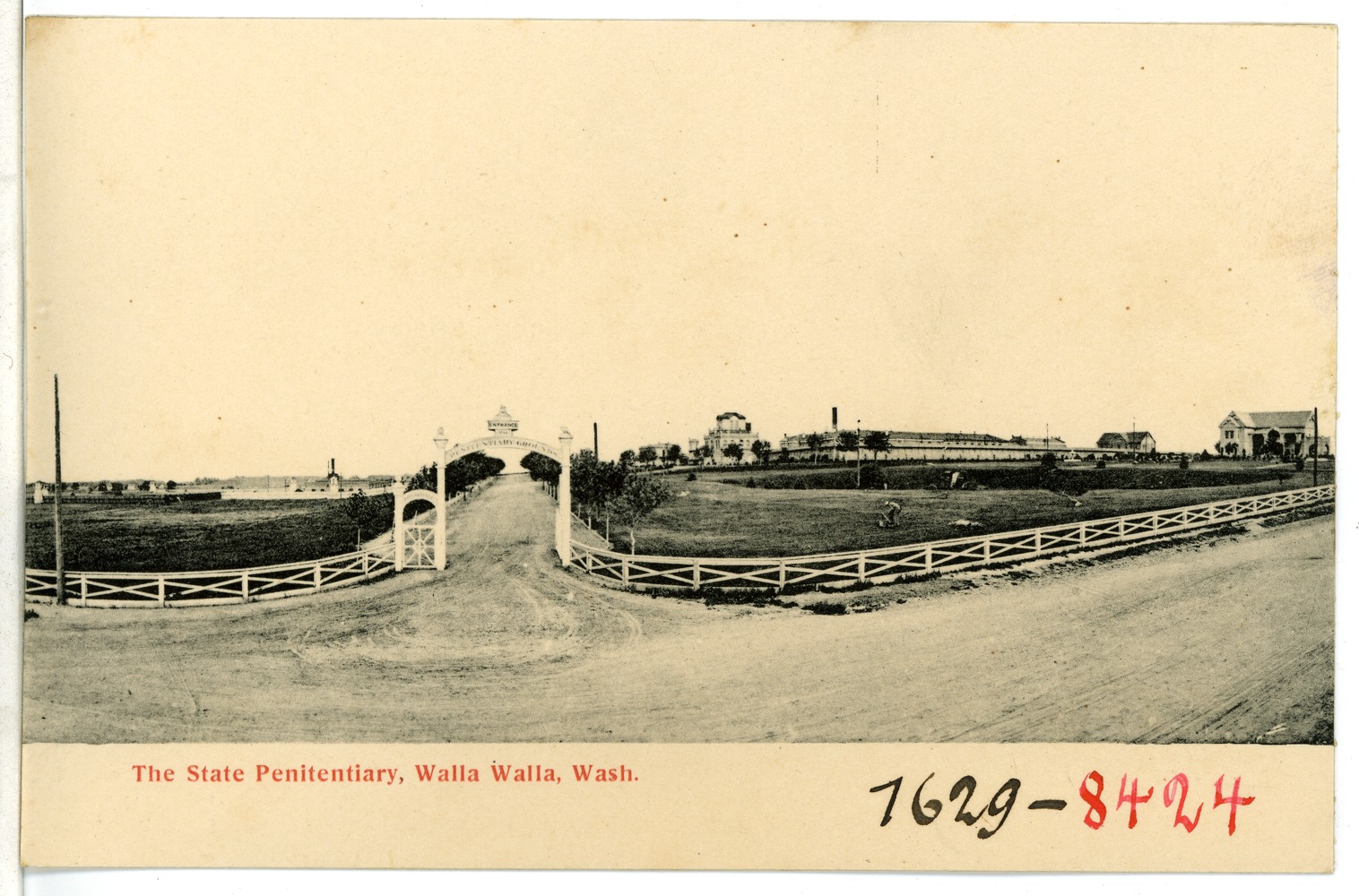
At his sentencing in 1947, Jake Bird cursed everyone connected to his case. Five of them were dead within the year, along with a death row guard at the Washington State Penitentiary in Walla Walla, where Bird was hanged and buried under a number.
Jake Bird went into the ground at the Washington State Penitentiary in Walla Walla in 1949, under a number instead of a name. By then most of the men who had sent him there were already dead, and he had told them they would be.
He said it in court. At his sentencing in Tacoma on December 6, 1947, after the judge denied his motion for a new trial, Bird spoke for 20 minutes and closed by cursing everyone connected to his prosecution. The exact wording changes with the telling. One version has him saying, "All you guys who had anything to do with this case are going to die before I do." The papers named it the Jake Bird hex.
Judge Edward D. Hodge died of a heart attack on January 1, 1948, 26 days later. Pierce County under-sheriff Joseph E. Karpach died in April. Court reporter George L. Harrigan died in June. Detective lieutenant Sherman Lyons, the man who had taken Bird's confession, died in October. And on November 26, 1948, Bird's own defense attorney, James Selden, died too, one year to the day after the jury convicted his client.
A sixth man worked inside the penitentiary itself. Arthur A. Steward, a guard on death row, died of pneumonia two months before the execution he was waiting on.
None of this was assembled into a legend afterward. It ran as news while it was still happening, in the Seattle papers and as far away as London. The Seattle Times headline on November 27, 1948: "Lawyer's Death Is Fifth Since Tacoma Killer's Hex."
Bird dropped 5 feet through the trap at 12:20 a.m. on July 15, 1949, in front of 125 witnesses. The volunteer chaplain was still reading his last statement, the one asking forgiveness, when the trap opened. They cut him down 14 minutes later.
Then he went into the prison cemetery. The burial roll lists him at entry 292: "Bird, Jake; -21520; d. 1949 Jul 15." Every headstone in that ground is set flush with the earth and carries the inmate's prison number and nothing else. No name, no birth date, no death date. Six of them carry no number at all, just question marks. "In this graveyard, the dead have no names," the Union-Bulletin wrote of it. Roughly 341 men lie there, 17 of them executed, at least two of them women. When the prison expanded, the graveyard that had always sat outside the walls ended up inside the razor wire, mowed and watered and closed to everyone.
For all that documented death, nobody has ever reported a ghost inside those walls. No apparition, no name, no investigation, and no way in to look. The only haunting Walla Walla has on the record happened out in the free world, in the year after one of its prisoners promised it would.