At Furnace Town near Snow Hill, Maryland, a man named Sampson Harmon is still seen walking the abandoned iron village, calling for his cats. He stayed alone for decades after everyone else left. The museum keeps strays on the grounds so he still has them.
At Furnace Town near Snow Hill, Maryland, people report a tall Black man walking the old iron village and calling for his cats. The staff know exactly who they think he is, and they keep stray cats on the grounds on purpose — so he still has his.
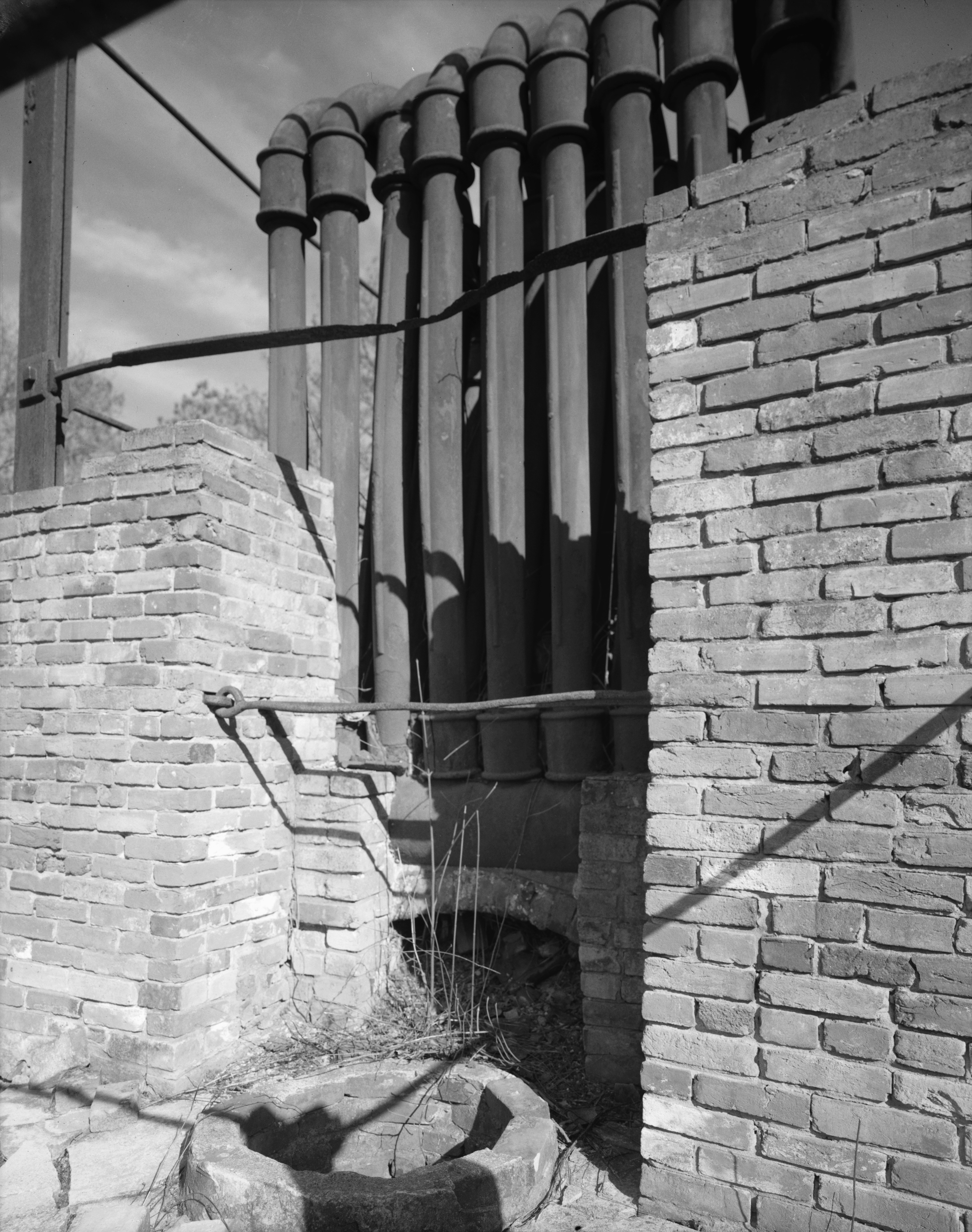
His name was Sampson Harmon. He was born free at Nassawango Hills in 1790, the son of a free father, and he worked the Nassawango Iron Furnace as the village jack-of-all-trades. The furnace had been built in 1828, and it smelted bog ore dredged from the Pocomoke swamp. It was the earliest surviving American furnace to run a hot blast, a cast-iron stove Thomas Spence installed around 1835, less than a decade after the technology arrived from Scotland. At its peak the place turned out about 700 tons of pig iron a year. Then production ceased in 1847, and the workers drifted off to find other work.
Sampson didn't. When the village emptied, he stayed. He kept a small wooden house near the Manor House, raised corn, and bartered in Snow Hill for what he couldn't grow, living alone in the abandoned town for decades with his cats. He named a grey one Stormy, and the story goes he'd call for it and the cat would meow back. Around him the buildings sagged and the furnace stack went quiet and cold, and he kept on as the last man in a town that had stopped existing.
In 1896 the county forced him out, into the Snow Hill Alms House, where he died about a year later — said to be 106 or 107. His one dying wish was to be buried back at the furnace. It was denied. They buried him in Snow Hill instead.
There's a strange footnote to his life. A novel called *The Entailed Hat* fictionalized him as "Sampson Hat," a slave. In 1895, the real Sampson sat for a newspaper interview to set the record straight: he had never been enslaved. He corrected his own legend a year before he died.
The furnace outlived him. The property was donated in 1962 to the Worcester County Historical Society, which propped up the deteriorated stack, and the village became the outdoor living-history museum it is now, with volunteer artisans working the blacksmith forge and the looms.
He has been seen on the property ever since, walking the village, calling, a cat sometimes trailing behind him. In older tellings the cat is black, named Tom. The museum doesn't argue with any of it. It just keeps the strays fed and on the grounds, so the man who wouldn't leave still has something to call for.