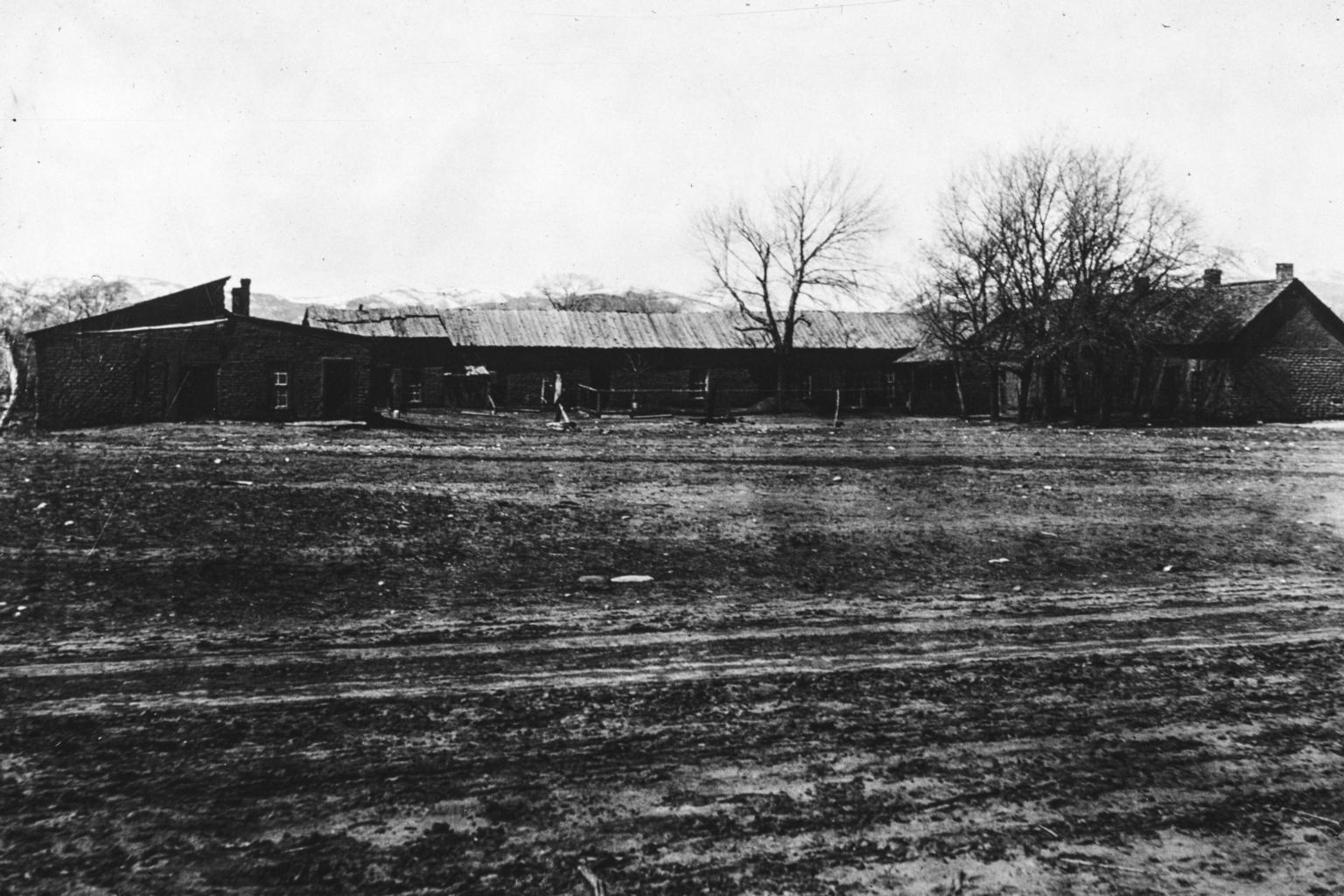
The Francisco Fort Museum in La Veta, Colorado has a floating lady in white, a piano that plays itself, and a rocking chair that rocks on its own. Then two investigators showed up for two days and took the whole story apart.
At the Francisco Fort Museum in La Veta, Colorado, a woman in white drifts past the windows of the west wing at night. A piano in the building plays a note with no one at the keys. A rocking chair rocks on its own, a second figure carries a candle through the dark, and the lights flicker. Visitors and staff have reported all of it.
The fort is a real one. Colonel John Francisco and his partner Henry Daigre built it in 1862 as an adobe ranch headquarters supplying beef to military forts, and it's the last surviving original adobe fort in Colorado. Three sides of about 100 feet each, bricks 18 to 24 inches thick. Over the years it was also a hotel, a post office, a storehouse, and a private home. Now the Town of La Veta runs it as a seasonal museum.
This is the rare haunted place where someone showed up and took the ghost story apart. Bryan Bonner and Matthew Baxter, two paranormal-claims investigators from Denver, spent two days at the fort with linguist Karen Stollznow, and walked out with a plain explanation for nearly everything.
The floating lady in white was visitors standing outside at night, their phone lights reflecting off the museum's old wavy window glass. Those same reflections were the candle figure and the flickering lights. The self-playing piano sits over a weak floorboard. Step on the right spot and a panel under the instrument lifts, pushing a hammer into a string. The rocking chair has its own loose board. The high EMF readings that earlier ghost hunters got excited about traced to a spot where the public library's Wi-Fi reached the meters.
Stollznow's verdict on the piano was dry. It "was hardly playing Chopin by itself," she wrote.
The museum's own director, Kim, had supervised an earlier ghost-hunting group's overnight stakeout. She wasn't impressed either. She spent the small hours, she said, babysitting them while they "ran around doing goofy stuff."