Visitors to the old Civil War prison camp grounds in Elmira, New York report ghost lights and faint cries for help. The prisoners called the place "Hellmira." In one year, nearly 3,000 of them died there, and the math is the whole haunting.
At the old Civil War prison camp in Elmira, New York, visitors to the grounds and the cemetery report the same handful of things: small ghost lights, whispers, and faint cries for help. There is no lady in white here, no single figure with a name. The lore is collective, and once you know the numbers behind it, you understand why no one ghost could carry the weight.
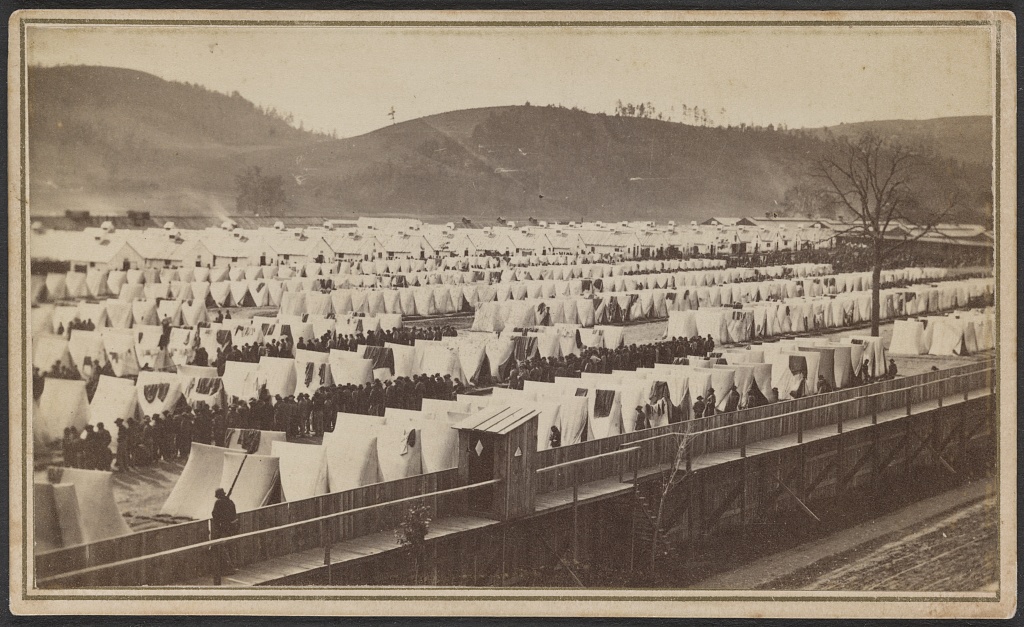
The prisoners called it "Hellmira." The camp opened on July 6, 1864, on the site of an old Union training depot, and it ran for exactly one year. In that time, roughly 12,100 Confederate prisoners passed through it. About 2,970 of them died. That is a death rate near 24.5 percent, just short of Andersonville, and the count varies by a few men depending on which record you read.
The reasons were on paper from the start. Inside the stockade sat Foster's Pond, a stagnant pool of water that served as both the drinking supply and the open sewer. The camp surgeon warned that the sinks near it might "become offensive and a source of disease." Drainage work did not begin until late October and did not finish until New Year's Day, 1865. Before the barracks were even completed, the temperature dropped to 18 below zero, a February storm dumped over two feet of snow, and prisoners traded and ate rats to get through the winter.
While the men died inside the fence, Elmira entrepreneurs built two observatories on Water Street and charged civilians 10 to 15 cents to climb up and look down into the camp. People paid to watch.
The dead were buried, one at a time, by a man named John W. Jones. He had escaped slavery on the Underground Railroad in 1844, and now he recorded each Confederate burial by name, rank, company, regiment, grave number, and date of death. He laid nearly 3,000 men into the ground this way. His records were so exact that of all those soldiers, only seven remain unidentified. Because of what he kept, the burial ground was declared a national cemetery in 1877.
The camp itself was torn down after the war. A few corner markers stand along Water Street and Winsor Avenue, one original prison building was found in storage and reassembled, and a partial reconstruction marks where the fort once stood. A solo investigator who spent time on the grounds logged a recurring feeling in the same spot each visit and a camera that stopped recording on its own. The result, formally written down: "Inconclusive. Further investigation necessary."