Dead Man's Hollow, a 450-acre preserve south of McKeesport, Pennsylvania, got its name from a corpse. Hikers on its trails report a figure with a rope around his neck, low voices from the old ruins, and the smell of burning.
In Dead Man's Hollow, a wooded preserve south of McKeesport, Pennsylvania, hikers report a man standing at the edge of the trail with a rope around his neck. He fits the oldest story on the land. In 1874, a group of boys cutting through these woods found a decomposed man hanging by a noose from a tree. He was never identified, and no one was ever charged. The name stuck.
Then the place kept earning it.
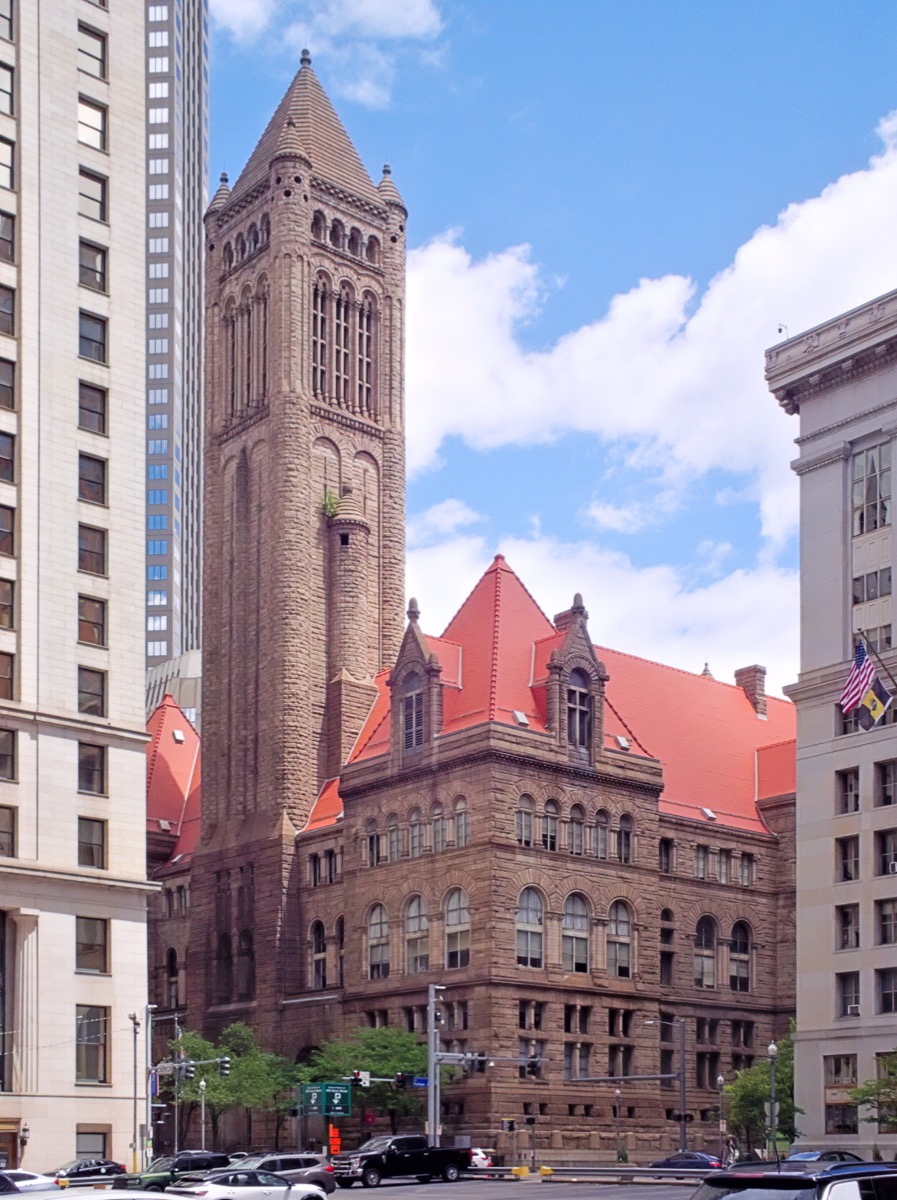
In 1881, a 19-year-old named Robert McConkey ran with a gang that robbed a McKeesport hardware store for a cache of knives and guns. The owners tracked the gang into the hollow, and McConkey shot and killed one of them, George McClure. He was convicted of murder and hanged in the courtyard of the Allegheny County Jail on May 10, 1883, insisting to the end that he was innocent. "Good-Bye, murderers," he said from the gallows, naming the men who had sentenced him.
He was not the last to die here. In 1883, a quarry work party built a warming fire too close to their explosives, and the blast killed the foreman, David Henninger, where he stood. In 1905, a sewer-pipe worker named Mike Sacco was climbing out of an elevator shaft when the platform rose and crushed him against the ceiling above.
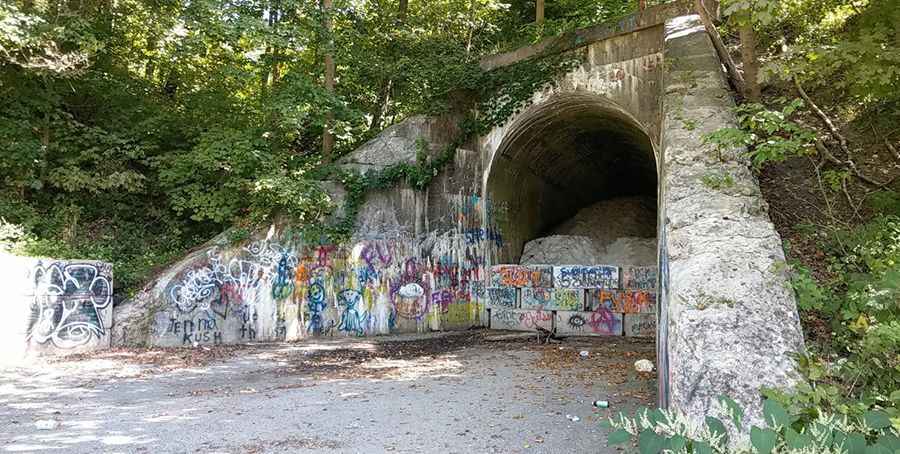
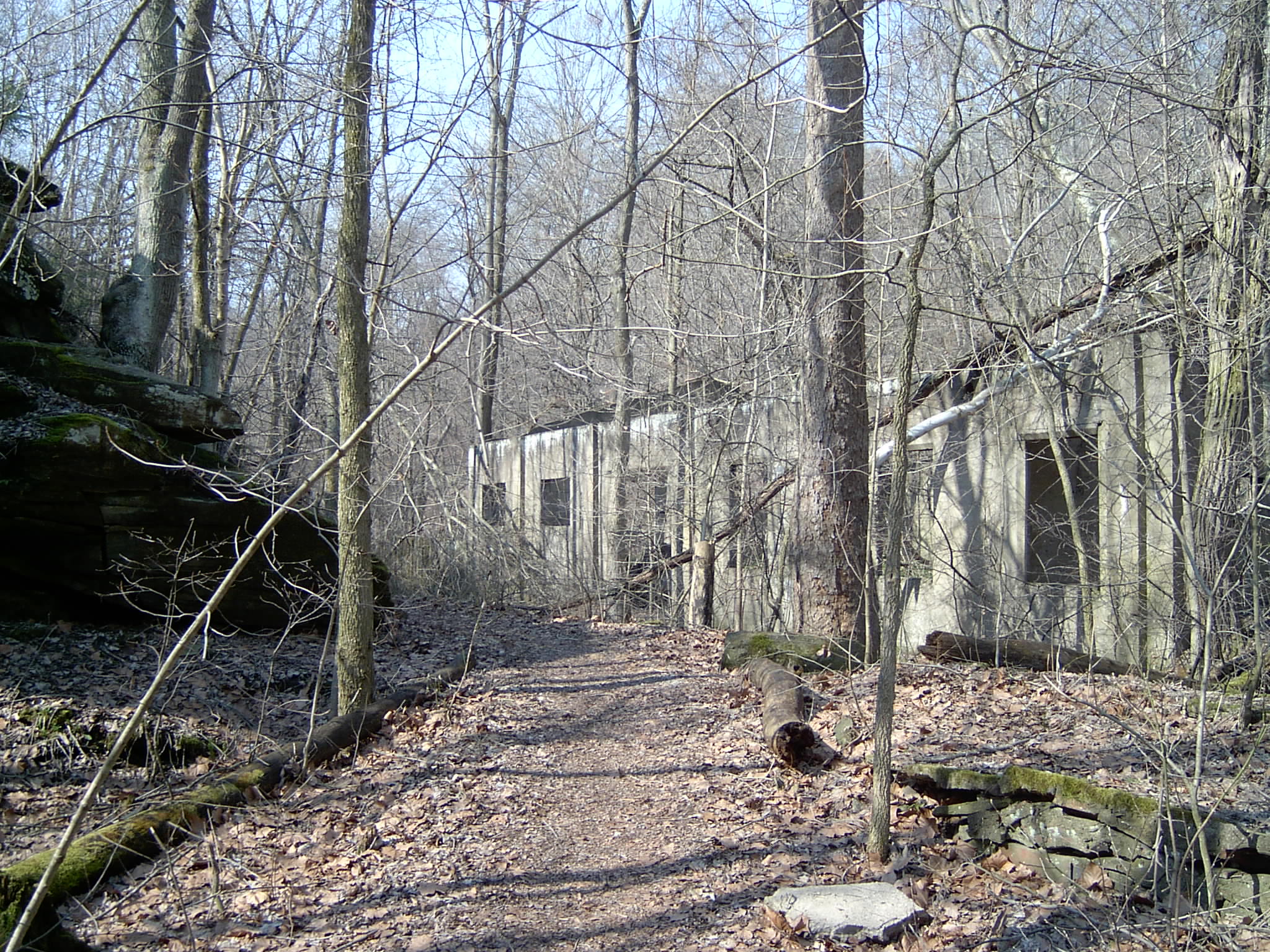
The ruins of that pipe works still stand in the trees, brick kilns and a boiler house slowly going green. The company made clay sewer pipe for cities across Pennsylvania, New York, and New England until the operation ended sometime in the 1920s. Now it's 450 protected acres of hiking trails along the Youghiogheny River, the largest privately protected natural area in Allegheny County.
The valley is older than any of that. It was Monongahela-culture country for centuries before the brickyards, and in 1934 a man rowing the Youghiogheny reported a Native American figure rising waist-high out of the water to watch him as he passed. That story is the one that turned the hollow's lore from named dead men toward something in the ground itself.
Hikers walking the trails today report shadows at the edge of their vision, low male voices coming from the direction of the old works, and the smell of something burning. Some say a presence pulls them toward the river. And the figure from 1874 is still reported on the path, a rope around his neck.
There's one more thing the woods are said to hold. Since the 1800s there's been talk of a snake here far too big to be real, 30 feet long by one 1893 account from a man named Charles Brown. Locals have a flat explanation for that one. They say the moonshiners started it, to keep people out of the woods.