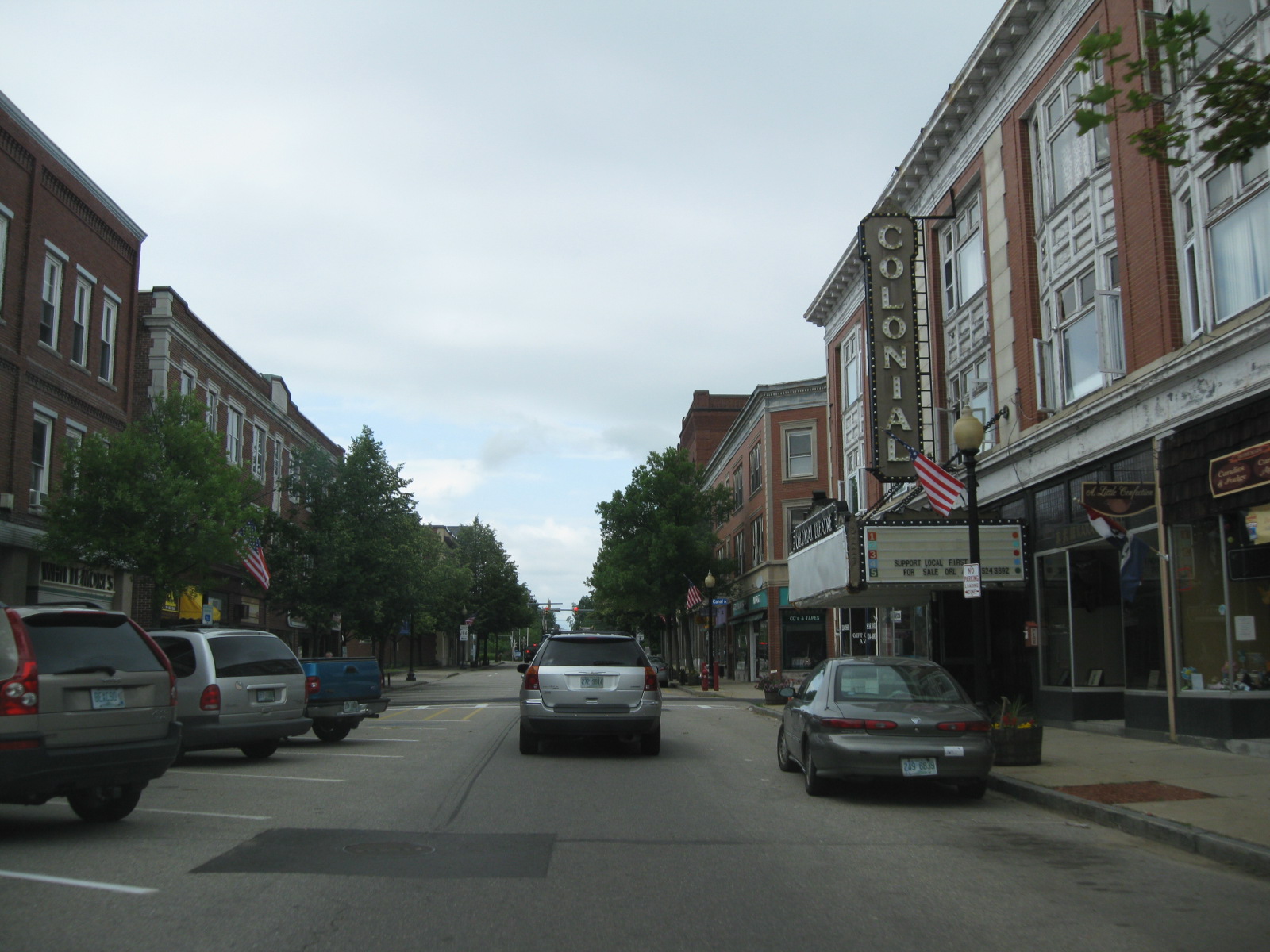
At the Colonial Theatre in Laconia, New Hampshire, people keep seeing a man in the upstairs projection booth, looking down at an empty house. Nobody can put a name to him, and no one ever died here to explain him. He just won't give up the booth.
The figure people keep spotting at the Colonial Theatre in Laconia, New Hampshire stands in the upstairs projection booth, looking down at an empty house with his hands at his sides. Local accounts call him the projectionist. The trouble is that the booth he works has no equipment left in it, and there's no record of anyone dying in the building to explain who he is.
The Colonial opened on Main Street in 1914, designed by local architect George Griffin and built by Benjamin Piscopo, an Italian-American stonecutter turned developer who'd come from Venice. He hung a hand-painted fire curtain across the stage showing Venice from the water, a homage to the city he'd left. The 1915 Laconia press called it "one of the handsomest play-houses to be found in New England." That same spring the Boston English Opera Company brought "Il Trovatore" to the stage. John Philip Sousa's band played there. In 1961 the world premiere of "Return to Peyton Place" filled the seats, tied to local author Grace Metalious from nearby Gilmanton.
Then it ran down. The theatre closed in August 2002 after 87 years, and the building sat dark for nearly two decades. During those years, the people checking on it described footsteps on stairs nobody was climbing, and doors on the upper floors opening on their own. Accounts of the abandoned years say the restoration crew heard the same sounds after the contractors had gone home for the night.
The room around the ghost has been rebuilt twice. In 1983 the single auditorium was carved into five movie screens, four cut from the balcony and orchestra and one set into the old stage. The restoration that finished in 2021 tore the partitions back out and returned it to one house seating about 750. The work cost roughly $14.4 million, and a firm called EverGreene Architectural Arts was brought in to restore the decorative plaster, which had survived intact behind the later walls the whole time. The grand opening came on August 27, 2021. The year before, the building had been added to the National Register of Historic Places.
So the man in the booth is watching a room that's been gutted and remade around him twice over. Witnesses still report footsteps through the building, voices with no source, and a male figure walking the aisles, a presence that accounts say tends to settle in the balcony. He has no name and no death to anchor him. He's just the projectionist who won't give up the job.