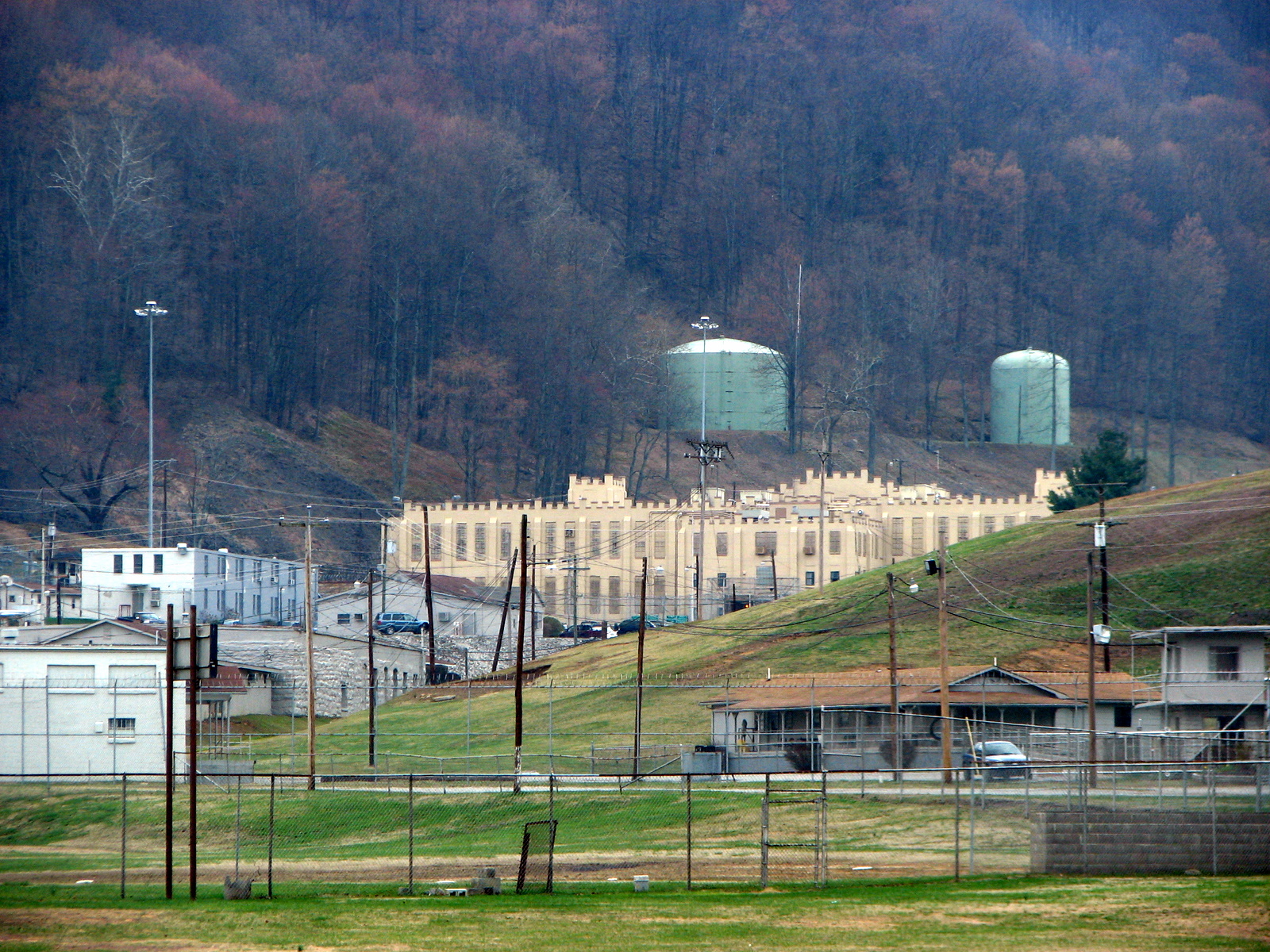
Something low crawls the auditorium floor at Brushy Mountain, the old Tennessee prison, and to the staff, it's the Creeper. But no one was ever executed here. What killed men at Brushy was the mine, the disease, and the dark of a block called the Hole.
Something crawls across the floor of the auditorium at Brushy Mountain, and the staff who run the old prison settled on a name for it: the Creeper. The story ties it to an inmate who was stabbed in the throat and bled out on the grounds, and it's the figure investigators cite most often, a shape that comes across the floor low and slow while a group sits in the dark waiting for nothing in particular.
Brushy Mountain State Penitentiary sits in a natural bowl at Petros, Tennessee, ringed by the Cumberland Plateau. The mountains were the walls, and escapes were rare and almost never worked. But the reason the prison exists at all is buried in the ground under it. In 1891, free East Tennessee miners revolted against the state's practice of leasing convicts into the coal seams for unpaid labor. They called it the Coal Creek War. They burned the stockades and forced the legislature to end convict leasing, and the state's answer was to build its own convict-worked mine and prison here and put the men down the shafts itself.
The mine did the killing. Coal was the prison's main business into the 1960s, worked amid cave-ins and chronic sickness. One old recollection of the 1930s and '40s put it plainly: "wouldn't be a week go by they'd be one killed in the mines." Hundreds of men died at Brushy across its 113 years, and a cemetery still sits less than a mile from the wall, more than a hundred deaths on record.
The place visitors leave hardest is the Hole, the original solitary block: windowless concrete cells kept in total darkness, a straw mattress and two buckets to a man. It held people long enough that they went briefly blind when they were finally walked back into daylight. It closed in 1957.
The chapel is where the recordings come from. Investigators call it the most active spot in the building and say their tapes have come back with the words "hell," "beast," and "pain." Elsewhere, visitors report being touched and shoved, a low growling with no source, shadow figures, and banging in empty blocks. The cold in the chapel is the detail people repeat most.
The tour keeps an electric chair on display. But no one was ever put to death in it, or anywhere at Brushy. Tennessee carried out its executions in Nashville. Whatever killed men here wasn't the state with a switch. It was the mountain, the mine, the knife, and the dark.