There's an upstairs room at Boothe Memorial Park in Stratford, Connecticut that staff call the Sad Room. People reach the doorway and stop, hit with a grief they can't explain. A first-grader felt chills there on a 90-degree day. An elderly woman fainted.
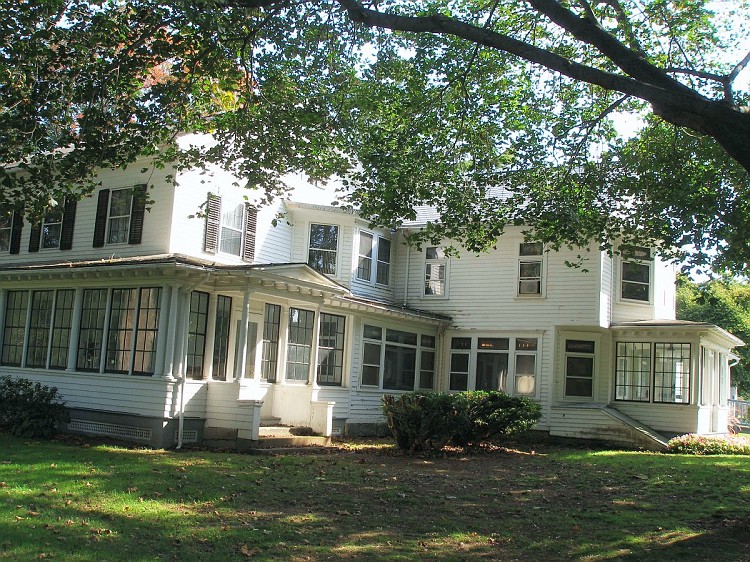
At Boothe Memorial Park in Stratford, Connecticut, there's a room upstairs in the old Homestead that volunteers call the Sad Room. It was the Civil War relics room once. People reach the doorway and stop, hit with a wave of sadness so sudden they back away from it.
By one account, close to 100 visitors of every age have felt it. A first-grade pupil complained of chills there on a 90-degree day. An elderly woman fainted. Park officials eventually set a chair beside the door for people who feel faint.
And there's a little girl. Visitors and a former caretaker describe her the same way, looking out the window of that same room — a sight that was once part of the public tour. No one knows who she is. No record names her.
The Homestead itself sits on a foundation laid in 1663, when Richard Boothe built the first house on the spot; the current house went up in the early 1820s over those old stones. Three centuries later, two brothers, David Beach Boothe (1867–1949) and Stephen Nichols Boothe (1869–1948), turned the family's 32-acre farm into something stranger — roughly two dozen tiny, bizarre buildings. A 44-sided blacksmith shop with three spires. A miniature lighthouse. A "cathedral" built in the early 1930s as a tribute to the Technocracy movement. The brothers left it all to Stratford, and it opened to the public in 1955 as a free outdoor museum.
The investigators who came weren't fringe. John Zaffis — nephew of Ed and Lorraine Warren, later the star of SyFy's *Haunted Collector* — held séances in the house from 1985 to 1989. "My involvement stems from meeting with some of the psychic groups that met up in the main Boothe house," he said. Staff there have reported rapping in the walls, a disconnected antique telephone ringing, a touch in an upstairs bedroom, a woman's voice from Mrs. Boothe's room.
But the room people remember is the one with the chair by the door, and the girl who keeps watching from the window.