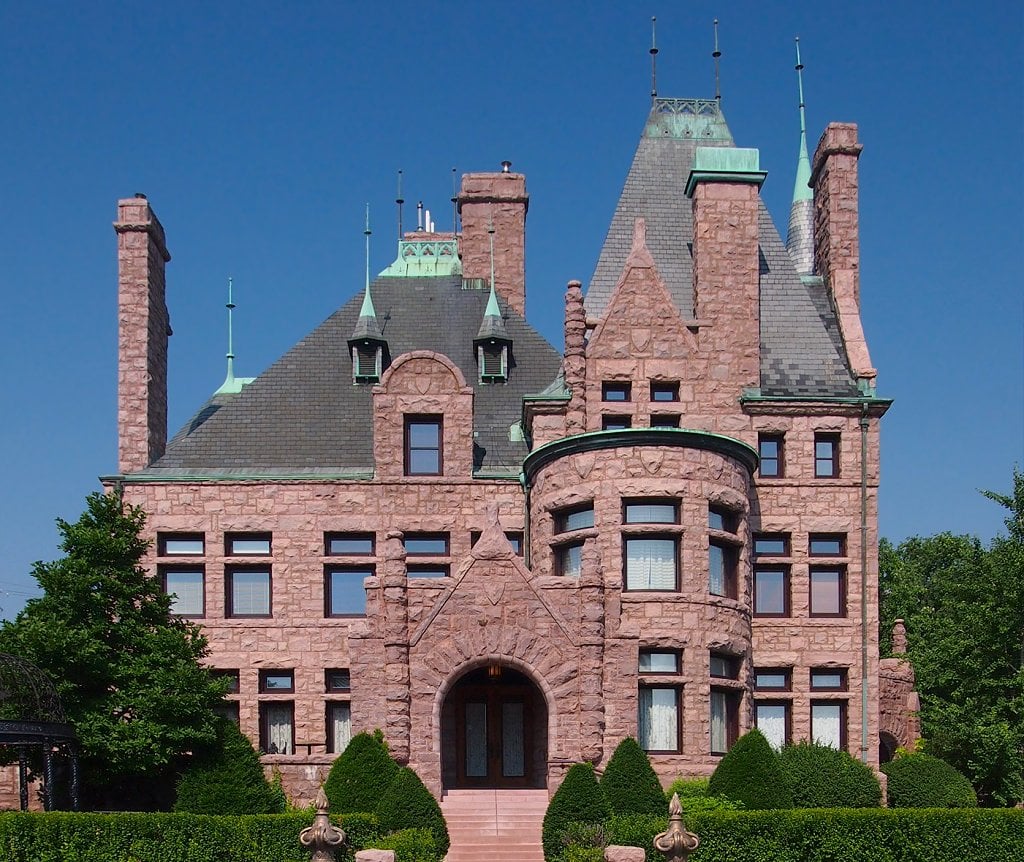
The Van Dusen Mansion in Minneapolis is a pink-quartzite wedding venue said to be home to two ghosts. Staff and ghost-tour guides report footsteps, apparitions, and cold spots after the guests go home. Its darkest chapter is the one nobody calls a haunting.
The Van Dusen Mansion on LaSalle Avenue in Minneapolis is a wedding venue now, and the guides on the city's ghost bus tour will tell you it's home to two ghosts. Nobody can tell you who they are. Mpls.St.Paul Magazine puts it plainly: it's "believed to be the home of two ghosts," and that's as specific as the record gets. No names, no story of how they died, no rooms tied to them.
What people do report is the leftover. The Minneapolis ghost bus tour calls the place "one of the city's most haunted locations," where "visitors and staff have reported hearing unexplained footsteps, seeing apparitions, and experiencing sudden drops in temperature." Staff say the apparitions drift the darkened rooms after the guests go home and the doors are locked for the night. Some accounts pin the footsteps on a former janitor, though no record names him, so the story stays a shape with no biography behind it. The tour guides who know the fullest version won't share even that. One who took the candlelight tour called the mansion her favorite story of the whole night, then stopped short: "I won't be sharing any of those, you'll have to take the tour."
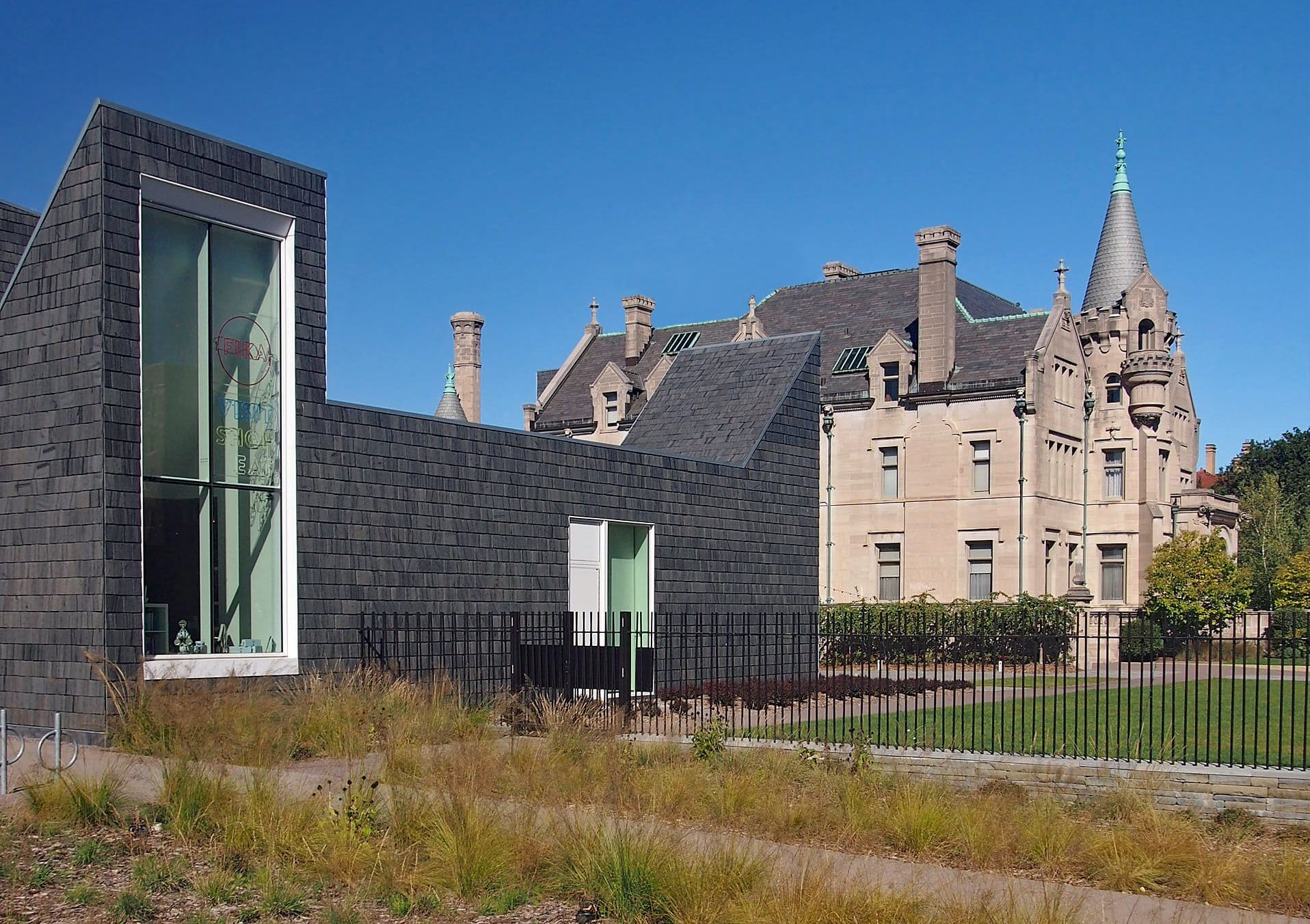
The house was built in 1893 for George Washington Van Dusen, a grain baron who ran one of Minnesota's most prosperous grain firms. Twelve thousand square feet of pink Sioux quartzite quarried near Luverne, with ten fireplaces, a grand staircase, a tile mosaic entryway, and a turret topped with a copper finial. His son Fred and Fred's wife Myra lived here after him, and Myra died in the house in 1937. No source ties her death to either ghost. After the family, the building passed through a College of Commerce, a law school, and years of vacancy before it was restored and reopened as an events venue.
The chapter with a paper trail came much later, and nobody calls it a haunting. In 2008 the mansion sold for $2.6 million to a man named Trevor Cook, who used the prestige of the address to lure investors to seminars for something called the Oxford Group. It was a Ponzi scheme, the second-largest in Minnesota history. About $194 million in all. Cook pleaded guilty in 2010 and went to federal prison for 25 years.
So the worst thing that ever happened inside these walls left no ghost. It left victims, a courtroom record, and a sentence handed down in years. The two who drift the rooms came from somewhere the record can't reach.