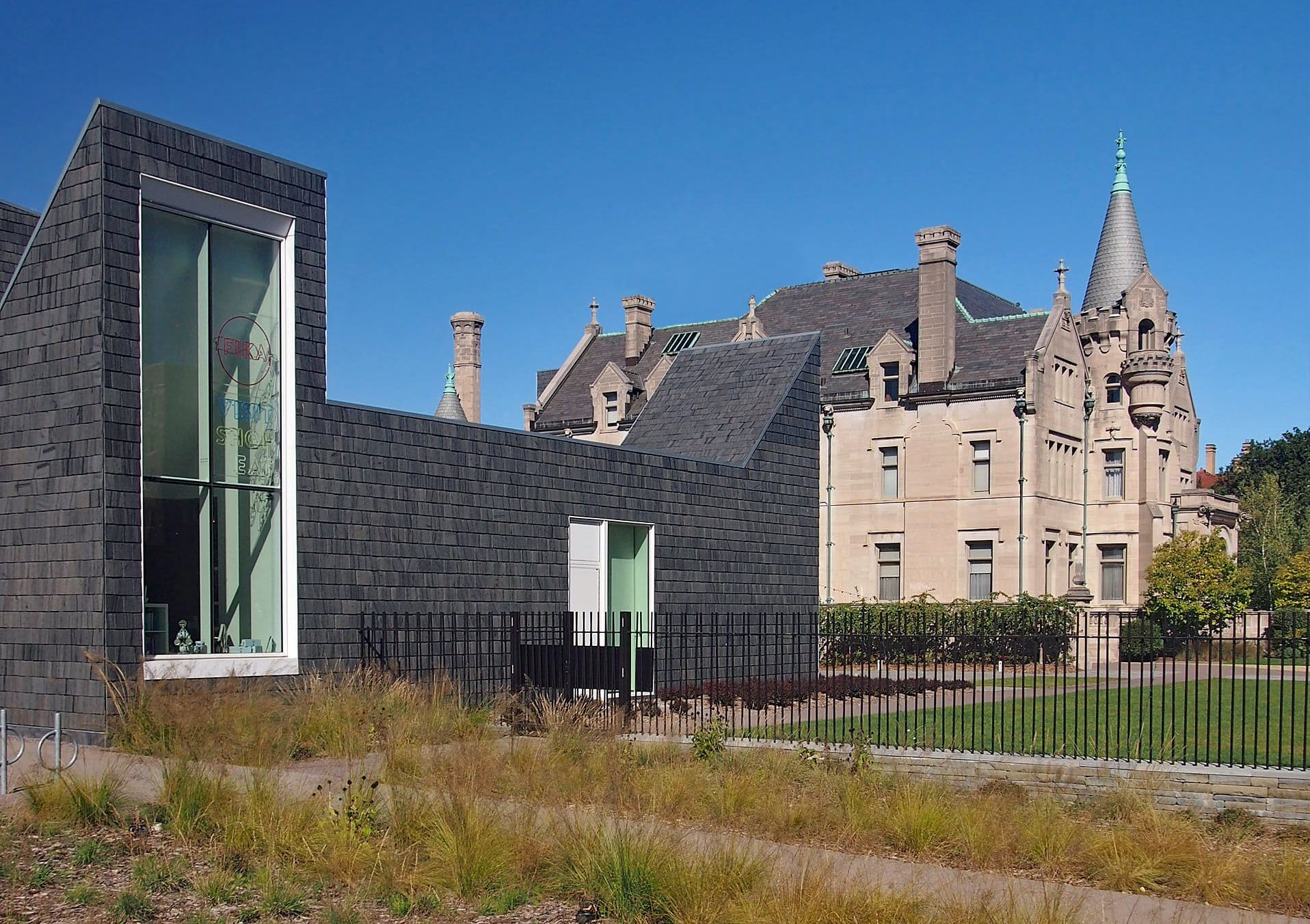
The American Swedish Institute in Minneapolis runs a heritage museum out of a 33-room limestone castle. Staff and guests report piano music with no one at the keys and sudden cold air — and the institution keeps its own Ghost Files on all of it.
The American Swedish Institute in Minneapolis keeps a ghost on the record. Guests and staff at the Turnblad Mansion report piano music with no one at the keys, and sudden, inexplicable blasts of cold air, and the institution that exists to preserve Swedish-American heritage has quietly become the keeper of its own haunting.
The house is built for it. Swan Turnblad, a Swedish immigrant who turned a Swedish-language newspaper from 1,400 subscribers into 40,000, raised a French châteauesque castle of Indiana limestone between 1904 and 1908 — 33 rooms, a steep-roofed turret, 11 imported Swedish tile stoves. "I wanted it to endure to a hundred thousand years," he said of it. His family moved in by 1908 and is believed never to have fully furnished it. In 1929 he simply gave it away, donating the mansion and his collections to found the institute it still houses.
The reports go back generations. According to the institute's own staff, the hauntings here date to 1921, and the accounts have only piled up since. The plainest ones are the piano and the cold. The strangest is soft-sourced and harder to shake: one account has a staff member at an evening event hearing a baby cry from the northeast room — the bedroom that had been the Turnblads' daughter Lillian's — though no baby was present, and none had ever lived there.
A former staffer is said to have seen something else entirely. The story goes that a woman with shoulder-length hair, dressed in a midi-skirt and cardigan out of the 1970s, stood at a colleague's desk; when the staffer looked back, she was gone. Not a Gilded Age apparition in a gown, but a figure from the museum's own working past.
In 2013 the Twin Cities Paranormal Society investigated the building, and by the account of the city's own tourism office, they corroborated the reported phenomena. The full report stayed private. Most of what the public knows lives in the institute's own files.
One detail turns this place from a haunted house into something odder: the museum leans in. Each October the institute runs flashlight tours through the darkened castle, walking small groups past the documented incidents with samples of aquavit. They're led by Andrea Justus, the interpretive services coordinator, who keeps the files and tells the stories and does not claim to believe a word of it.
"I leave it up to people to come to their own conclusions," she says. "There's no super conclusive evidence."
She tells them anyway. The institute keeps its Ghost Files anyway. A heritage museum built to last a hundred thousand years, quietly holding the record of everyone who never quite left.