TLDR
James Habersham Jr. built this pink-stained Georgian mansion in 1771 and died here in 1799 under disputed circumstances. His ghost lights candles and straightens tables between October and March, while enslaved children's spirits throw dice in the basement tavern and a woman's voice screams "GET OUT!" in the restroom.
The Full Story
A waiter turned away for a moment. When he looked back, every candle on every table in the dining room had been lit. Nobody else was in the room.
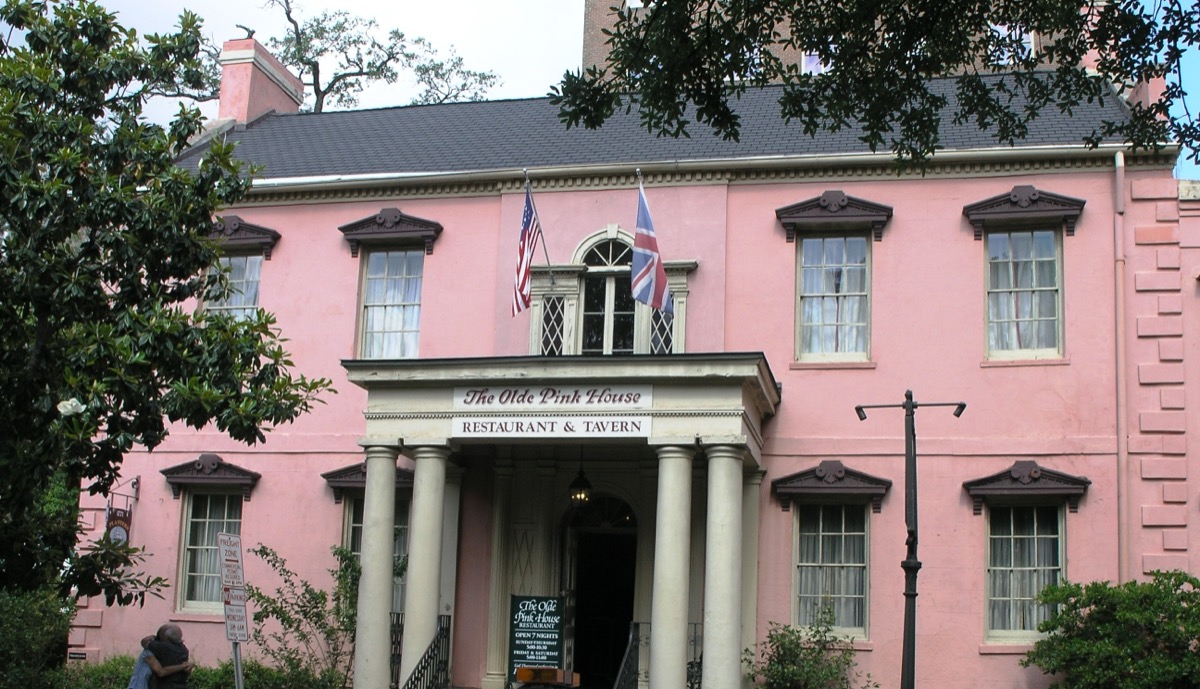
That's James Habersham Jr., or so the staff at 23 Abercorn Street believe. He built this Georgian mansion in 1771, though the Revolutionary War interrupted construction and the house wasn't finished until 1789. He covered the red brick exterior in white plaster because that's what wealthy Savannah men did. Then the humidity went to work. Rain bled the red through the white, turning everything pink. Habersham hated it. Savannah loved it. In the 1930s, owner Alida Harper Fowlkes stopped fighting the color entirely and painted it brilliant pink on purpose.
Habersham was the first Georgia student to attend the College of New Jersey (now Princeton). He ran a mercantile firm that imported goods and enslaved Africans to Savannah, built plantations on the Savannah River, and became one of the wealthiest men in colonial Georgia. His family life was more complicated. His father, James Sr., stayed loyal to Britain. All three sons went the other direction. His brother Joseph personally arrested the Royal Governor of Georgia. Joseph later became Postmaster General of the United States under George Washington.
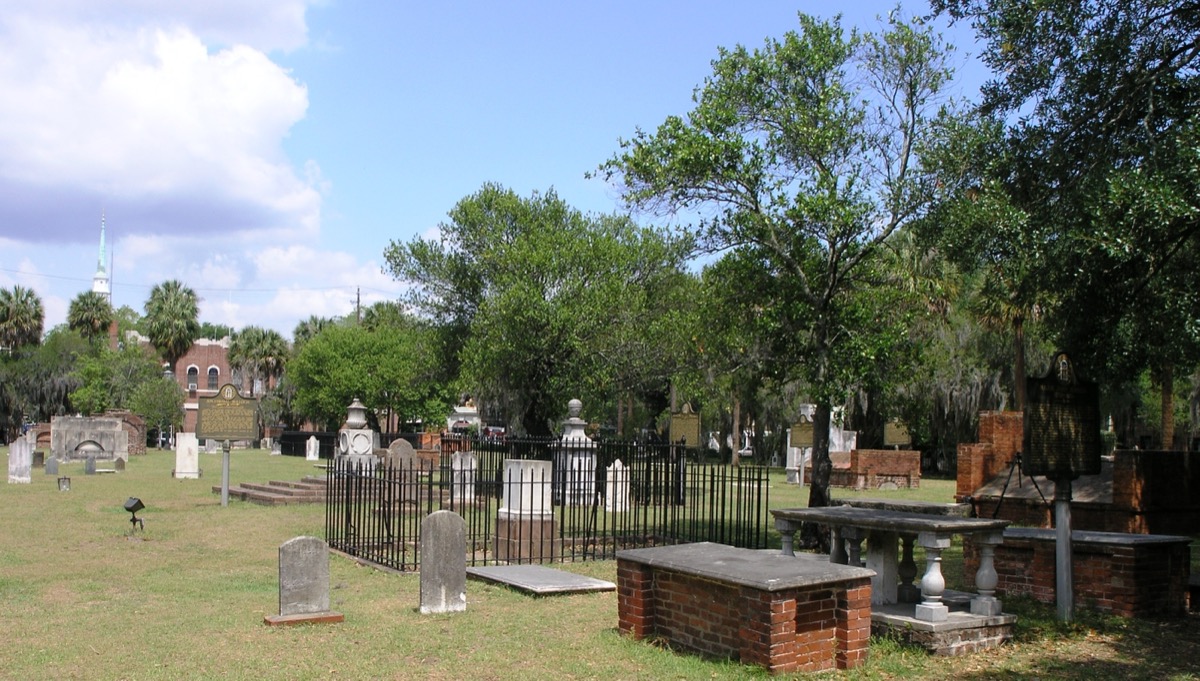
James Jr. died on July 2, 1799. The official cause was declining health at age 53. The unofficial version, repeated by every ghost tour in Savannah, is that he hanged himself in the basement after discovering his wife's affair with the architect who built the mansion. The suicide story has a problem: he's buried at Colonial Park Cemetery alongside his father and brothers, and suicide burials weren't permitted in consecrated ground. The truth probably lies somewhere nobody can reach anymore.
The house survived a fire in 1796 that destroyed over 200 surrounding buildings. It became Planters Bank in 1812, the first bank in Georgia. Union General Zebulon York commandeered it as his headquarters during the Civil War. After decades as offices and a bookstore, Jim Williams (the Midnight in the Garden of Good and Evil figure) restored it in 1968. Herschel McCallar Jr. and Jeffrey Keith bought the building for about ,000 in 1970, jacked it up, installed I-beams under the foundation, and opened the restaurant in 1971. Today it spans 16,000 square feet across three floors with thirteen dining rooms.
Habersham's ghost wears Colonial garb. Staff describe him as a pin-neat gentleman who straightens table settings, arranges chairs at empty tables, and lights candles when nobody's looking. He shows up between October and March and avoids the summer heat, which is either very specific behavior for a dead man or a great detail someone invented. He vanishes the moment a guest realizes he's not a living reenactor.
The basement tavern is where things get louder. Children play down there, believed to be the ghosts of enslaved children who died in the house from yellow fever. They throw dice against the walls, knock silverware off tables, and used to lock women in the bathroom from the inside. Staff eventually removed the locks. The children adapted. Now they hold the door shut instead.
A soldier, possibly Joseph Habersham, sits at the bar and raises his glass with a joyous grin, offering toasts to whoever happens to be nearby. He vanishes before anyone can drink. A separate ghost takes solid form at the bar, orders a drink, walks toward Colonial Park Cemetery, and disappears near the Button family monument.
The women's restroom has its own problem. Female guests hear a woman's voice screaming "GET OUT!" Sharp, angry, unmistakable. Some tour guides attribute it to Mrs. Habersham, though the historical basis for that claim is thin. The number of people who've heard it independently is not.
In December 2018, a fire broke out in the upstairs ballroom and closed the building for four months. It reopened, of course. The Olde Pink House has survived fire before. It's survived wars, seizures, occupations, and 250 years of Savannah humidity. People come for the food, which is excellent, and for the building, which is stunning. The hauntings are almost incidental. You might have a perfect dinner on the main floor while James quietly lights a candle two rooms over, the kids rearrange silverware downstairs, and someone in the restroom hears a voice that shouldn't be there.
Researched from 10 verified sources. How we research.