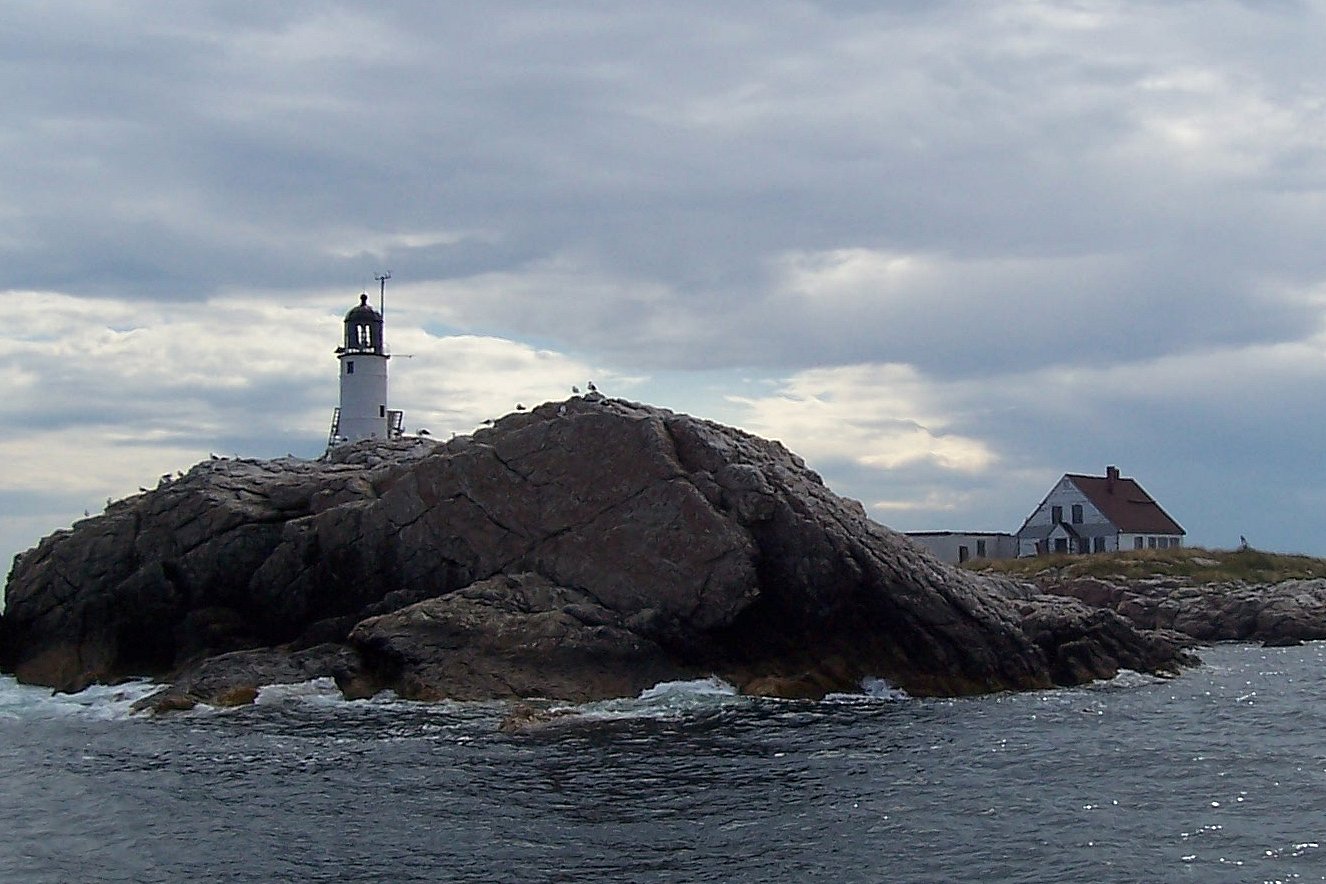
Smuttynose Island sits six miles off Portsmouth, New Hampshire — a treeless rock where two immigrant women were killed with their own axe in 1873. The legend keeps their killer there, searching the rocks for the one who escaped.
On Smuttynose Island, six miles off Portsmouth, New Hampshire, the story goes that a man still walks the rocks looking for a woman who got away from him in 1873. His name was Louis Wagner, and he is searching for Maren Hontvet, who hid from him among those rocks all night and lived.
The island is a 25-acre slab of grass and gulls with no trees worth the name, the third-largest of the Isles of Shoals. On the night of March 5 into March 6, 1873, three Norwegian women were alone in the only occupied house there, their men stranded on the mainland. Shortly after 1 a.m., Wagner rowed out in the dark.
He knew the house. He had once boarded in it and worked John Hontvet's boat, and that day he had asked the men three times whether the women would be alone. He believed money was hidden inside, saved for a new boat. He beat and strangled Karen Christensen, killed Anethe Christensen with the household's own axe, and went looking for Maren. She climbed out a window and hid barefoot among the icy rocks until dawn, then crossed a breakwater and signaled for help.
For all of it, Wagner took only about fifteen dollars and some change. He fled to Boston, where he spent exactly that on a new suit and boots — a detail used to convict him. A bloody shirt turned up hidden in the privy of his Portsmouth boarding house. He was hanged in 1875, maintaining his innocence to the end.
The case did not stay quiet. Celia Thaxter, the poet who lived on neighboring Appledore Island and had once employed Karen Christensen at her family's island hotel, wrote an account of the murders, "A Memorable Murder," that ran in the Atlantic Monthly the year Wagner died. More than a century later Anita Shreve's 1997 novel reimagined Maren — the survivor — as the real killer, a theory the island's own historian, J. Dennis Robinson, weighed against the trial records and rejected, closing the case back on Wagner.
The lore that grew up alongside it keeps him on the island. New Hampshire Magazine records the legend plainly: the ghost of Louis Wagner is said to haunt the place "in remorse for the two little Dutch girls he murdered here." Visitors report moans and screams from the spot where the cottage once stood, and Wagner himself searching the ground for the woman who got out the window. Another strand has him back on the streets of Portsmouth every March 6 around 1 a.m., the hour he rowed out, proclaiming his innocence.
The legend has even his victims' country wrong. The women were Norwegian, not Dutch. A century and a half on, the place keeps the killer and loses the names of the dead.