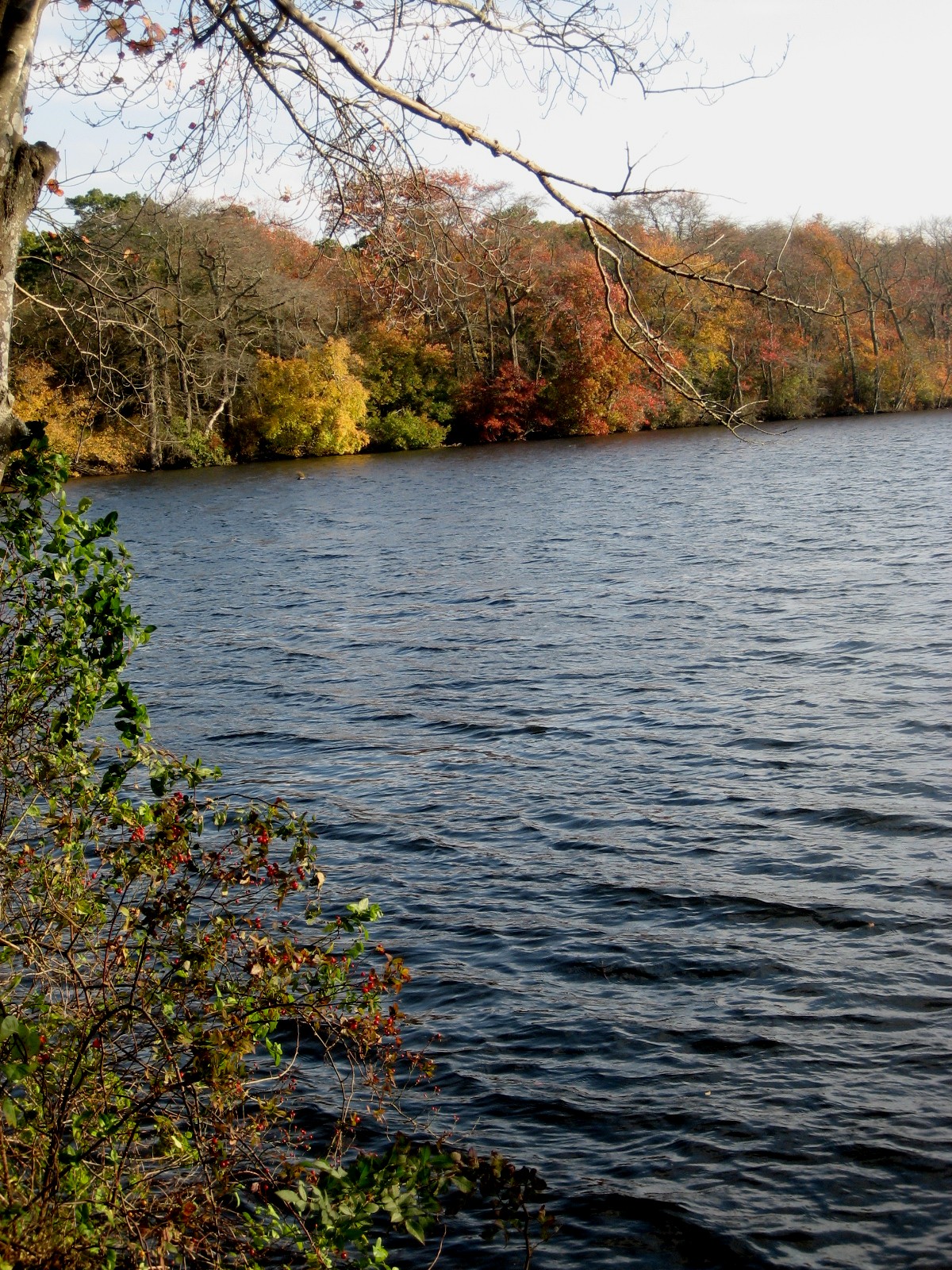
Lake Ronkonkoma is the largest freshwater lake on Long Island, and the story is that it takes one young man a year. The lifeguard who watched it for 32 summers kept count of the drownings. Every single victim was male.
Lake Ronkonkoma, the largest freshwater lake on Long Island, is said to drown one young man every year. Mothers in Suffolk County grew up telling their children the same thing their own mothers told them: stay out of that water.
Dr. David S. Igneri watched the lake for 32 summers as its head lifeguard. About 30 people drowned on his watch. Every one of them was male. He wrote a book about what he saw and never found a way to explain the pattern. Local folklore counts something like 160 drownings going back to the mid-1800s, and in all that span only three of the dead were women.
The story people tell to explain it is older than any of the records. In the mid-1600s, a Setauket chief's daughter named Tuskawanta fell in love with an English woodcutter, Hugh Birdsall. Her father forbade it. For seven years, the way it's told, she wrote letters on strips of bark, rowed to the center of the lake, and floated them across the water toward him. He never answered one. Birdsall was a real man, and he eventually moved back to England and married someone else. She rowed out a final time and, depending on who tells it, drowned herself or drove a knife into her chest in the middle of the lake.
Since then, the legend says, she takes one young man a year, pulling him under to replace the lover she lost. The story is old enough that the state put up a historic marker for it in 2016. The marker reads that she "claims one male each year by drowning to be with her at bottom of lake."
The lake gives them up strangely, too. Visibility drops to nothing past about ten feet, and the bottom shelves off hard near the southwestern corner into a deep spot locals call "the hole." A diving platform built there in the early 1900s became a place people kept going under. For centuries the lake was held to be bottomless. Men are said to have dropped 1,000 feet of weighted fishing line into the southwestern holes and never touched the floor, and early settlers told of a wagon that vanished into the water and turned up later in the Great South Bay, miles away, as if the lake ran out to the sea underground.
The bodies seemed to follow those passages. In the 1930s, a Connecticut bootlegger who'd been dumped into Long Island Sound surfaced on the bank here, hat and wallet and flask still on him.
In 1875, three men rowed out and measured the deepest point at 72 feet. Later accounts put it closer to 90. Nobody agrees on how deep the hole actually goes.
The last person to drown was a woman, in 2017. Swimming is no longer allowed.