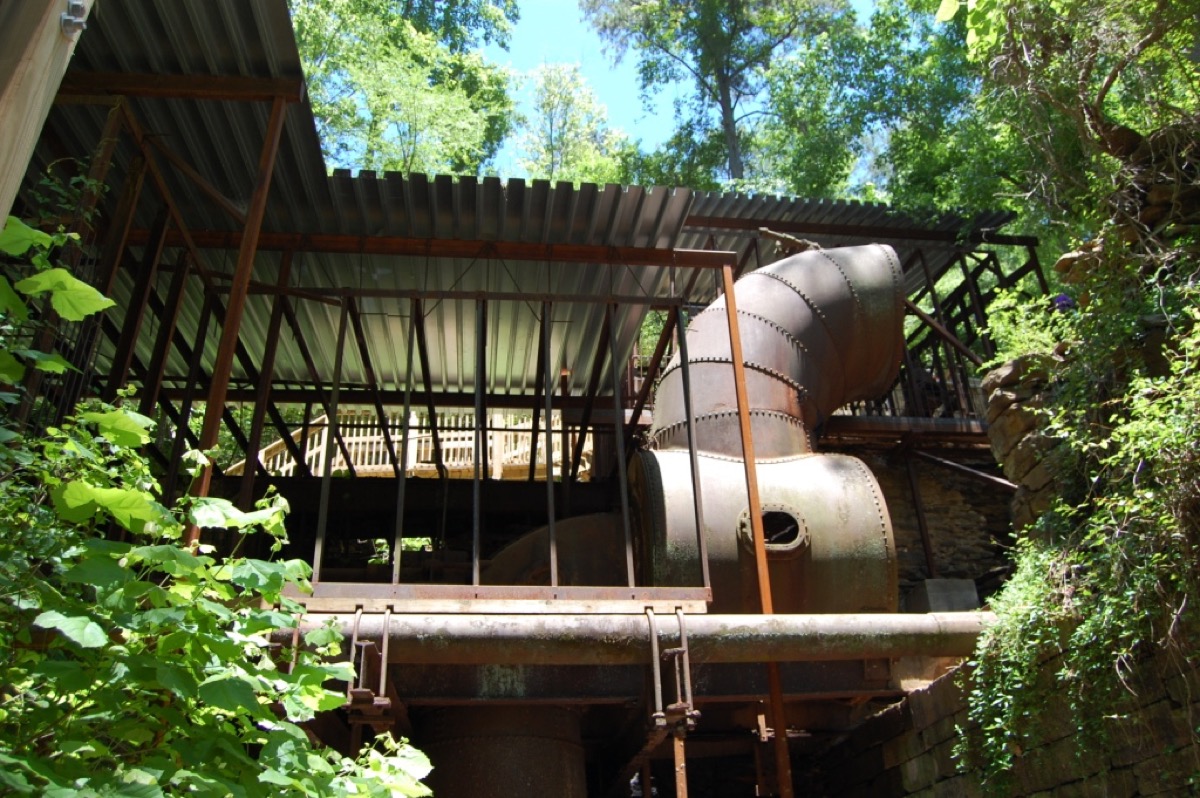
At the Roswell Mill ruins in Roswell, Georgia, a woman in white is said to weep along Vickery Creek, searching for children torn from her. The lore ties her to July 1864, when Sherman charged 400 mill women with treason and shipped them north.
Along Vickery Creek in Roswell, Georgia, where the old cotton mills survive only as stone ruins, locals tell of a woman in a white dress who weeps near the water. They call her the Weeping Woman of Vickery Creek. No one knows her name. People near the creek at dusk say they hear soft sobbing with no one in sight, and the story goes she is still searching for the children torn from her arms.
To understand why she's searching, you have to go back to what happened here in 1864.
The Roswell Manufacturing Company, incorporated in 1839, grew into the largest cotton operation in north Georgia. By the war it was turning out "Roswell Gray" for Confederate uniforms, along with rope, canvas, and tent cloth. The looms were run mostly by women — their husbands off fighting, their children at their feet because there was no one else to watch them.
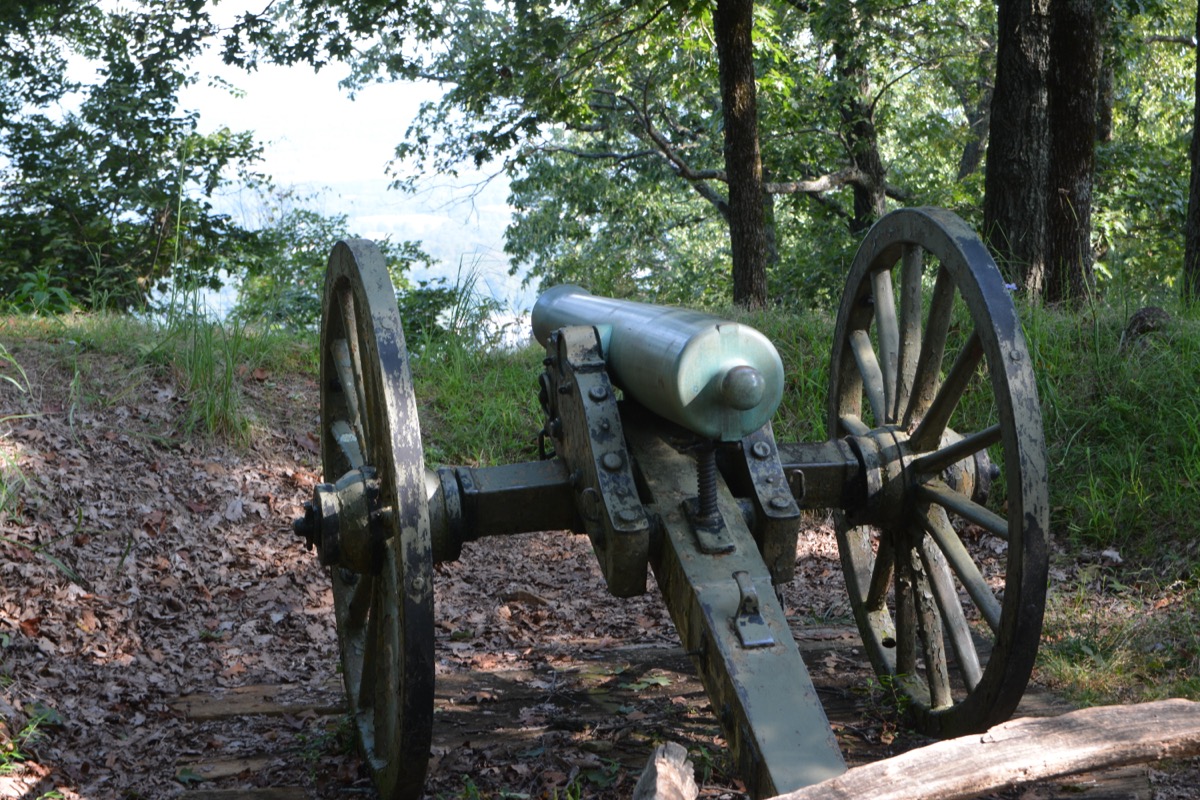
On July 5, 1864, Union cavalry under General Kenner Garrard took the town. Two days later, Sherman ordered the mills burned and everyone connected to them arrested and charged with treason. "The poor women will make a howl," he wrote.
Roughly 400 workers, almost all of them women and children, were held a day on the square, marched to Marietta, and packed into boxcars headed north — to Louisville, to Indiana. They left with a few days' rations. Many suffered exposure and hardship along the way, and few ever returned. Their names were lost for more than a century.
The covered bridge where she's most often seen is a wooden reproduction, built in 2005. The woman it's tied to would have been gone 141 years by the time it stood. But people still report her there, and apparitions of women and children at the water's edge — and, from the empty ruins, the faint sound of mill machinery that has not run in generations.