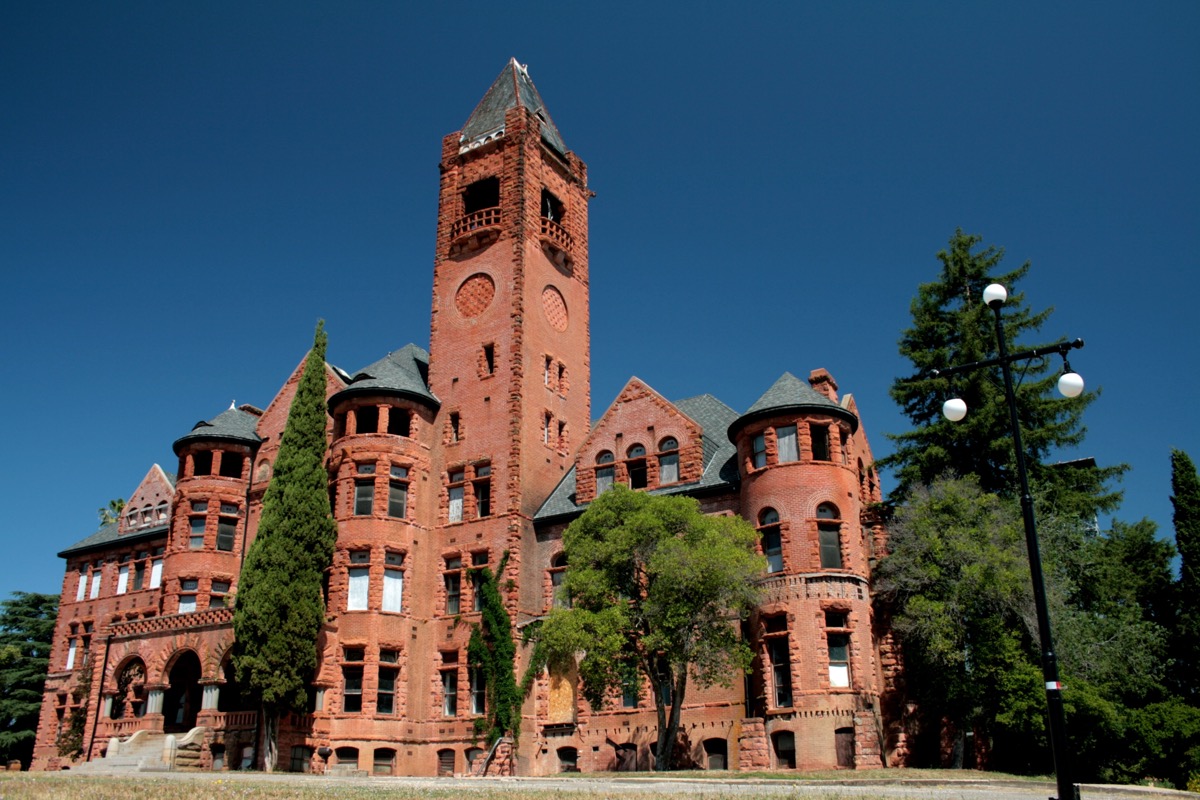
About This Location
Preston Castle was constructed in 1894 as the administration building for the Preston School of Industry, a reform school for boys. The imposing Romanesque Revival structure served as a reform school until 1960. The castle witnessed decades of harsh discipline and tragedy, including the brutal unsolved murder of head housekeeper Anna Corbin in 1950. Now a California Historical Landmark, the castle offers ghost tours and overnight paranormal investigations.
The Ghost Story
Preston Castle rises from the Ione hillside as one of America's most imposing relics of juvenile incarceration. Constructed between 1890 and 1894 using bricks made by prisoners at San Quentin and Folsom, the 42,000-square-foot Romanesque Revival structure served as the administration building for the Preston School of Industry, one of the nation's oldest and most notorious reform schools. The initial seven wards were transferred directly from San Quentin State Prison—children as young as eight, committed for crimes ranging from murder to homelessness to simply being orphans their parents abandoned on the front steps.
The reform school quickly developed a reputation for brutal discipline. By 1895, reports emerged of ill-treatment, malnourishment, and overworking of youth. Control methods included public lashings, starvation, prolonged isolation, and chemical dunking baths for lice treatment. Medical procedures were performed on floors before 1913. Over 66 years, the institution witnessed hundreds of escape attempts, violent encounters, documented sexual abuse, and multiple deaths. A lost cemetery on the grounds contains the graves of at least 17 wards who died inside the school, mostly from tuberculosis and yellow fever. The youngest buried was only eight years old.
Samuel Goins, a convicted burglar, was shot and killed by a guard in 1918 during an escape attempt and lies buried in the castle's cemetery. Other documented casualties include 8-year-old Grant Walker and 20-year-old Nicholas Hamilton. Notable wards who survived their time here include country legend Merle Haggard—labeled "incorrigible" in 1953 after four escapes from Whittier, he escaped Preston within six months and was eventually sent to San Quentin—as well as poet Neal Cassady, actor Rory Calhoun, and author Edward Bunker. Haggard bore a "PSoI" tattoo but declined a benefit concert for the castle before his death, wanting nothing to do with the place.
The castle's most infamous chapter came on February 23, 1950, when head housekeeper Anna Corbin was found beaten beyond recognition in a basement storeroom, wrapped in a rug with a rope around her neck. All 657 wards and staff were questioned. Nineteen-year-old Eugene Monroe became the prime suspect after his bloody clothing was discovered, but despite three trials, he was never convicted—two ended as hung juries before acquittal in the third. Monroe later confessed to the murder and rape of a pregnant woman in Tulsa, Oklahoma and received a life sentence, yet he maintained his innocence regarding Anna Corbin until his death. Her murder remains officially unsolved.
The paranormal activity at Preston Castle is relentless. Both Ghost Adventures (2009) and Ghost Hunters (2010) have documented significant evidence here. The Ghost Adventures team captured EVPs including "I don't know," "get out of here," "come on, you can do it," and "never again." Two orb-like lights appeared on camera, one vanishing near investigator Nick Groff's head. Aaron Vance received three mysterious scratches on his leg on the third floor. Lead investigator Zak Bagans exhibited such unusual behavior that his team suspected possession by Anna Corbin's spirit.
The TAPS Ghost Hunters team captured a voice responding to Jason, a voice saying "Grant's" name, a scream, and confirmed footsteps with a door opening and closing in the basement. Thermal imagery revealed unexplained figures. Docent Donna Jackson caught an EVP during her first 2012 investigation that hooked her on the building. Even foundation president Karl Knobelauch, a self-declared skeptic, heard a disembodied voice call his own name when no one else was present.
The infirmary remains the most active area, known for ghostly figures standing at windows and strange noises at night. The basement carries an oppressive energy where visitors report dark, humanoid figures moving unnaturally in the shadows. Near where Anna's body was found, cold gusts of air and whispers persist, with some hearing a woman's voice pleading for help. Throughout the castle, visitors experience cold spots, disembodied voices, slamming doors, childlike laughter, phantom footsteps, and unseen hands touching them. The Preston Castle Foundation now offers overnight paranormal investigations and daytime tours, welcoming those brave enough to confront over a century of tragedy still echoing through its halls.
Researched from 12 verified sources including historical records, local archives, and paranormal research organizations. Learn about our research process.