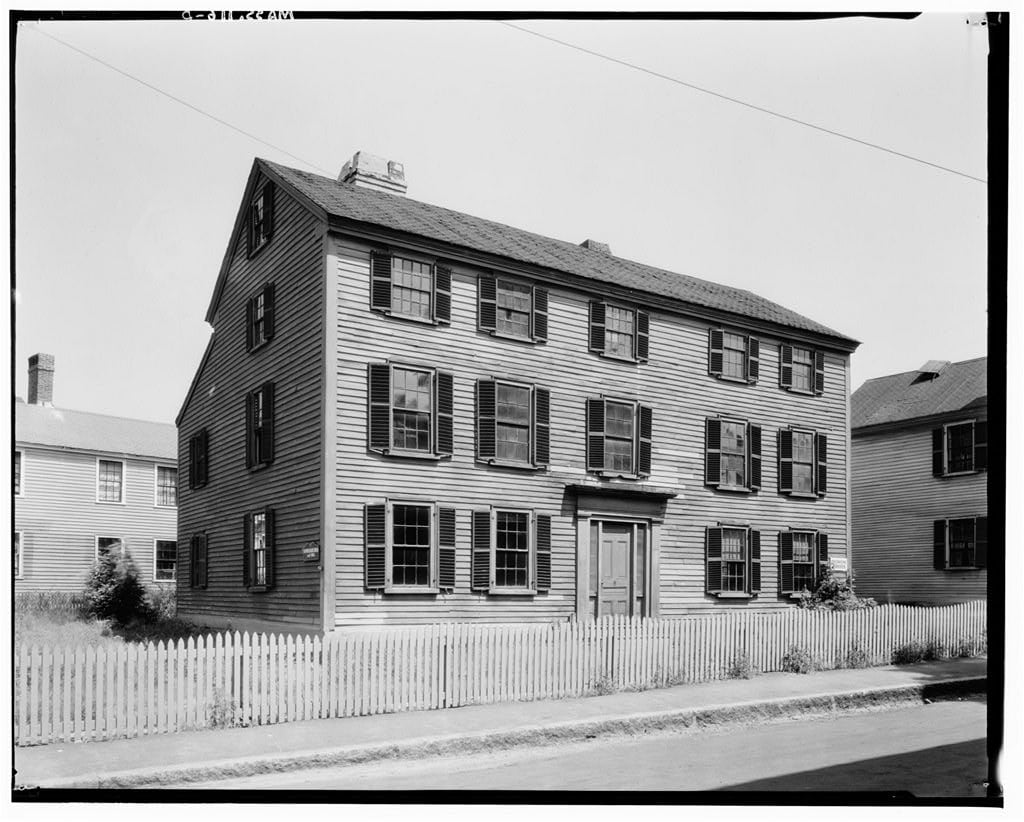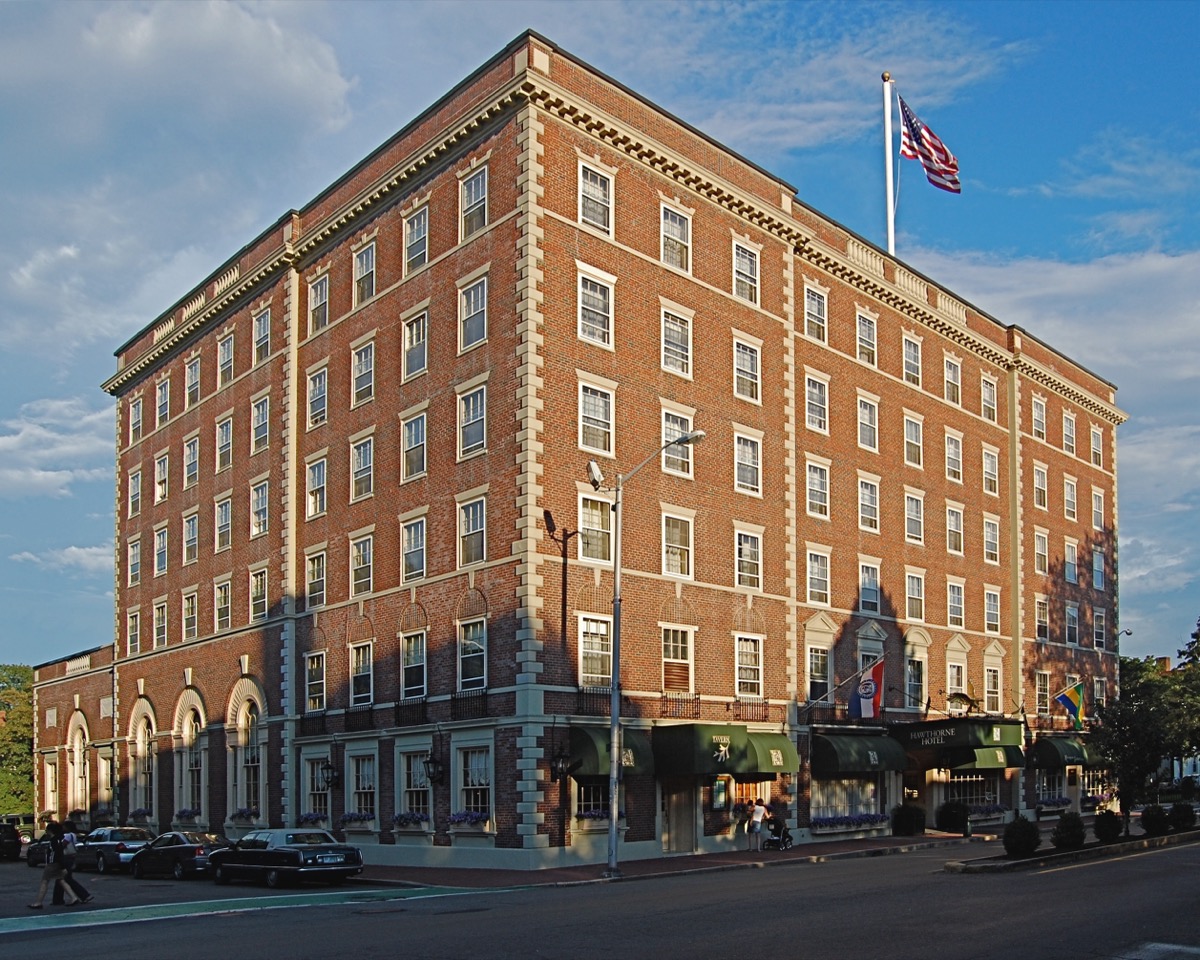
The Peabody Essex Museum in Salem keeps its ghost story off-site, at the Ropes Mansion it owns three blocks down Essex Street. Two people died badly in that house, and a caretaker's photograph there once caught a pair of hands with no body attached.
The Peabody Essex Museum in Salem, Massachusetts is a serious institution. It traces back to 1799 and a society of sea captains who collected curiosities from voyages past the Cape of Good Hope. Its East India Marine Hall, dedicated in 1825 with John Quincy Adams in attendance, still lines its walls with nine carved ship figureheads. For years its library held 527 original Salem witch-trial documents, returned to the state in 2023. The ghost story belongs to a different building. The museum owns that one too.
It's the Ropes Mansion, a Georgian house at 318 Essex Street, three blocks down from the main galleries. Caretakers Rick and Georgette Stafford were photographing the place for an insurance appraisal when, the story goes, one frame came back with two hands in it — a man's hands, resting on the front-hall couch, in an otherwise empty room. The author Robert Ellis Cahill published the picture and named the sitter. "Here the judge sits for a spell on the front hall couch," he wrote. "After all, if you were wandering around this mansion for over 200 years, you'd want to sit for a while, wouldn't you?"
The judge is Nathaniel Ropes, who bought the house in 1768. By March 1774 he was dying of smallpox in an upstairs bed, and a mob came for him anyway, throwing mud, sticks, and rocks at the windows to punish his Loyalist sympathies. He died the next day, at 47. His family blamed the crowd for the timing. John Adams, who knew him, wrote in his diary a week later that Ropes had been "exceedingly agitated all the time of his last Sickness."
Sixty-five years later the house took another Ropes. In 1839 his descendant Abigail, called Nabby, stood at the mansion fireplace when her dress caught. The Salem Gazette recorded "a distressing illness of three weeks caused by her clothes accidentally taking fire." She lingered the full three weeks, then died of the burns.
Visitors and staff say Abigail never left. They report a woman in the windows and the upstairs halls, doors that open on their own, a cold that has no draft to explain it. Some say they've heard her screams from the years she spent burned and dying. Out in the mansion's garden, visitors describe the icy touch of something they can't see. The house has had its film moment since: it played Allison's house in the 1993 Disney movie Hocus Pocus, and a fire in 2009 gutted the upper floors before a careful restoration brought it back in 2015. It's a house where two people died slowly, kept open now, kept furnished. And somebody, the story goes, still sits in the front hall.