The Palace Hotel and Bath House in Eureka Springs, Arkansas ran as a bordello in its early decades, and the ghost story is a madam named Rosemary. Unlike most of the town, the Palace refuses to advertise her — no tours, no themed rooms, just a knock on the door that finds an empty hall.
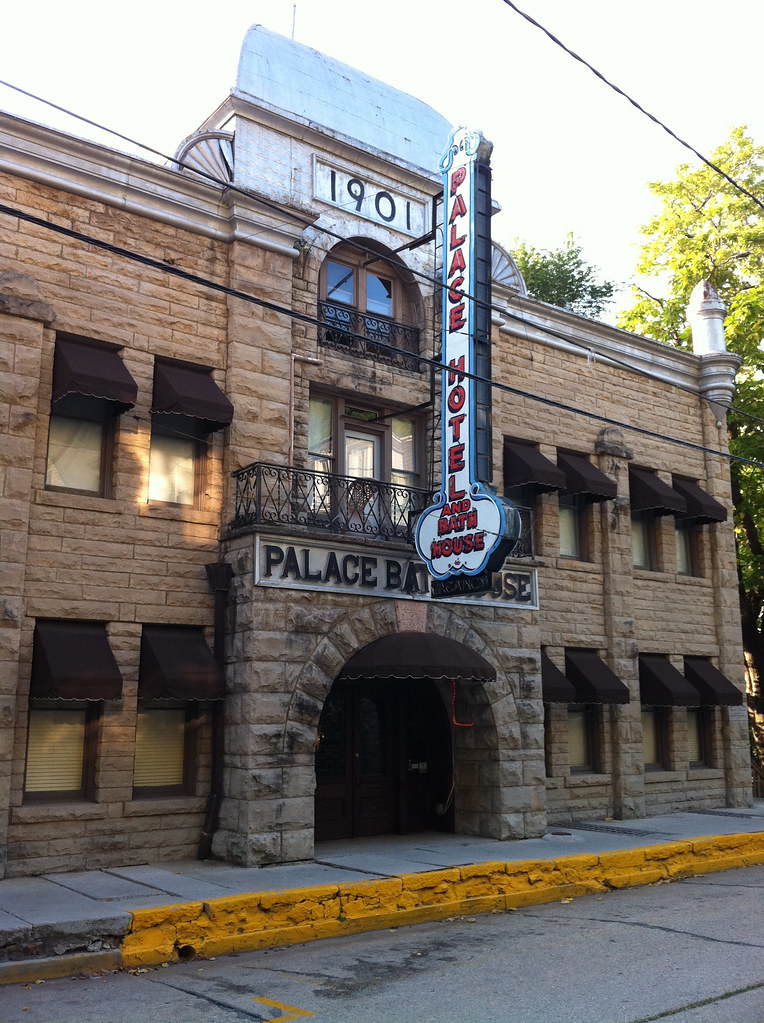
The Palace Hotel and Bath House in Eureka Springs, Arkansas has a ghost it refuses to advertise. There are no tours through the lobby, no themed rooms, no haunted-history tab on its website. In a town that runs on ghost stories, the Palace keeps its to itself.
In its early decades the building ran as a bordello — the hotel's own manager has said as much — and the ghost grows out of that chapter. Local lore gives her a name: Rosemary, a lady of the evening who is said to have died, in the phrase the story always uses, "in the throws of passion," and started turning up around the end of Prohibition. The dates don't quite hold — the same sources that put the end of the red-light trade in the 1920s also date Rosemary's death to 1933 — so she belongs to the lore, not the record.
Her one reported trick suits a madam. A guest, in the middle of an intimate moment, heard a sharp bang on the room door, opened it, and found the hall empty. The reading that stuck is that it's the old house reflex, the knock that used to collect the fee before anything went further. There's no room number, no date, no second guest who came forward. It's a single account the house has been telling on itself ever since.
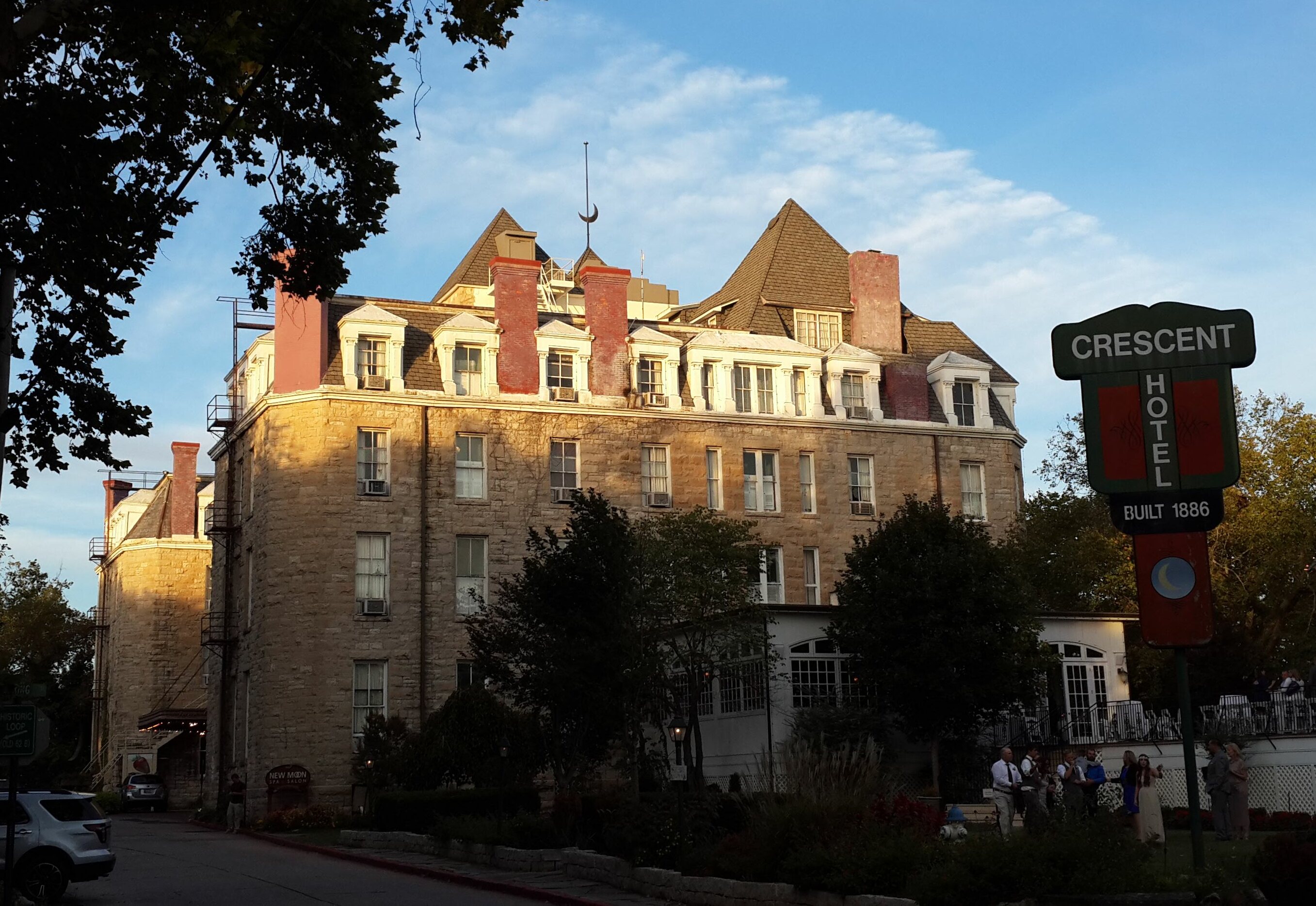
What's striking is how little the Palace does with it. One ghost-tour writeup put it flatly: the place does not boast being haunted. That's rare restraint in downtown Eureka Springs, especially in the long shadow of the Crescent Hotel up the hill, which soaks up nearly all the town's ghost coverage.
So the Palace leans on what it can prove. Its bath house is the last of the town's Victorian spas still running, on original clawfoot tubs and wooden barrel steam cabinets, with spring water still moving through plumbing laid in 1901. A 1940s neon sign hangs on the limestone front. The original wire-cage elevator still sits in its shaft, no longer safe to ride.
It is the Palace's whole posture. It will sell you a mineral bath drawn from a spring older than the state's tourism trade, and leave the ghost entirely up to you.