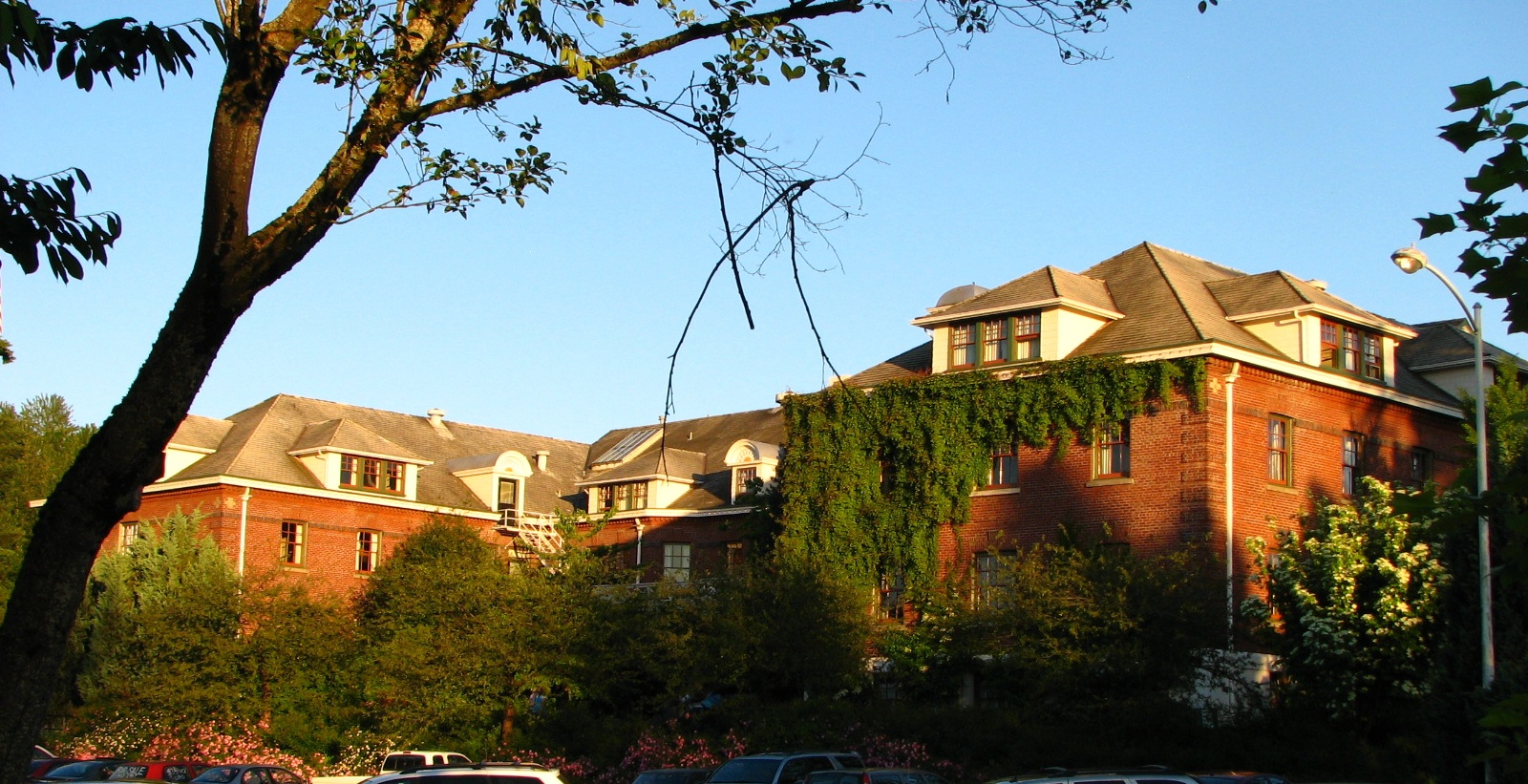
The McMenamins Edgefield in Troutdale, Oregon keeps a ghost log at the front desk, a binder where overnight guests write down what happened to them. The most-requested room is 215, asked for by name because it fills more pages than any other.
The McMenamins Edgefield, in Troutdale, Oregon, keeps a binder at the front desk. Guests write in it — what they heard in the hall, what moved, what stood at the foot of the bed overnight. It's the ghost log, and the most-requested room on the property is 215, asked for by name because it fills more of that binder than any other.
The resort wasn't built to be one. It opened in 1911 as the Multnomah County Poor Farm, where the county sent the indigent, the sick, the elderly, and the disabled to work the land in exchange for a roof. An infirmary wing went up in 1934, and by 1935 more than 600 people lived there. Many of them died there over the decades that followed. The farm finally closed in the 1980s, sat abandoned, and was nearly torn down before the McMenamin brothers bought the wrecked buildings in 1990 and made them their flagship.
Where the dead ended up is the part the stories can't agree on. Oregon's own tourism office says visitors feel the presence of those who died there, many of them believed to lie in unmarked graves on the grounds. The venue disputes it, saying the dead were carried off to a county cemetery rather than buried where guests now sleep. Either way, the building kept something.
The winery used to be the infirmary, and a McMenamins employee named Alison Berliner says she saw a woman there one morning around 11. A nurse, in clothes from another era, holding keys as if to unlock a door, then gone. She was close enough, and clear enough, that Berliner could describe what she wore. "I could tell she had a little hat on. I could tell she had pantyhose on."
The oldest account comes from before the place reopened. In 1989, a Portland man named John Flannery was boarding up windows in the abandoned building when he and another worker switched on a light in a long room full of closets. "I saw a person peeking out from a closet," he said. "It was definitely male, and not too old." The figure was gone when they looked again. They had the room cleared; Flannery says they brought in a priest and a shaman.
Years later, back on the restored property, Flannery came across a mural that had been painted on a wall inside. He stopped. "There it was," he said, "a picture of a person peeking out from a closet, with his hand on the door." The thing he'd seen in the dark of an empty building was already on the wall, waiting for him to find it.