Every winter, the Multnomah people say, a woman in white stands among the trees beside Multnomah Falls, watching the water fall. In their legend she is the chief's daughter who leapt from the cliff to end a plague, and the waterfall is the sign her sacrifice was accepted.
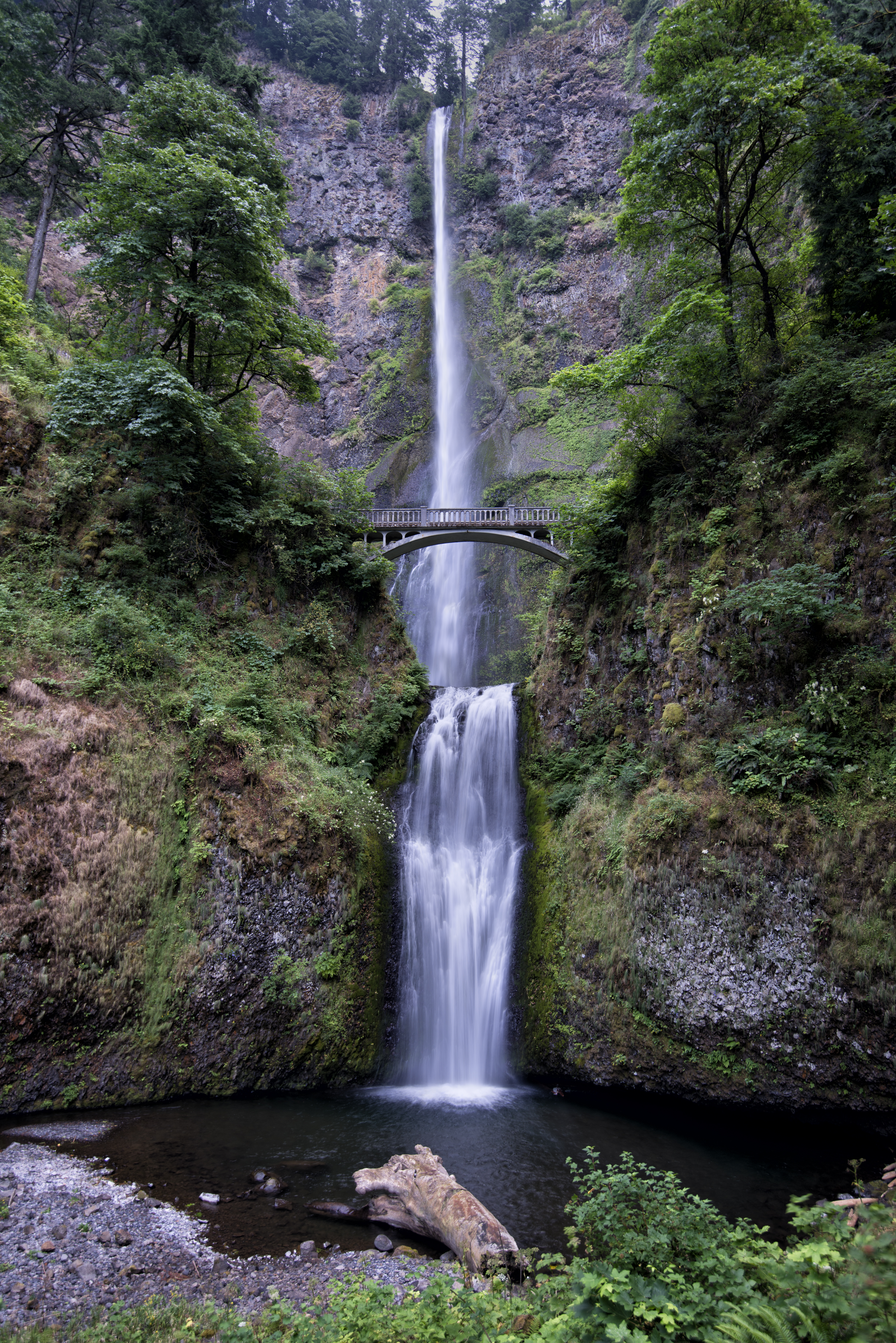
There is a woman who comes back to Multnomah Falls only in winter. She wears white, and she stands among the trees at one side of the falls, in the Columbia River Gorge east of Portland, Oregon, watching the water drop. The Multnomah people, who lived in the gorge long before it took their name, say she is the reason the waterfall is there at all.
The falls comes down 620 feet in two long tiers, the tallest in Oregon, and the oldest story about it is less a ghost story than an account of how it formed. A sickness moved through the gorge, the kind that empties villages, and an aged medicine man told the people it would lift on one condition: a maiden of noble birth had to give herself willingly to the Great Spirit. The chief's daughter, his only surviving child after his sons died in battle, was betrothed to a young Clatsop chief, and in some tellings the sickness reached them during the wedding celebration itself. She heard the prophecy. That night she climbed to the cliff above the Columbia and stepped off.
By morning the sickness had broken. And where bare rock had stood the day before, water was coming down. "A stream of water, silvery white, was coming over the edge of the rock," the recorded version reads. "It broke into floating mist and then fell at their feet." The Great Spirit had taken the sacrifice and left a sign that it was accepted: the waterfall itself, in a place that had none.
The story reaches us through folklore collectors rather than the tribe's own writing. Ella Clark set it down in 1953, in a book of Pacific Northwest legends, and like all oral tradition it shifts from teller to teller — which neighboring tribe the girl marries into, how the sickness arrives, even whether the old man's vision came to him that day or had been handed down from his own father many winters before. What holds across every version is the leap, and the falls answering it.
And then the line that turns a creation story into a haunting. "Sometimes in winter," the recorded ending goes, "the spirit of the brave and beautiful maiden comes back to see the waterfall. Dressed in white, she stands among the trees at one side of Multnomah Falls." More than two million people a year come to photograph the water. She comes back to look at the thing her death made.