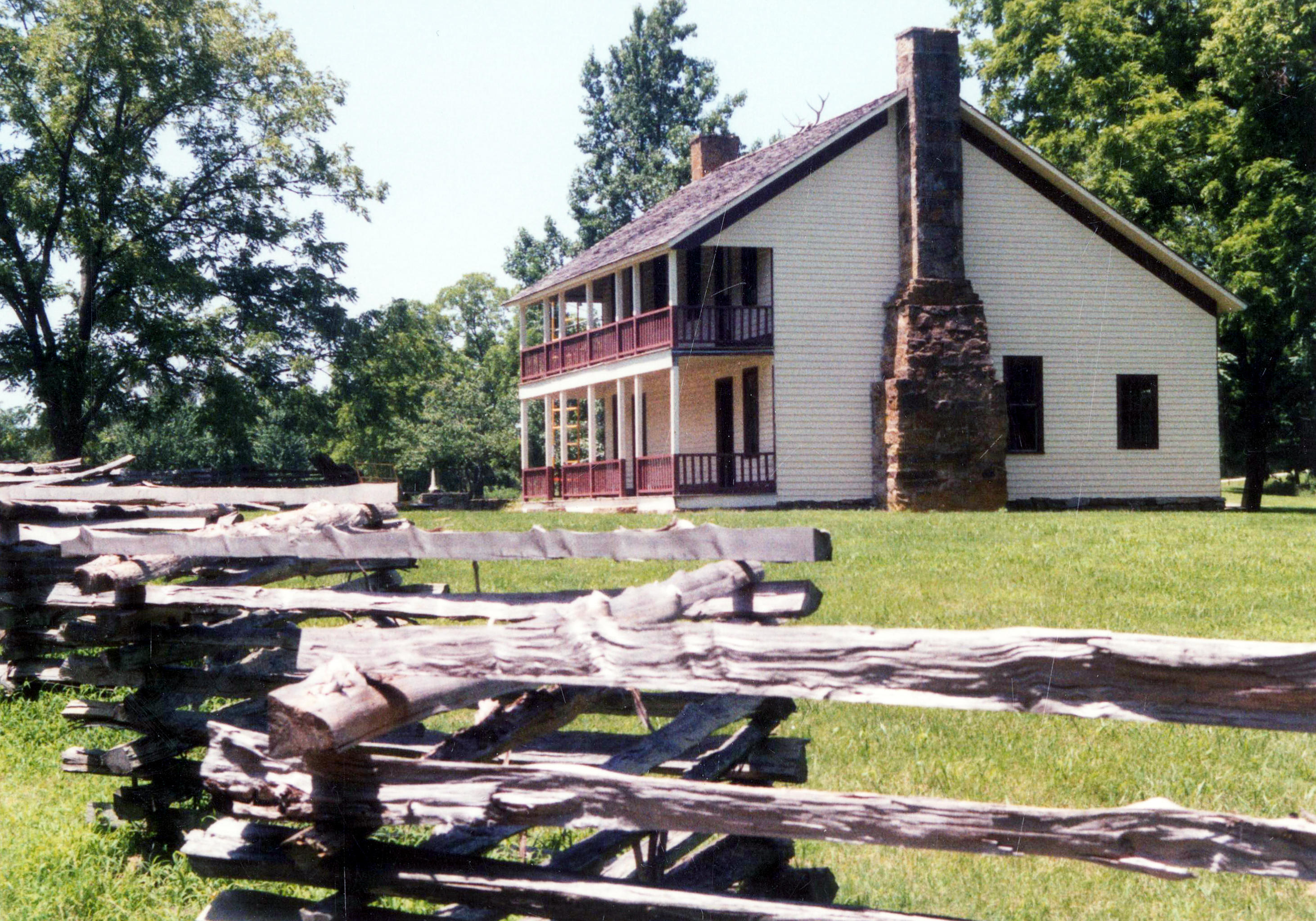
The Kendrick House outside Carthage, Missouri keeps an unusually crowded roster of named spirits. The hardest one to explain away is a child's voice on a recorder, naming herself Carol, in a house where a toddler named Carol once died.
The detail that hangs over the Kendrick House, just north of Carthage, Missouri, is a child's voice on a recorder. A Paranormal Science Lab crew played their session back and heard a little girl give her name. She said it was Carol. Nobody on the team knew, until afterward, that a toddler named Carol Sue Janney had died of polio inside the house, not yet three years old. Her older sister had called her "Carrot Soup." One investigator swore the recording said "Carrot."
"Carol is very, very active in the house," says Lisa Livingston-Martin, a trial lawyer and longtime board member who leads the tours. "We get lots of EVPs related to her."
She is one of seven. The house keeps a roster more crowded than most haunted hotels claim: Elvira, Joshua, and Austin Kendrick, Elizabeth, Carol, her aunt Pauline, and Rose, a servant said to have lived under that roof for roughly 80 years.
To understand the weight of the place, go back to the table. The Kendrick House was built in 1849, the oldest standing home in Jasper County and one of the few pre-Civil War buildings in the area to survive the war at all. When the Battle of Carthage came through on July 5, 1861, both armies used the house as a command center and field hospital, and the large wooden dining table is said to have become a battlefield operating table. Buckets sat at each end to catch what came off it. Run a UV light over that table now and dark streaks show up, running down the wood, heaviest at the ends. Nobody claims that proves anything.
The rest of the house carries the same overlap of the ordinary and the awful. General Jo Shelby's officers stabled their horses in the parlor, and hoofprints are said to remain in the floor. Beneath that parlor sits a trap door to a hidden room, where women and children waited out the fighting. For a time, before Carthage finished its courthouse on the square, the house even served as the county's courthouse.
The Kendrick family held it from the late 1850s until the 1980s, when the nonprofit Victorian Carthage bought it and reopened it as a living museum. The haunted tours and investigations Livingston-Martin runs there now help pay for the building's upkeep. A caretaker on the board has said she's heard voices in the empty house and found objects moved. "Some weird things have happened," is how she put it.
The county archivist questions the ghost stories. He does not question the house's "profound spiritual connection with the past." Carol arrived long after the soldiers, and she is the one nobody on that crew could have named first.